UP raises minimum wages after Noida unrest, seeks balance between industry and workers
Uttar Pradesh government moves quickly after a day of disruption in Noida. It hikes minimum wages across categories and enforces the revised rates from April 1. Officials confirm the decision on Tuesday, signaling urgency after protests shook industrial hubs.
Next, Medha Roopam, District Magistrate of Gautam Buddh Nagar, outlines the changes. A high-powered committee reviews the situation. Soon after, Chief Minister Yogi Adityanath clears the proposal late Monday night. The administration frames the move as both corrective and preventive.
Under the new structure, unskilled workers in Gautam Buddh Nagar and Ghaziabad now earn ₹13,690 per month. Earlier, they received ₹11,313. Meanwhile, semi-skilled workers will get ₹15,059, and skilled workers will draw ₹16,868. In other municipal corporation areas, the state sets ₹13,006 for unskilled, ₹14,306 for semi-skilled, and ₹16,025 for skilled workers. For the remaining districts, wages stand at ₹12,356, ₹13,591, and ₹15,224 respectively. The government attempts to align pay scales with regional cost pressures.
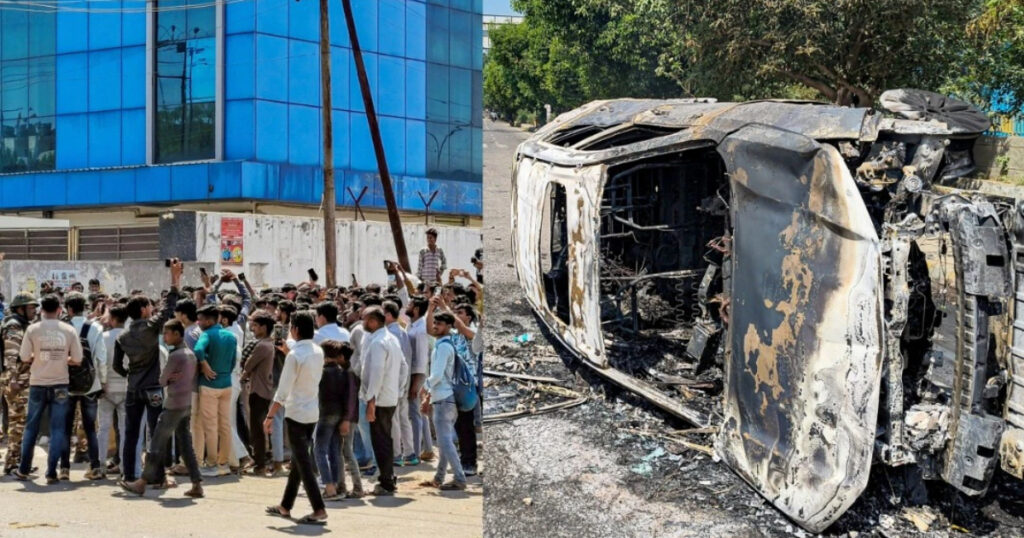
However, the wage revision does not happen in isolation. Just a day earlier, Noida witnesses widespread unrest. Thousands of factory workers gather and press for higher wages and better conditions. As tensions rise, some pockets turn violent. Police step in, and authorities rush to contain the situation. The scale of the protests exposes long-standing friction between labour and industry.
On the ground, workers describe rising living costs and stagnant incomes. Many say rent, food, and transport expenses have surged in recent months. At the same time, factory owners point to slowing exports and higher raw material prices. They argue that margins have tightened. This contrast shapes the state’s challenge: it must address worker distress without destabilising industry.
Therefore, the government initiates consultations with both sides. It engages labour unions and employer groups. It reviews objections and suggestions before finalising the hike. Officials present the outcome as a “balanced and practical” solution. They stress that the revision reflects both economic realities and worker needs.
In the background, broader economic signals influence the decision. Industries across the region face global headwinds. Export demand has weakened. Input costs have climbed. Yet, labour issues remain pressing. Workers demand fair wages, timely payments, and safe workplaces. These competing pressures push the state to act swiftly.
Following the decision, the chief minister issues a public appeal. He urges citizens to rely only on official information. He also directs employers to comply strictly with labour norms. Companies must ensure timely wages, overtime payments, weekly holidays, and bonuses. Moreover, they must guarantee safety and dignity, especially for women workers.
Meanwhile, administrative teams increase vigilance in industrial zones. Local officials monitor compliance and track any signs of fresh unrest. The government aims to stabilise the situation while restoring confidence among workers and businesses alike.
In conclusion, Uttar Pradesh’s wage hike reflects a rapid policy response to immediate unrest. At the same time, it highlights deeper structural tensions in industrial regions like Noida. The coming weeks will test whether the new rates ease worker concerns and help maintain industrial stability.