Manipur erupts after deadly blast, protests intensify as security tightens
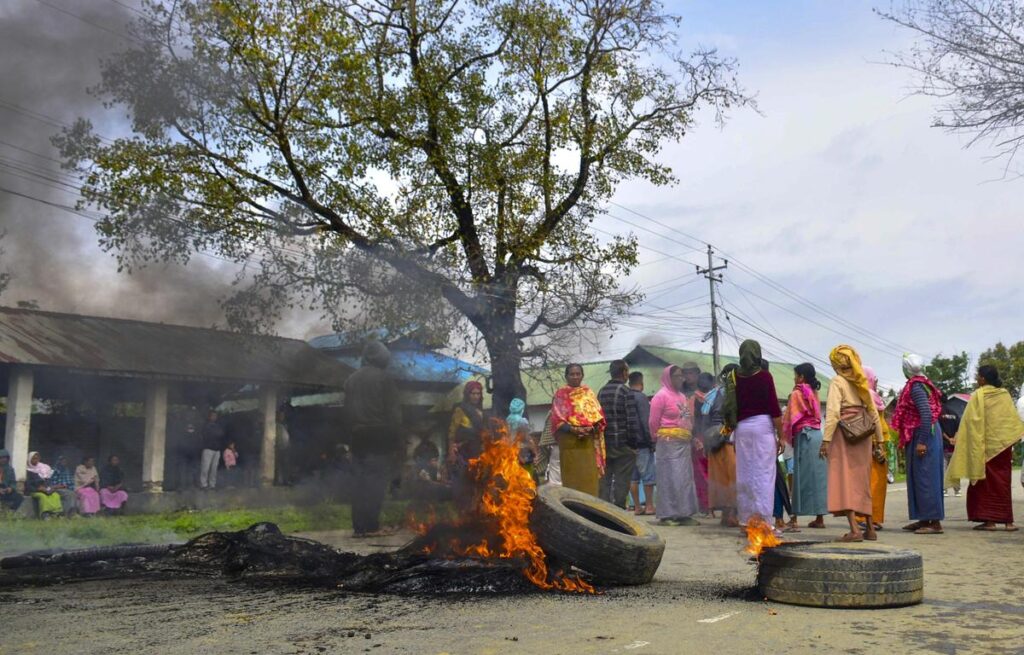
First, grief turns into anger across Manipur. A bomb attack in Bishnupur district kills two children. The incident shocks the valley. Soon after, protests spread rapidly.
As a result, normal life comes to a halt. Markets shut down. Schools and colleges close. Banks and offices stop work. Meanwhile, empty roads reflect rising fear. Residents stay indoors as security forces enforce strict curbs.
Soon, civil groups step in. The Coordinating Committee on Manipur Integrity leads a major protest in Imphal. Protesters gather in large numbers. They carry banners and placards. They demand accountability. They also call for the resignation of Chief Minister Yumnam Khemchand Singh and Home Minister Govindas Konthoujam.
However, tensions rise quickly. Police intervene as crowds push against restrictions. Authorities fire tear gas to disperse the gathering. They also block the rally from moving ahead. This action fuels more anger on the ground.
At the same time, protest leaders sharpen their criticism. COCOMI members blame the government for security failures. They argue that authorities failed to protect civilians. They also highlight recent incidents that deepen mistrust.
In particular, leaders point to a firing near a Central Reserve Police Force camp. They claim security personnel killed three young individuals. They describe this episode as a serious lapse. Consequently, public outrage grows stronger.
Beyond Imphal, unrest spreads further. In Kakching district, women-led groups join the protests. The Keirak Apunba Meira Paibi organizes a sit-in. Participants condemn the blast. They also question the use of force against civilians. This widens the scope of the agitation.
On the ground, fear mixes with frustration. Shopkeepers keep shutters down. Parents keep children at home. Transport services slow sharply. Every siren and patrol adds to the tension. Locals say uncertainty defines daily life.
Meanwhile, the government moves to contain the crisis. Chief Minister Khemchand Singh chairs a high-level security review. Senior officials join the meeting. Representatives from the Army and paramilitary forces also attend. The team evaluates the situation in detail.
Following this, authorities increase deployment across key districts. They enforce curfew in Imphal East, Imphal West, Bishnupur, Kakching, and Thoubal. They aim to prevent further violence. The government also reiterates its commitment to public safety.
However, the background reveals deeper issues. Manipur has faced recurring unrest over the past year. Ethnic tensions, security concerns, and political distrust have shaped the crisis. Each new incident adds pressure on an already fragile system.
Looking ahead, the situation remains tense. Protests continue to simmer. Security forces maintain a strong presence. Both sides hold firm positions. As a result, the state stands at a critical moment. Stability depends on swift action, clear accountability, and trust-building on the ground.