Faith on Trial: Sabarimala Case tests limits of Law and Religion
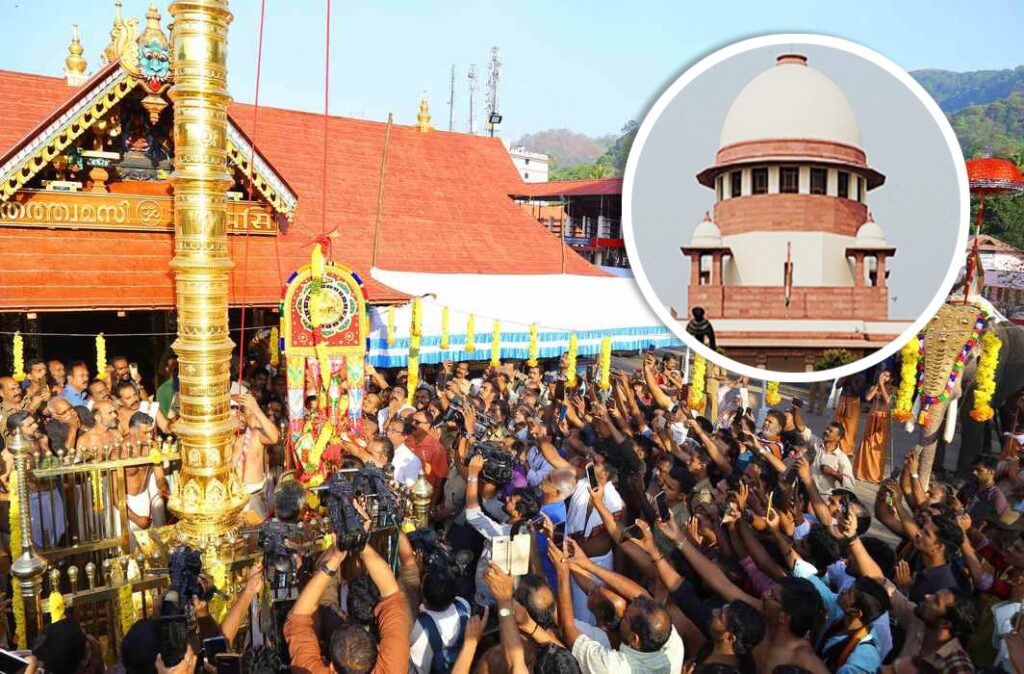
New Delhi – India’s top court steps into one of its most sensitive debates. A nine-judge bench of the Supreme Court of India, led by Chief Justice Surya Kant, begins final hearings on the Sabarimala review. The bench now examines whether constitutional rights can override long-held religious customs.
The courtroom sets the tone early. Judges raise seven key questions. They focus on equality, faith, and the idea of “essential religious practice.” They also test whether courts should enter deeply personal domains of belief.
At the foothills of Sabarimala Temple, uncertainty builds again. Devotees discuss the case in tea stalls and pilgrim shelters. Many recall the unrest of 2018. Others fear fresh friction if the court redraws boundaries.
Local traders prepare for both outcomes. “We just want peace and steady pilgrims,” says a shopkeeper near Pamba. Pilgrimage drives the local economy. Any disruption hits livelihoods fast.
The temple stands deep in the Western Ghats. It draws millions every year. Devotees worship Lord Ayyappa as a celibate deity. They follow a strict 41-day vratham before the trek. The practice shapes discipline and identity.
The shrine also reflects plural traditions. Pilgrims visit a mosque linked to Vavar before the climb. This ritual builds a rare bridge between communities. For decades, the journey has symbolised coexistence as much as devotion.
The current conflict did not emerge overnight. In 2006, the Travancore Devaswom Board ordered an astrological ritual after a series of mishaps. The exercise flagged ritual lapses and a controversial claim of a woman’s entry.
Soon after, legal action followed. The Indian Young Lawyers Association challenged the entry ban for women of menstruating age. The petition argued that the restriction violated equality and dignity.
In 2018, a Constitution bench delivered a split verdict. It allowed women of all ages to enter. The ruling triggered sharp protests across Kerala. In 2019, two women entered the temple under police protection. Their visit sparked statewide clashes and shutdowns.
The court then paused. It referred the matter to a larger bench. It also widened the scope to include similar disputes across religions.
The bench now goes beyond Sabarimala. It examines entry rights in mosques and dargahs. It reviews questions around Parsi women’s access to fire temples. It also considers practices within the Dawoodi Bohra community.
Each issue links back to one core tension. Can the Constitution reshape religious practice? Or should faith communities define their own rules?
The Union government has taken a clear stand. It backs the review petitions. It signals support for restoring earlier restrictions. Temple authorities also push for a community-led approach. They argue that courts should avoid redefining sacred traditions.
The judges aim to finish hearings by April-end. Their verdict could set a lasting precedent. It may define how India balances belief and rights in the years ahead.
On the ground, people wait. Pilgrims prepare for the next season. Activists plan their next steps. Lawyers sharpen arguments inside courtrooms.
The final ruling will not just decide who enters a temple. It will answer a deeper question. In a democracy, does faith guide the law—or does the law redraw faith?