
Bomb threat email triggers security scare at Delhi Assembly, metro station
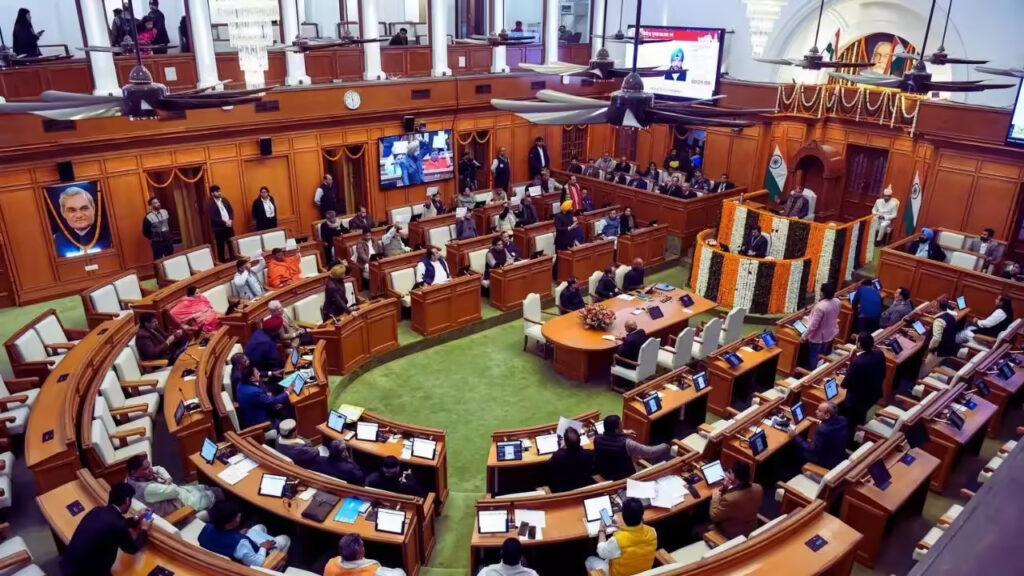
New Delhi – A fresh bomb threat has put the national capital on alert. On Tuesday, Delhi Assembly Speaker Vijender Gupta received an alarming email. The message warned of explosions inside the Assembly complex and at the nearby Vidhan Sabha Metro Station. As a result, authorities moved quickly and launched a full security response.
Soon after the alert, police teams rushed to the Assembly premises. They began a detailed search operation without delay. Security personnel scanned entry points, checked vehicles, and inspected the building thoroughly. At the same time, bomb disposal squads and dog units joined the effort. Officials aimed to rule out any real threat and ensure public safety.
Meanwhile, early visuals from the site showed heightened vigilance. Officers controlled movement around the complex. They also coordinated with metro authorities to monitor the nearby station. However, investigators did not find any suspicious object during the initial sweep. Even so, security agencies refused to take chances. They kept forces deployed and continued surveillance in and around the area.
In addition, the threat email raised concerns at the highest levels. Reports suggested that the message mentioned several senior leaders. These included Lieutenant Governor Taranjit Singh Sandhu, Prime Minister Narendra Modi, Home Minister Amit Shah, External Affairs Minister Subrahmanyam Jaishankar, Delhi Chief Minister Rekha Gupta, and minister Manjinder Singh Sirsa. However, officials have not confirmed these claims independently. Therefore, agencies have treated this part of the message with caution while continuing verification.
At the ground level, the situation remained under control. Police maintained strict access checks around the Assembly. They also increased patrolling in adjoining areas. Metro services continued as usual, but security staff stayed on high alert. Commuters noticed tighter checks at the station, which reflected the seriousness of the situation.
Furthermore, this incident fits into a troubling pattern. In recent months, Delhi has seen a rise in hoax bomb threats. Many of these warnings have targeted schools, banks, and public institutions. Each time, authorities have carried out evacuations and searches. Yet, most cases have turned out to be false alarms.
Earlier this month, several institutions faced similar threats. At least three banks received warning emails. These included branches of Axis Bank in Connaught Place and State Bank of India near AIIMS and in Shahdara. Soon after, security teams inspected these locations. They found no explosives, but the threats disrupted normal operations.
At the same time, multiple schools also reported alarming emails. These included Army Public School Delhi Cantt, Salwan Public School, Sardar Patel Vidyalaya, Mira Public School Janakpuri, Ramjas Public School, and Ramjas School Rajendra Nagar. Authorities evacuated students and staff as a precaution. Later, search teams cleared all campuses. They did not find any suspicious material.
Consequently, these repeated threats have created anxiety among residents. Parents, in particular, have raised concerns about student safety. Schools have responded by tightening entry protocols and running mock drills. Similarly, banks and public offices have reviewed their emergency response systems.
Security experts now stress the need for stronger digital tracking. They believe that many threat emails originate from anonymous or masked sources. Therefore, cyber units must trace the origin quickly. Officials have already stepped up efforts to track such messages. They aim to identify the senders and prevent further panic.
Moreover, authorities have urged the public to remain calm but alert. They advise citizens to report any suspicious activity immediately. At the same time, they warn against spreading unverified information on social media. False rumours can increase panic and complicate response efforts.
Back at the Assembly, officials continued monitoring the situation through the day. They coordinated across multiple agencies to maintain security. Although the immediate threat appeared non-existent, the alert level remained high. Investigators also began examining the email’s source and technical details.
In the broader context, Delhi’s experience reflects a global trend. Cities worldwide have seen a spike in hoax threats through digital channels. These incidents rarely involve real explosives, yet they strain security systems and disrupt daily life. Therefore, governments now focus on both physical security and cyber intelligence.
To conclude, Tuesday’s bomb threat once again tested Delhi’s preparedness. Authorities acted swiftly and followed standard protocols. They secured key locations and reassured the public. While the search yielded no danger, the incident highlighted an ongoing challenge. Repeated hoax threats demand constant vigilance, faster investigation, and stronger preventive measures.