Indian Official Rejects NGO-Based Criticism During Tense Norway Briefing
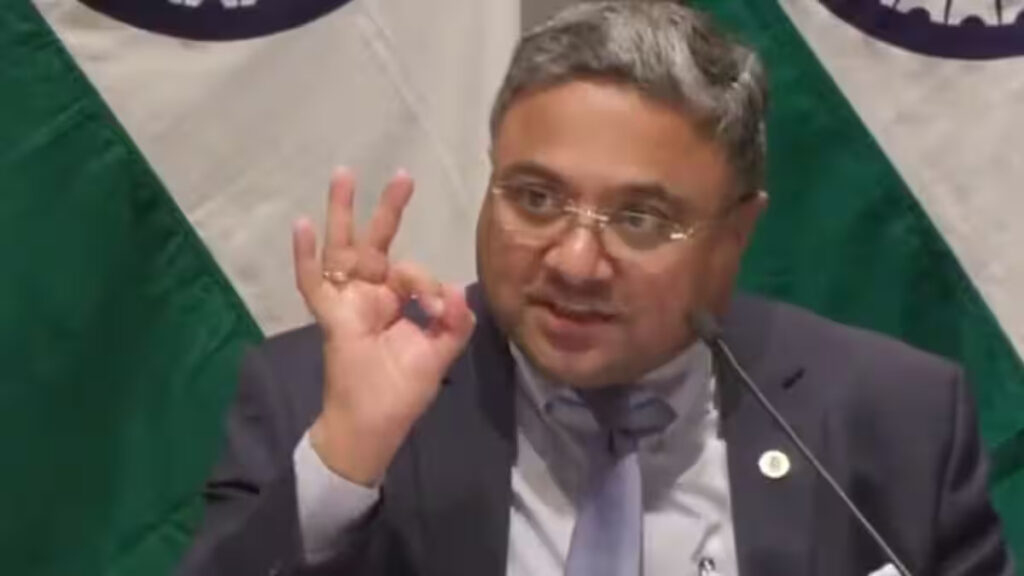
A tense moment unfolded during an official media briefing in Norway after a Norwegian journalist repeatedly questioned India’s human rights and press freedom record in front of senior diplomats accompanying Prime Minister Narendra Modi’s Europe visit. The exchange quickly turned into one of the most discussed moments of the trip, especially after a top Indian official openly criticised foreign rights narratives linked to India.
Ministry of External Affairs Secretary (West) Sibi George responded strongly after the reporter challenged India’s credibility on minority rights, media freedom and democratic values. As the questions continued, George defended India’s institutions and accused several international groups of judging the country through selective reporting rather than broader ground realities.
The interaction took place during an official press briefing held on Monday night in Norway. Diplomats present at the venue attempted to continue the briefing despite repeated interruptions from the journalist. At one point, the reporter briefly walked out of the room before later returning to the interaction.
George then used the opportunity to underline the scale of India’s democracy and media ecosystem. He said critics often overlooked the size and diversity of the country while making sweeping judgments. He pointed out that hundreds of television channels, newspapers and digital platforms operate daily across multiple Indian languages and political viewpoints.
According to officials present during the briefing, the diplomat stressed that India’s democratic structure allowed constant public scrutiny, open political criticism and regular electoral change. He argued that these features reflected the strength of constitutional rights rather than democratic decline.
George also pushed back against reports issued by certain international advocacy groups and NGOs. He suggested that many foreign observers formed opinions after reading limited reports without understanding India’s social complexity, regional diversity and institutional systems. His remarks drew attention because of the unusually direct tone used during an overseas diplomatic interaction.
The senior diplomat further highlighted India’s constitutional framework while responding to concerns linked to equality and civil liberties. He noted that India granted voting rights to women immediately after Independence in 1947. He contrasted that decision with several Western countries where women received voting rights decades later.
Officials travelling with the Indian delegation later described the exchange as a firm defence of India’s democratic credentials at a global platform. Supporters of the government praised the response on social media and said foreign criticism often ignored India’s electoral participation, judicial system and constitutional protections.
On the ground, reactions inside India reflected a familiar divide. Government supporters viewed the remarks as a necessary rebuttal against what they called one-sided international commentary. Critics, however, argued that tough questions from foreign journalists remained part of democratic accountability and should not trigger aggressive responses from public officials.
The confrontation also arrived at a time when India continues to face scrutiny from several international organisations over issues related to press freedom rankings, civil liberties and treatment of minorities. New Delhi has repeatedly rejected many of those reports and accused global watchdogs of bias and selective political interpretation.
Prime Minister Narendra Modi currently remains on a multi-nation Europe tour aimed at strengthening diplomatic, economic and strategic ties with European countries. Norway formed one of the key stops in that outreach effort, with bilateral discussions focusing on trade, technology cooperation and regional security.
However, the sharp media exchange ended up drawing almost equal attention online, turning a routine diplomatic briefing into a larger debate over how India responds to international criticism on democracy and rights issues.