West Bengal voter roll shake-up: 35–40% names dropped after SIR review, political heat rises
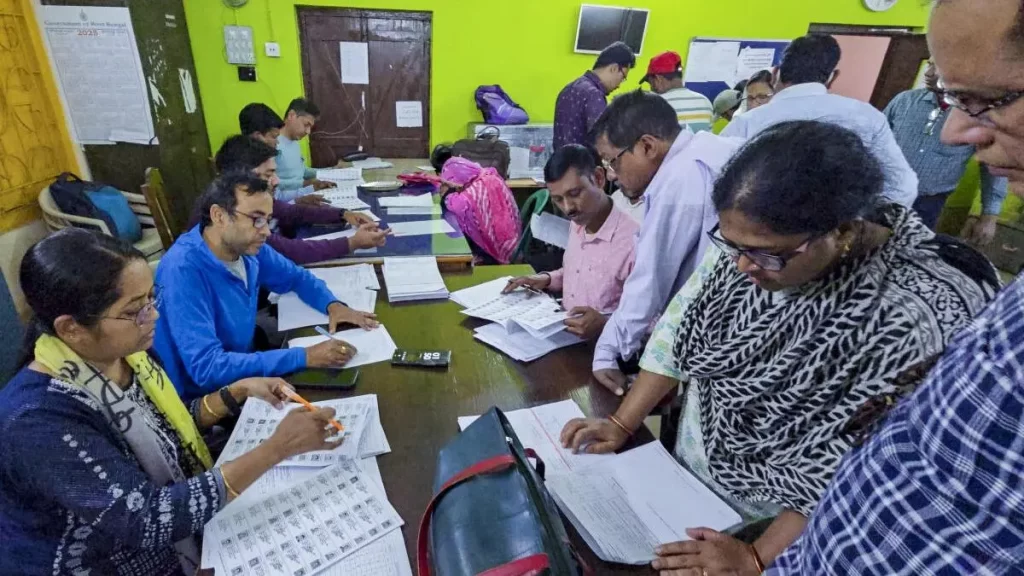
Kolkata witnessed a major electoral update this week. Officials confirmed that judicial officers reviewed millions of disputed voter entries under the Special Intensive Revision (SIR).
They processed nearly 3.2 million cases of “logical discrepancy.” As a result, they removed about 35% to 40% of these names from the electoral rolls.
Election authorities pushed the process to clean up voter data before upcoming polls. They aimed to identify duplicate or questionable entries and ensure accuracy.
Ground Angle: Confusion, Glitches, and Voter Anxiety
The rollout triggered confusion on the ground. Many voters rushed to check their names online. However, they faced technical issues.
For a brief period, the system showed almost every voter as “under adjudication.” This created panic across districts. People feared sudden deletion from voter lists.
Officials later clarified the situation. They said the system faced technical glitches. They also claimed a temporary cyber breach disrupted access.
Manoj Kumar Agarwal assured voters that the issue now stands resolved. He urged people to recheck their status on the updated portal.
Supplementary Lists Raise Fresh Questions
Authorities released the first supplementary list late Monday night. The timing added to the chaos.
Officials uploaded around one million names in this list. These entries had already received digital approval from judicial officers.
However, the Election Commission has not yet shared full data on rejected cases. This gap has raised fresh questions about transparency.
Officials now plan to release a second supplementary list soon. They have also approached the Calcutta High Court to allow daily publication of such lists.
Political Clash Intensifies Over Deletions
The issue quickly turned political. Chief Minister Mamata Banerjee raised strong concerns.
She said she personally checked the voter list and found her name marked “under adjudication.” She questioned the credibility of the process and demanded answers.
At the same time, she challenged the hacking claim. She asked whether anyone could actually breach such a sensitive system.
On the other side, BJP leader Suvendu Adhikari took a different stand. He claimed that millions of “fake voters” had been removed.
He argued that the clean-up would benefit his party in upcoming elections. He even projected a strong electoral outcome based on the revised rolls.
Background: What SIR Means for Voter Lists
The Special Intensive Revision aims to refine electoral rolls. Authorities use it to verify identities and remove inconsistencies.
In West Bengal, officials sent over six million claims for judicial review. By March 23, officers had already disposed of about 2.9 million cases.
This exercise followed an earlier revision. On February 28, authorities had already removed more than 6.18 million names from the final rolls.
Now, the fresh deletions add another layer to the clean-up. Together, these steps mark one of the largest voter list revisions in the state’s history.
Numbers Game: Competing Claims and Unclear Totals
Officials confirmed that 35–40% of adjudicated names faced deletion. However, political leaders offered different figures.
Some claimed that around 800,000 names vanished in the first supplementary list. Others pushed the number higher, linking it to alleged fake entries.
This gap between official silence and political claims has fueled debate. Voters now seek clarity on whether genuine names got removed.
What Lies Ahead
The Election Commission plans to speed up the process. It wants daily updates on supplementary lists. This move may bring more clarity in the coming days.
However, challenges remain. Authorities must ensure accuracy while avoiding panic. They must also maintain trust in the electoral system.
For voters, the immediate task stays simple. They need to verify their names and raise objections if needed.
Meanwhile, political parties continue to frame the narrative. One side calls it a clean-up drive. The other calls it a flawed exercise.
In the end, the credibility of the voter roll will shape the next election. And right now, that credibility stands under intense scrutiny.