Xi asks Trump to build stability, not rivalry, between US and China
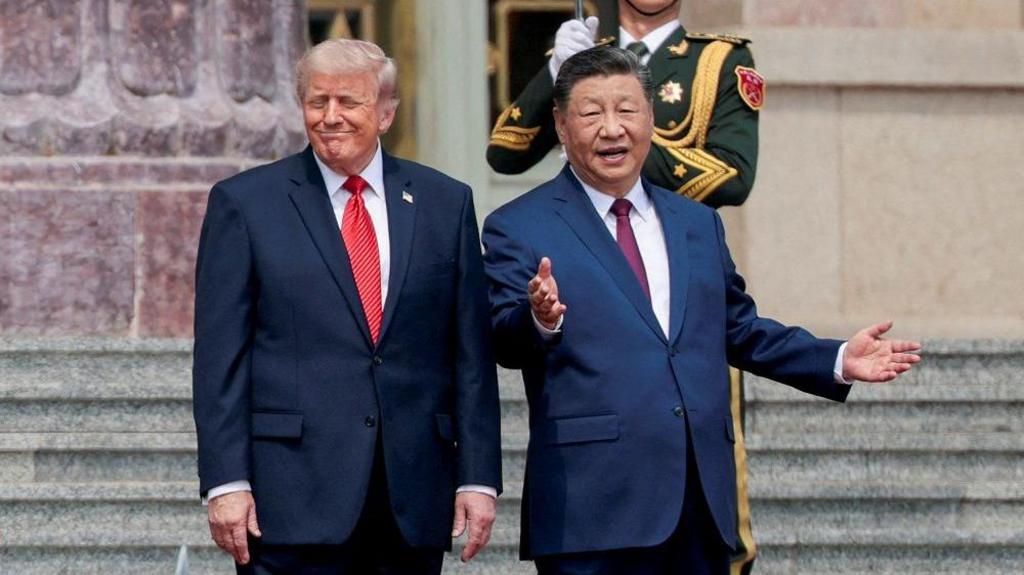
Chinese President Xi Jinping struck a calm but strategic tone on Thursday as he welcomed former US President Donald Trump to Beijing for their first formal meeting in nearly a decade. While cameras flashed inside the Great Hall of the People, Xi used the opening moments of the summit to send a broader message to Washington and the world: China wants cooperation, not confrontation.
Xi avoided sharp criticism. Instead, he framed the relationship between the United States and China as a test of global leadership at a time when wars, economic uncertainty and diplomatic tensions continue to shake several regions. He urged both countries to act with restraint and focus on long-term stability rather than political rivalry.
Standing beside Trump before senior officials from both sides, Xi asked whether the world’s two largest economies could work together to handle international challenges and create a more stable future. He also stressed that the decisions taken by Beijing and Washington would affect not only their own citizens but also the wider global order.
The carefully worded remarks reflected China’s current diplomatic strategy. Beijing now wants to project itself as a predictable power while many countries worry about rising geopolitical conflicts and economic disruptions. Chinese officials increasingly present stability as their biggest advantage in global politics.
Outside the venue, security remained tight across central Beijing. Convoys moved through cleared roads while journalists and residents gathered near restricted zones hoping to catch a glimpse of the visiting delegation. Chinese state media gave the meeting extensive coverage from early morning and highlighted themes of cooperation, trade and global responsibility.
Meanwhile, analysts viewed Xi’s comments as a subtle attempt to shape Trump’s approach toward China if he returns to office after the US election cycle. Trump often adopted a hard line against Beijing during his presidency through tariffs, technology restrictions and strong rhetoric on trade. However, Chinese leaders now appear eager to keep communication channels open despite years of tension between the two powers.
The meeting also comes at a sensitive moment for the global economy. Businesses across Asia, Europe and North America continue to watch US-China relations closely because supply chains, technology markets and financial systems remain deeply connected to both nations. Even small shifts in policy from either side can quickly influence international markets.
Xi therefore chose moderation instead of aggression. He presented partnership as a practical necessity rather than an idealistic goal. At the same time, he reminded both delegations that history would judge how major powers respond during periods of uncertainty.
Beijing appears determined to lower the temperature. Yet the deeper disagreements between Washington and Beijing over trade, security and influence still remain firmly in place.