Republic Day airspace curbs to disrupt Delhi flights for 6 days, thousands of passengers affected
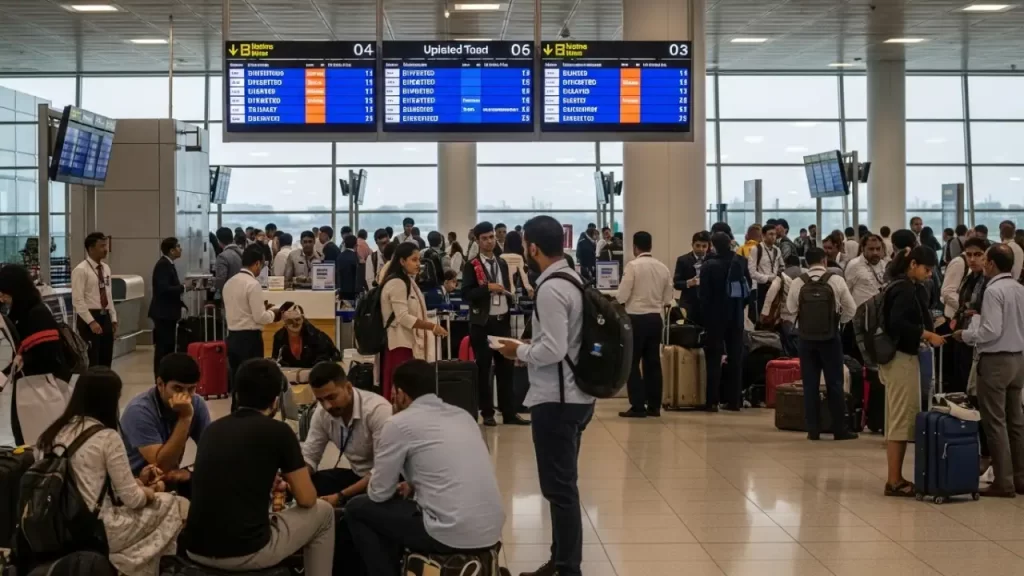
Delhi airport will face fresh disruption from January 21. This time, Republic Day security will drive the impact. After weeks of fog-related delays, passengers must now prepare for airspace restrictions.
On Tuesday, the government issued a NOTAM. The notice orders daily airspace closure over Delhi from 10:20 am to 12:45 pm. The restriction will run for six days, from January 21. Authorities will enforce the curbs for parade अभ्यास, dress rehearsal, and the main Republic Day event.
As a result, airlines must halt or shift operations for two hours and 25 minutes each day. This window covers a peak movement period. Therefore, the impact will spread fast across schedules.
According to aviation analytics firm Cirium, more than 600 flights will feel the impact. Many of these flights feed into Delhi’s busy afternoon departure bank. Passengers from across India land in Delhi to connect onward to Europe and other domestic destinations. Because of this, even short closures can trigger large ripple effects.
Meanwhile, airlines now face a race against time. The NOTAM came with just eight days’ notice. As a result, carriers must quickly adjust flight timings. They must also track misconnected passengers. In addition, they need to reroute travellers or offer refunds and changes. All of this adds heavy operational and financial strain.
The disruption will hit passengers daily. Cancellations will rise. Rescheduling will increase. Connections will break. Many travellers will face uncertainty, especially those with tight onward flights.
Authorities enforce the closure for security reasons. The Republic Day parade includes a major flypast. Fighter jets, transport aircraft, and helicopters take part. Security agencies also protect dignitaries along Kartavya Path. For these reasons, officials clear the airspace completely during the event window.
However, not every flight will cancel. Airlines may change timings instead. In some cases, carriers will move passengers to later flights. Yet this year, the challenge grows sharper. The closure window overlaps with winter fog patterns. On days with poor visibility, operations will shrink further. That combination could push systems to the edge.
Airports across India will also feel the strain. Aircraft rotations do not work in isolation. When one flight shifts, the next one moves too. A delay in Delhi can affect a flight that neither starts nor ends there. For passengers, this means sudden schedule changes far from the capital.
Airlines face limited flexibility. Major hubs like Mumbai already operate at full capacity. Delhi airport also runs close to its limits. Therefore, retiming flights remains difficult. The network lacks spare capacity to absorb repeated daily shutdowns.
Passengers now need to act early. Travellers flying to or from Delhi during the affected hours should update contact details. Airlines rely on accurate phone numbers and emails to share changes quickly. If a flight cancels, carriers usually offer rebooking or a full refund.
However, fares may rise sharply at short notice. Because of this, passengers may find alternate options more practical than fresh bookings. Flexibility will help reduce stress.
This episode also raises a larger question. The government aims to project Delhi as a global transfer hub. Yet last-minute airspace notices can weaken passenger confidence. Many travellers may rethink future connections through Delhi.
Republic Day falls on the same date every year. The airspace closure also follows a fixed pattern. Authorities could announce such curbs much earlier. Advance notice would help airlines plan better. It would also reduce disruption for passengers.
Safety remains essential. However, better planning can protect both security and convenience.