Leaked diplomatic cable revives claims of US role in Imran Khan’s removal
A leaked diplomatic document has once again pushed Pakistan’s political crisis into international focus. The classified cable, now circulating widely online, has revived former Prime Minister Imran Khan’s long-standing claim that foreign pressure played a role in his removal from office in 2022.
The document reportedly records a conversation between Pakistan’s former ambassador to Washington and senior US official Donald Lu shortly before Khan lost a no-confidence vote in parliament. The leak has triggered intense political debate in Pakistan, where Khan’s supporters see the cable as proof of outside interference, while his opponents continue to reject the allegation.
The controversy first erupted in 2022 when Khan accused the United States and domestic political rivals of working together to topple his government. At the time, Washington denied any involvement and dismissed the accusations as baseless. Opposition parties in Pakistan also argued that Khan lost power because of political instability, inflation and weakening alliances inside parliament.
Now, the leaked cable has reopened old wounds across the country.
In Islamabad, supporters of Khan’s Pakistan Tehreek-e-Insaf gathered outside party offices and demanded accountability. Several workers described the leak as a “vindication” of Khan’s earlier warnings. Social media platforms in Pakistan also saw a fresh wave of political arguments, hashtags and protests after details from the document surfaced online.
At tea stalls and markets in Rawalpindi and Lahore, conversations quickly shifted toward foreign influence, military power and Pakistan’s fragile democracy. Many citizens expressed frustration over repeated political instability that continues to affect inflation, jobs and investor confidence.
The cable reportedly includes remarks suggesting relations between Islamabad and Washington could improve if Khan lost the parliamentary challenge. One phrase from the reported conversation — “all will be forgiven” — has especially drawn public attention and fuelled speculation over diplomatic pressure behind the scenes.
Khan had often criticised US foreign policy during his time in office. He openly refused requests linked to American military operations after the withdrawal from Afghanistan. He also maintained closer engagement with Russia and China despite growing tensions between Washington and Moscow.
His visit to Moscow during the early phase of the Russia-Ukraine conflict further strained ties with Western countries. Pakistan later avoided directly condemning Russia at the United Nations, which deepened diplomatic friction with the United States and its allies.
The leaked report also places Pakistan’s military establishment under renewed scrutiny. According to the publication, senior military figures began engaging separately with Washington even before Khan lost power. The report claims military-backed political networks later aligned more closely with US strategic priorities after Khan’s exit from office.
Pakistan’s powerful military has historically shaped major political developments in the country. Therefore, any suggestion of coordination between foreign officials and military leadership carries major political consequences inside Pakistan.
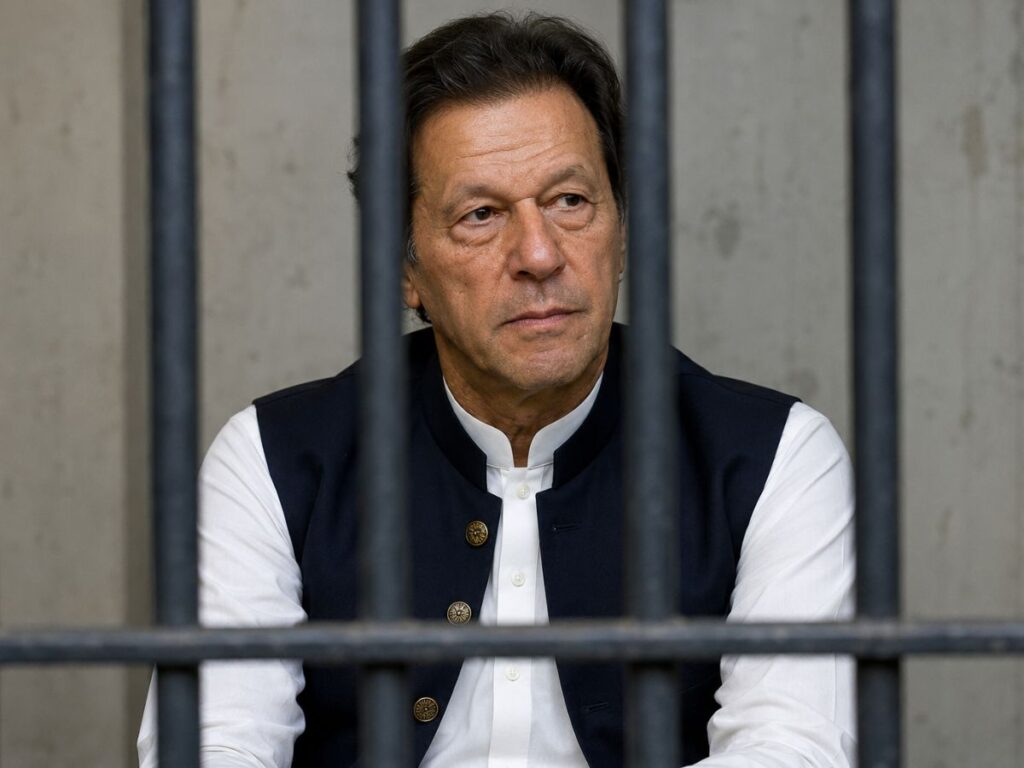
Meanwhile, Khan remains in jail following his conviction in a corruption case. Despite imprisonment and legal troubles, he continues to command strong support among large sections of the public, especially younger voters and urban middle-class groups.
Political analysts believe the latest leak may further deepen divisions between Khan’s supporters, opposition parties and the military establishment. At the same time, the controversy arrives during a sensitive phase in Pakistan’s foreign relations as Islamabad attempts to strengthen diplomatic ties with Gulf nations, China and the United States simultaneously.
For many Pakistanis, however, the issue now goes beyond one politician or one government. The leak has reignited a larger debate about sovereignty, foreign influence and the balance of power inside the country’s political system.