El Niño threat raises fears of India’s weakest monsoon in more than a decade
India may face its most challenging monsoon season in over ten years as weather experts warn that rainfall could fall well below normal levels in 2026. After two consecutive years of healthy rains that supported agriculture, replenished reservoirs, and strengthened rural incomes, fresh forecasts now point to a far less favorable season.
The southwest monsoon, which arrives between June and September and supplies most of the country’s annual rainfall, plays a critical role in India’s economy. Farmers, water managers, and policymakers closely track every forecast because millions of livelihoods depend on the seasonal rains. This year, however, climate signals from the Pacific Ocean have sparked concern across the country.
Meteorologists now expect rainfall to remain below the long-term average. More importantly, experts see a significantly higher risk of a deficient monsoon, a situation that often brings drought-like conditions, water shortages, and agricultural losses. Such a scenario could mark the weakest monsoon performance since 2015, when several regions struggled with severe water stress and poor crop output.
At the center of the concern stands El Niño, a climate pattern that develops over the tropical Pacific Ocean. Under normal conditions, ocean temperatures and atmospheric circulation help support rainfall across South Asia. During an El Niño event, warmer-than-usual Pacific waters alter global weather systems and weaken the conditions that typically drive India’s monsoon.
As temperatures rise across the Pacific, moisture-rich air currents shift away from the Indian subcontinent. Consequently, fewer rain-bearing systems reach the country. Historical records show that many El Niño years have produced below-average rainfall across India, making the phenomenon one of the most closely watched climate indicators.
Current forecasts suggest that El Niño could strengthen as the monsoon season progresses. That timing worries agricultural experts because September remains a crucial month for standing kharif crops. Farmers rely on consistent rainfall during this period as crops such as paddy, pulses, and oilseeds approach critical growth stages. Any prolonged dry spell could reduce yields and affect farm incomes.
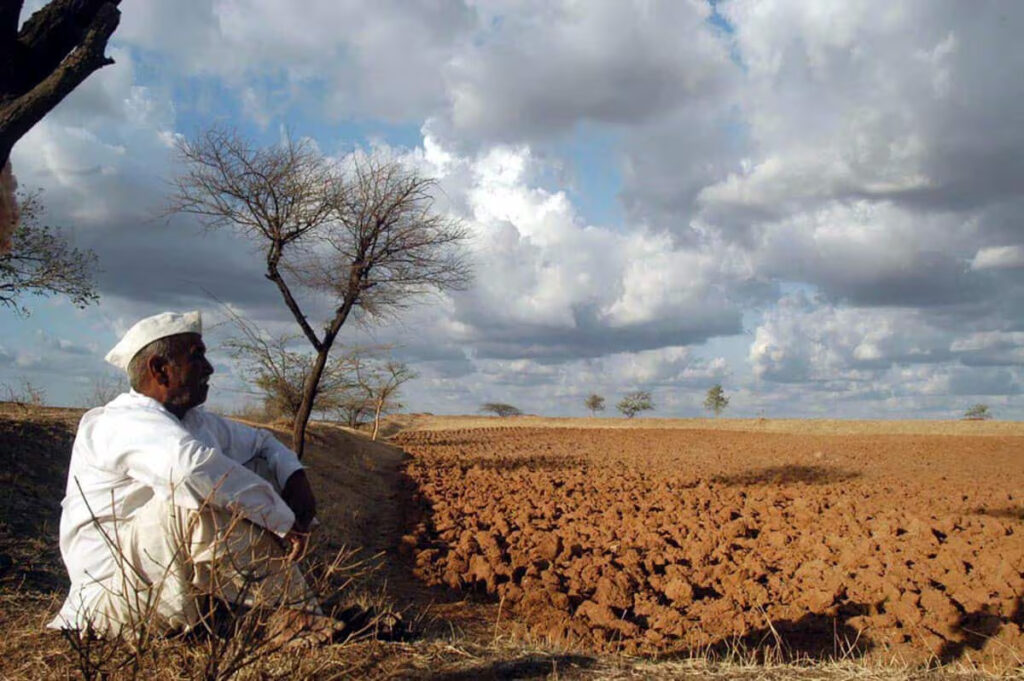
On the ground, many farmers already prepare for uncertainty. Large sections of India’s agricultural landscape still depend heavily on rainfall rather than irrigation networks. In several rural districts, growers have few alternatives when seasonal rains fail to arrive on time or in sufficient quantity.
Another factor adds to the concern. Climate scientists do not expect significant support from the Indian Ocean this year. In some past seasons, favorable ocean conditions near India helped offset the drying impact of El Niño. Current projections, however, indicate neutral conditions, offering little relief if Pacific warming intensifies.
Regional forecasts also paint a mixed picture. While parts of northeastern India may receive rainfall close to normal levels, several areas in central, northwestern, and southern India could experience lower-than-average precipitation. These regions include important agricultural belts that contribute substantially to national food production.
The potential impact extends beyond farms. Lower crop output often pushes food prices higher, affecting household budgets across urban and rural India alike. Since food items account for a large share of consumer spending, any disruption to agricultural production can quickly influence inflation trends.
Despite the concerns, experts caution against assuming a drought is inevitable. Weather systems remain complex, and several factors influence monsoon performance throughout the season. Past records show that some El Niño years still delivered adequate rainfall due to favorable regional conditions.
For now, attention remains fixed on the skies. Farmers continue sowing preparations, water authorities monitor reservoir levels, and weather agencies track developments in the Pacific. The coming weeks will reveal whether the monsoon can overcome mounting climate pressures or whether India must brace for one of its driest rainy seasons in recent memory.