Delhi Rolls Out Tough Anti-Pollution Curbs as AQI Slips to ‘Severe’
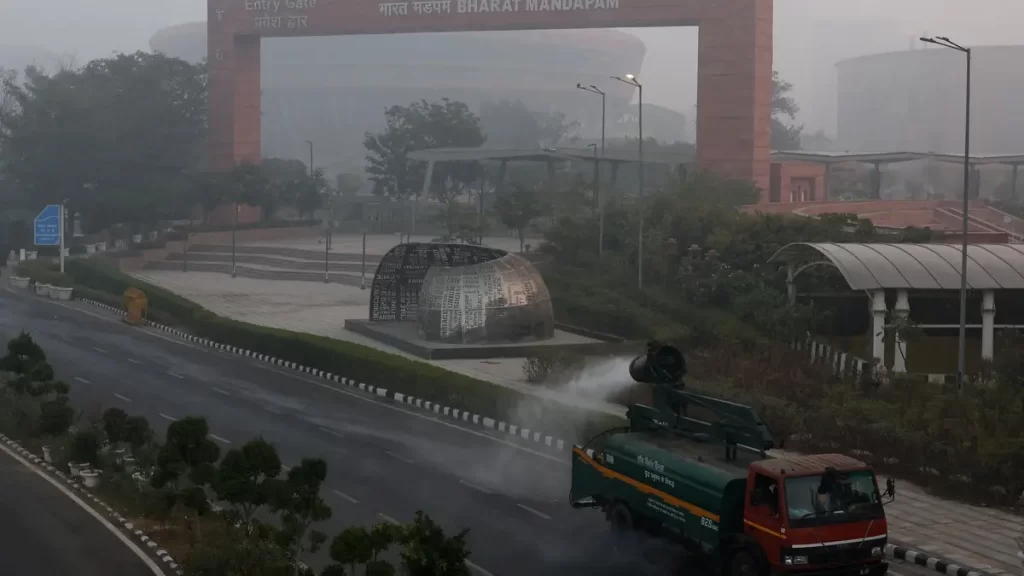
New Delhi – Delhi woke up to tighter anti-pollution rules on Thursday as toxic air pushed the city into the ‘severe’ AQI zone. The Delhi government activated fresh curbs to cut emissions fast and limit public exposure. These steps come alongside GRAP-4 restrictions already in force after three straight days of severe air quality.
Earlier this week, pollution levels spiked due to calm winds, falling temperatures, and persistent emissions from traffic and construction. As smog thickened, pressure mounted on authorities to act decisively. The Commission for Air Quality Management (CAQM) enforced GRAP-4, the toughest stage of the emergency plan. Meanwhile, the Supreme Court sharply criticised existing measures and demanded a stronger, coordinated response.
Against this backdrop, the Delhi government announced additional steps that directly affect offices, vehicles, and fuel access.
Offices shift to hybrid work mode
First, the government moved to reduce daily commuting. Labour Minister Kapil Mishra announced a mandatory hybrid work-from-home model for both government and private offices. From Thursday, offices must ensure that no more than 50 percent of staff attend work physically. The rest must work from home.
This rule aims to immediately cut traffic volume and vehicular emissions. However, the government carved out clear exceptions. Emergency and frontline workers remain outside its scope. This group includes hospital staff, healthcare services, fire services, pollution-control departments, transport workers, and sanitation staff. Daily-wage labourers also remain exempt.
Officials warned that non-compliance will invite strict action. The government hopes that fewer office commutes will ease congestion and reduce exhaust fumes during peak hours.
Non-BS-VI vehicles face entry ban
Next, the government tightened vehicle entry norms. Environment Minister Manjinder Singh Sirsa announced that non-BS-VI vehicles registered outside Delhi cannot enter the city when GRAP-4 remains active. The final order confirms that this ban applies strictly during Stage 4.
To enforce the rule, Delhi Traffic Police and transport department teams have taken positions at city borders and petrol pumps. They will check registration details and emission standards in real time.
At the same time, the Supreme Court withdrew interim protection for BS-III and older vehicles. This move cleared the way for stricter enforcement against high-emission vehicles within the capital.
The government also banned trucks carrying construction materials from entering Delhi. Sirsa urged commuters from neighbouring states to use BS-VI compliant vehicles only. He said these steps will help reduce dust and diesel emissions, two major pollution sources.
PUC certificate becomes mandatory for fuel
Finally, the government linked fuel access to emission compliance. From Thursday, petrol pumps will deny fuel to vehicles without a valid Pollution Under Control (PUC) certificate. This rule targets poorly maintained vehicles that emit excessive smoke.
A PUC certificate follows a basic emission test at authorised centres across Delhi. The test costs ₹60 for two- and three-wheelers and ₹80 for four-wheelers. Diesel vehicles pay ₹100. For BS-IV and BS-VI vehicles, the certificate remains valid for 12 months.
Together, these measures signal a tougher stance as Delhi battles yet another winter pollution crisis. Authorities say enforcement, public cooperation, and favourable weather will decide how quickly the city can breathe easier.