
Delhi Murder: Former domestic worker tries to open locker using victim’s finger
A quiet South Delhi neighbourhood wakes up to a brutal crime. Then, investigators piece together a chilling sequence inside a familiar home. As a result, police expose how trust, access, and routine turned into a deadly advantage.
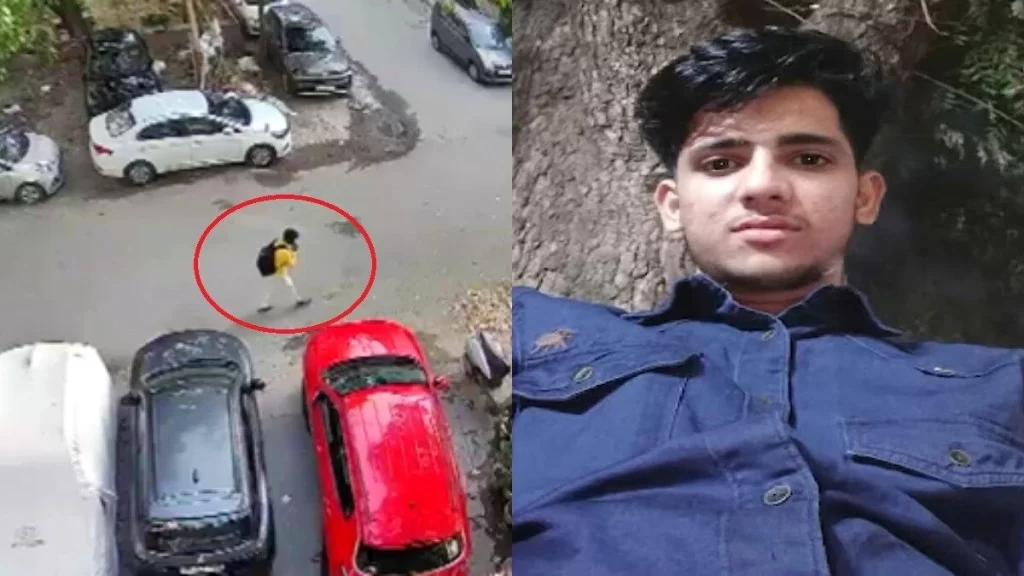
The crime unfolds in Amar Colony, where a 22-year-old engineering graduate prepares for civil services. She studies early in a rooftop room while her parents leave for the gym. Meanwhile, 23-year-old Rahul Meena enters the residential complex around 6:28 am. CCTV captures him in a yellow shirt and black pants. He moves without hesitation. He knows the layout. He understands the routine.
Investigators say Meena once worked at the house for months. Therefore, he knows entry points, locks, and blind spots. He bypasses four layers of security and heads straight to the rooftop study. There, he confronts the victim. He tries to overpower her. She resists. Then, he attacks her with a lamp and another heavy object. She collapses after severe injuries.
After the assault, he drags her down the stairs. He attempts to unlock a biometric locker using her fingerprints. However, the system fails to read the print. Police believe blood on her hand or loss of circulation blocks the scan. Then, he shifts his plan. He breaks open the locker with a screwdriver. He collects cash and jewellery and packs them in a bag from the house.
Next, he changes his clothes at the scene. He notices blood stains on his own clothes. So, he wears the victim’s brother’s trousers and slippers. Soon after, CCTV shows him leaving around 7:22 am with a black backpack. He briefly stops near a park and then disappears.
At 8 am, the victim’s parents return. They find the house ransacked. They see their daughter lying in blood. The scene shocks the neighbourhood. Residents gather outside. Police teams arrive quickly and seal the area.
During interrogation, Meena reveals details of the crime. Police also examine a possible earlier offence. They probe claims that he assaulted a woman in Alwar before travelling to Delhi. Investigators link his movement across locations to build a timeline.
Meanwhile, police uncover his background. He worked at the victim’s home for nearly eight months. The family removed him weeks earlier over financial misconduct. He allegedly took money for errands but failed to pay दुकानदारs and bought goods on credit. This past access plays a crucial role in the crime.
To track him, Delhi Police forms nearly 15 teams. Officers scan CCTV footage from streets and nearby roads. They reconstruct his escape route step by step. Eventually, they identify an autorickshaw he used. After questioning the driver, they trace him to a hotel in Dwarka. There, police arrest him.
On the ground, the case raises serious questions about domestic worker verification and urban security. Residents in similar colonies express concern over insider threats. Many now review security systems and access control within homes.
The victim’s story adds another layer. She excelled in academics and ranked among top students in school. She had just begun an early morning study routine a day before the incident. That routine, investigators say, unknowingly exposed her to risk.
Now, police register charges of murder, rape, and robbery. They await medical reports to confirm all aspects of the assault. As the investigation continues, the case highlights a stark reality. Familiar faces can exploit trust, and routine can become a vulnerability in urban life.