Delhi air turns toxic for 3rd day as AQI stays severe, smog cuts visibility and disrupts flights
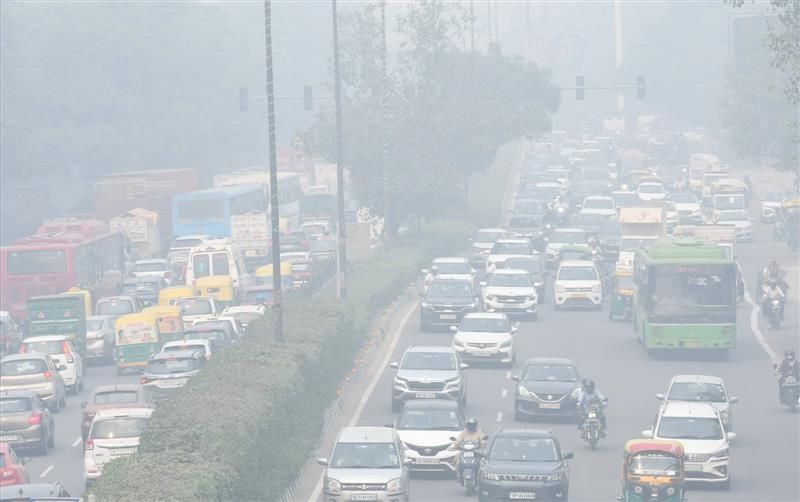
New Delhi – Delhi entered another hazardous winter morning on Monday. Thick smog blanketed the city. Air quality stayed in the “severe” zone for the third straight day. As a result, residents faced choking air, while flights braced for delays.
At 6 am, the citywide Air Quality Index stood at 457. Data from Delhi’s air quality warning system showed sharp visibility loss across several areas. Consequently, daily life slowed as haze reduced sightlines even at short distances.
Meanwhile, the smog spread uniformly across the capital. Roads, residential colonies, and commercial hubs all appeared under a grey veil. Because of this, authorities warned of health risks, especially for children, the elderly, and those with breathing issues.
Over the weekend, pollution levels worsened steadily. By Monday morning, at least four monitoring stations hit the maximum AQI reading of 500. These stations included Ashok Vihar, Jahangirpuri, Rohini, and Wazirpur. Since the AQI scale stops at 500, actual pollution exposure likely exceeded the recorded level.
In addition, nearly the entire city slipped into extreme categories. On Sunday, 38 of Delhi’s 39 active monitoring stations reported “severe” or “severe-plus” air at different hours. Notably, 13 stations stayed above an AQI of 490 for several hours, showing how persistent the episode has become.
For context, pollution authorities classify AQI levels between 101 and 200 as “moderate.” Levels between 201 and 300 count as “poor.” Readings from 301 to 400 fall under “very poor.” Any value above 400 signals “severe” air. Once AQI crosses 450, agencies treat it as “severe-plus,” a stage that demands emergency measures.
At the same time, visibility dropped sharply at Indira Gandhi International Airport. Around 7 am, visibility fell to nearly 50 metres, according to weather officials. Earlier, the weather department had issued a dense fog warning for morning and forenoon hours. Following this, Delhi airport issued advisories, asking passengers to expect delays and possible disruptions.
Across the city, visuals reflected the crisis clearly. Footage from several locations showed heavy smog over Barakhamba Road, Akshardham, and Bawana. These scenes confirmed that the pollution episode extended far beyond isolated pockets.
Data from monitoring stations reinforced the concern. Out of 38 active stations, 24 crossed the “severe-plus” threshold of 450. Five stations reached the maximum level of 500. Besides the worst-hit areas, Anand Vihar recorded 493. Other hotspots included DTU at 482, Punjabi Bagh and Okhla Phase-2 at 480 each, Patparganj at 476, and Delhi University’s North Campus at 473.
So why has pollution tightened its grip? Experts largely blame weather conditions. Weak winds have persisted since Friday. Because of this, pollutants failed to disperse. Moreover, Delhi’s basin-like geography traps cold air near the ground during winter. This layer holds pollutants close to breathing level.
Additionally, the absence of rain has removed any natural cleansing effect. While vehicles and construction dust continue to add emissions, experts note one change. Stubble burning no longer drives the crisis, as farm fire incidents have dropped sharply this season.
For now, relief looks unlikely. With calm winds and stable weather, Delhi residents prepare for another day of toxic air, poor visibility, and rising health concerns.