Bihar at a turning point: Race for next CM intensifies ahead of Nitish Kumar’s exit
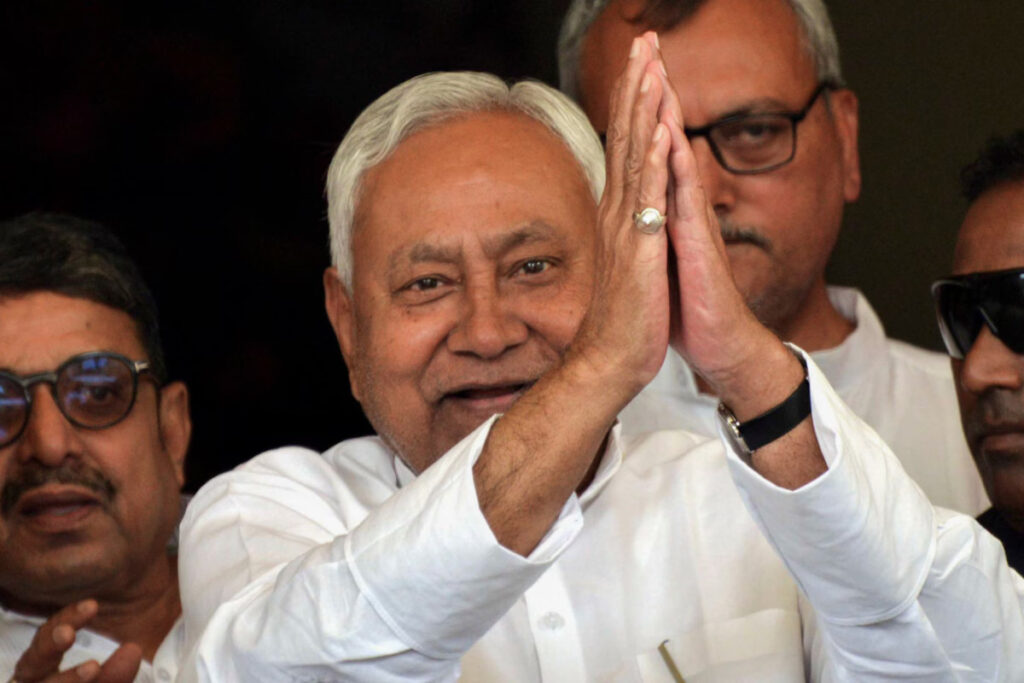
Patna enters a decisive moment. Chief Minister Nitish Kumar prepares to step down after his final cabinet meeting on April 14. The political temperature rises as parties rush to lock numbers and shape the next government.
First, the outgoing leader schedules his last cabinet session at 11 am. Soon after, he plans to meet the Governor and submit his resignation. Meanwhile, officials prepare for a formal announcement. At the same time, activity increases at his official residence on Circular Road. These visible moves signal a clear transition.
Next, attention shifts to the power equation. The Bharatiya Janata Party, which leads the alliance numerically, now moves to claim the top post. In the 2025 Assembly polls, the party wins 89 seats and emerges as the single-largest force. Its ally, Janata Dal (United), follows with 85 seats. Together, the NDA crosses the majority mark comfortably and sidelines the opposition bloc.
However, senior leaders avoid public statements. A key voice from Delhi confirms that the next chief minister will come from the BJP but refuses to reveal a name. The leadership places the final decision with Narendra Modi and Amit Shah. This centralised approach reflects the party’s pattern in recent state transitions.
Meanwhile, suspense builds around potential candidates. Deputy Chief Minister Samrat Choudhary leads the race. He commands strong support among backward caste groups, especially the Kushwaha community. His administrative experience and current home portfolio strengthen his case.
At the same time, Nityanand Rai remains a serious contender. He brings organisational depth and electoral experience from Hajipur. Alongside him, Dilip Kumar Jaiswal stays in the mix with his legislative background and past leadership role in the state unit.
Even so, the BJP often introduces surprise names. Therefore, party insiders keep all options open. This uncertainty keeps political circles on edge.
On the other hand, JD(U) leaders maintain silence but push internal interests. Reports suggest growing support for Nishant Kumar as a deputy chief minister candidate. His recent political entry adds a dynastic layer to the transition. This move could help the party retain influence within the alliance despite losing the top post.
Simultaneously, groundwork intensifies in Patna. Both BJP and JD(U) instruct their MLAs to arrive in the capital. Closed-door meetings begin to shape the final outcome. The BJP appoints Shivraj Singh Chouhan as central observer to oversee the process. This step signals urgency and high stakes.
On the ground, party workers gather outside offices and residences. They exchange updates, speculate on names, and prepare for celebrations. Security tightens near key locations as media crews line up for breaking developments. The city senses a leadership shift in real time.
Looking ahead, the timeline appears tight. The BJP may announce its leader on the same day as the resignation. Soon after, the NDA legislature party will endorse the choice. The alliance will then approach the Governor to stake claim. If plans hold, the new chief minister could take oath on April 15.
In the background, Bihar’s politics enters a new phase. For nearly two decades, Nitish Kumar defined governance and coalition strategy in the state. Now, the BJP prepares to take direct control. This shift could reset caste equations, policy direction, and alliance dynamics.
As the clock ticks, one question dominates: who will lead Bihar next? The answer now depends on a final call from the top—and the next 48 hours will decide it.