6 Indians dead in West Asia conflict, India steps up evacuation and safety efforts
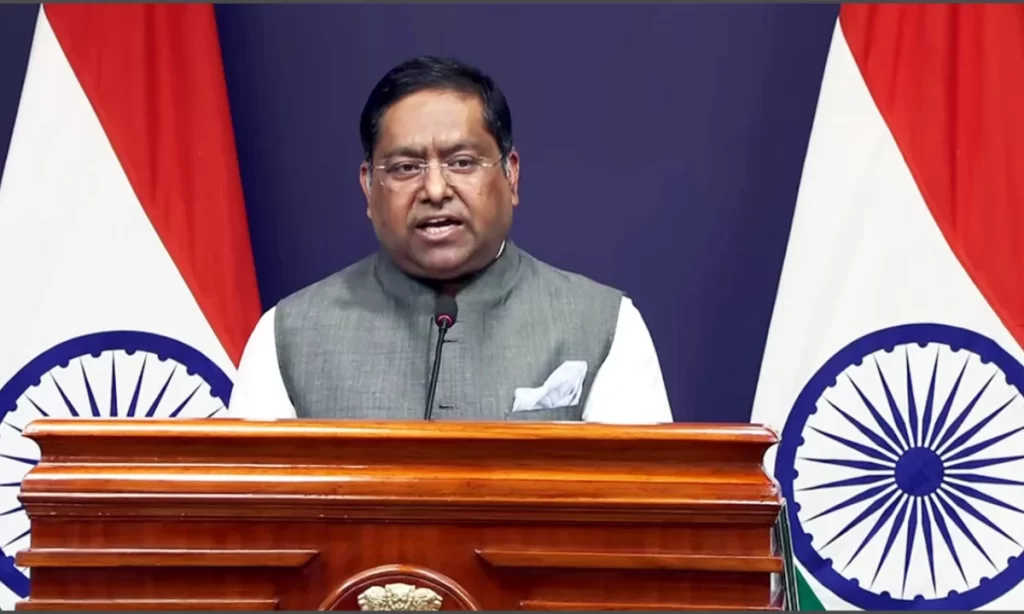
The Ministry of External Affairs shared a key update on Friday. Officials confirmed that an Indian national died in missile and drone strikes in Riyadh. The incident took place on March 18 and marked the first reported Indian death in Saudi Arabia during the current conflict.
Next, senior official Aseem Mahajan addressed the media. He expressed condolences to the victim’s family. He also said the Indian embassy has contacted the family and started coordination with local authorities. Officials aim to bring the body back to India at the earliest.
Moreover, early inputs linked the incident to missile and drone strikes launched amid rising tensions involving Iran. Authorities continue to gather more details about the attack.
Meanwhile, the overall death toll among Indian nationals has reached six. Earlier, two Indians died in an हमला on an industrial site in Oman on February 13. In addition, three Indian seafarers lost their lives in separate attacks on commercial vessels in regional waters.
At the same time, officials reported one Indian citizen missing. This development has added to concerns among families and authorities alike.
Furthermore, several Indians have suffered injuries in multiple incidents. Reports confirmed casualties in United Arab Emirates, Oman, Iraq, and Saudi Arabia. These include workers in industrial zones and crew members on ships.
As a result, Indian missions have increased medical and emergency support. They continue to monitor local developments closely and assist affected citizens.
In response, the Indian government has strengthened its outreach. Officials have engaged with leadership across West Asia to ensure the safety of Indian nationals. Around 10 million Indians live and work in the region, making the situation highly sensitive.
Additionally, the government has accelerated evacuation efforts. Since the conflict escalated on February 28, nearly 300,000 Indians have returned home. Authorities have used both commercial and special flight arrangements to manage the large-scale movement.
At the same time, airlines have expanded operations. Carriers in the UAE operated around 90 flights to India in a single day. Flights also continued from Oman and Saudi Arabia.
Meanwhile, Qatar partially reopened its airspace. This step allowed Qatar Airways to run special flights. Similarly, Jazeera Airways launched a non-scheduled service from Saudi Arabia to India.
On the ground, the situation remains complex. Several countries continue to keep their airspace closed. Therefore, Indian officials have arranged alternative routes for stranded citizens.
For instance, teams helped Indians in Kuwait, Bahrain, and Iraq cross into Saudi Arabia to catch flights. Likewise, Indians in Israel moved to Jordan through land borders.
In another effort, citizens in Iran crossed into Armenia and Azerbaijan to board flights home. These coordinated moves have helped thousands avoid high-risk zones.
In addition, authorities have focused on maritime workers. Fifteen Indian crew members from an oil tanker near Basra are set to return via Saudi Arabia. Officials are also working to repatriate the body of a seafarer who died in the same incident.
Moreover, a group of 24 seafarers recently returned to India from Oman. They included crew from multiple vessels affected by regional tensions.
The current crisis began intensifying in late February. Since then, repeated missile and drone attacks have disrupted daily life and trade routes. West Asia remains a key hub for energy and employment, especially for Indian workers.
Millions of Indians contribute to sectors such as construction, shipping, and oil services. Therefore, any instability in the region directly affects Indian households and the broader economy.
In conclusion, India faces a growing challenge as the conflict continues. The loss of six citizens highlights the risks on the ground. However, the government has moved quickly to respond, expand evacuations, and support those in danger.
Now, the focus remains clear. Authorities aim to bring every Indian to safety while closely tracking developments across West Asia.