
Rupee crashes to record low as oil surge and Iran tensions shake markets
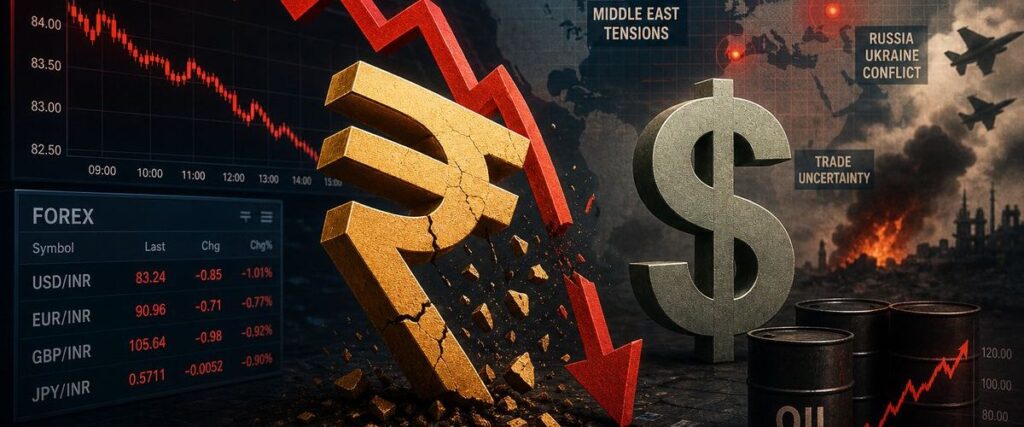
India’s currency market faced fresh turbulence on Tuesday after the rupee slipped to a historic low of 95.58 against the US dollar. Rising crude oil prices, fears around West Asia and heavy pressure on foreign exchange reserves pushed the currency deeper into the red.
The latest fall came only a day after the rupee posted its sharpest single-day decline in more than a month. Dealers across Mumbai’s forex market said panic buying of dollars by importers and continued foreign fund withdrawals accelerated the slide during early trade.
Currency traders pointed directly at crude oil prices. Brent crude has climbed sharply in recent weeks as tensions linked to Iran and the Gulf region continue to unsettle global markets. Since India imports more than 85 percent of its crude oil needs, every jump in oil prices quickly increases pressure on the rupee.
At fuel stations and transport hubs, the concern has already started showing on the ground. Truck operators in Delhi and Mumbai said freight companies now fear another rise in diesel prices if crude remains elevated. Small manufacturers and transport contractors also worry that a weaker rupee could raise the cost of imported machinery parts, chemicals and electronics.
In several wholesale markets, traders have begun discussing possible price increases in the coming weeks. Import-heavy businesses now expect higher costs for edible oils, industrial materials and consumer goods if the rupee fails to stabilise soon.
Meanwhile, global developments continue to add uncertainty. Fresh concerns emerged after reports suggested the fragile ceasefire involving Iran could weaken further. Statements from US President Donald Trump added to market anxiety after he reportedly described the April ceasefire arrangement as unstable. Investors now fear prolonged disruption in the Gulf region, which remains critical for global oil supplies.
The Reserve Bank of India has started responding aggressively to the volatility. Forex dealers believe the central bank entered the market multiple times in recent sessions through state-run banks to slow the rupee’s fall. Traders noticed large dollar sales during trading hours, which they linked to RBI intervention.
Apart from direct intervention, the central bank has also tightened some forex market rules and encouraged measures that may reduce dollar demand from oil importers. However, analysts say those steps may only slow the pressure instead of reversing the trend completely.
Foreign investors have also continued pulling money out of Indian equities and debt markets. That trend has further weakened sentiment in financial markets. Benchmark stock indices witnessed sharp declines earlier this week as investors reacted to rising oil prices and fears of imported inflation.
Economists now warn that a prolonged weak rupee could affect household budgets across the country. Higher crude prices often increase transportation costs first. Then prices of food items, consumer goods and services usually follow. Airlines, logistics companies and manufacturing sectors may also face rising operational expenses.
Financial experts say India’s current account deficit could widen further if oil prices remain high for a longer period. That may increase pressure on government finances and complicate inflation management ahead of the festive season.
In business districts across major cities, market participants now watch three key developments closely — crude oil movement, geopolitical signals from West Asia and the RBI’s next intervention strategy.
The rupee’s record fall has turned into more than just a currency story. It has become a wider warning sign for inflation, imports and economic stability at a time when global uncertainty continues to rise.