
India warns against escalation after drone attack near UAE’s Barakah plant
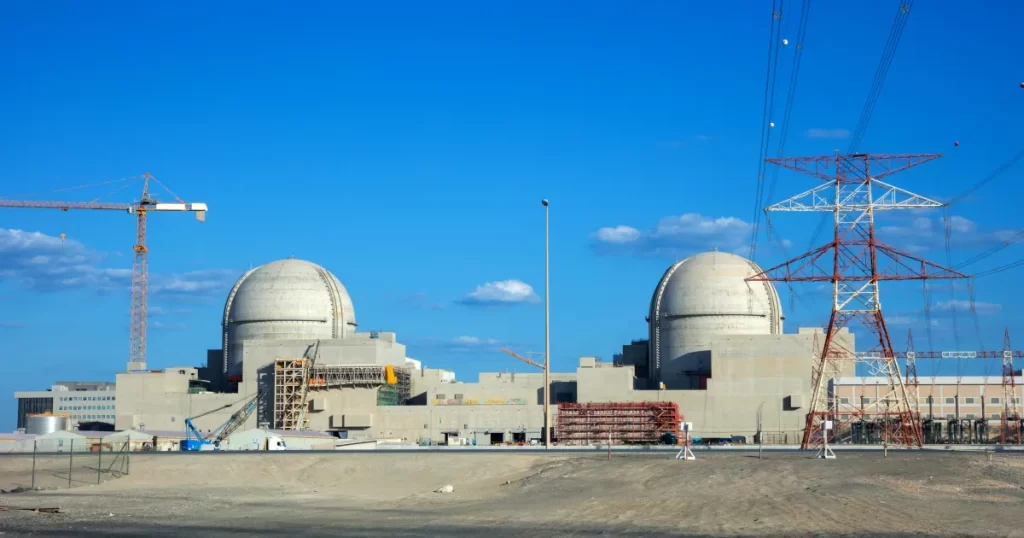
India on Sunday voiced strong concern after a drone strike sparked a fire near the Barakah Nuclear Power Plant in the United Arab Emirates. New Delhi described the incident as a serious escalation and urged all sides to avoid further confrontation in an already tense region.
In a sharply worded statement, the Ministry of External Affairs said attacks near sensitive nuclear infrastructure posed a grave risk to regional stability. At the same time, India called for restraint and pushed for diplomacy instead of military retaliation.
The incident unfolded in Abu Dhabi’s Al Dhafra region, where authorities reported a fire near an electrical generator outside the Barakah plant’s protected inner zone. Emergency teams quickly moved to the site and brought the flames under control. Officials later confirmed that radiation levels remained normal and no injuries occurred.
Even so, the attack rattled residents living near the area. Workers in nearby commercial zones described a sudden rise in security checks and restricted movement after the strike. Some residents said they heard emergency sirens and noticed helicopters circling overhead through the evening.
Local shopkeepers in Al Dhafra said conversations quickly shifted from daily business to fears about regional instability. Many people expressed concern over the possibility of attacks targeting critical infrastructure in the Gulf.
Meanwhile, UAE authorities launched an investigation to trace the origin of the drones. Officials said the country reserved the right to respond against any group or network involved in the attack. A senior adviser to the UAE leadership called the strike a dangerous provocation regardless of whether direct actors or proxy groups carried it out.
The UAE defence ministry later announced that security forces intercepted two additional drones before they reached their intended targets. Officials added that the drones approached from the western border, although authorities avoided naming any country or organisation linked to the operation.
The strike immediately triggered diplomatic reactions across the region. Saudi Arabia strongly condemned the incident and described it as a direct threat to regional peace. Riyadh also revealed that its defence systems intercepted three drones that crossed through Iraqi airspace. Saudi officials warned that the kingdom would take firm operational measures against any threat to its sovereignty.
International concern also grew rapidly after the incident. Rafael Grossi, who heads the International Atomic Energy Agency, said military activity near nuclear facilities could create catastrophic consequences. He urged all parties to avoid actions that could endanger civilian infrastructure.
The Barakah Nuclear Power Plant holds major strategic importance for the UAE. The facility serves as the Arab world’s first commercial nuclear energy project and plays a key role in the country’s long-term energy plans. Therefore, any security breach near the site carries both political and economic implications.
India’s response also reflects its wider interests in Gulf stability. Millions of Indian citizens live and work across the UAE and neighbouring countries. In addition, India maintains deep trade, energy and security partnerships with Gulf nations. Any prolonged escalation in the region could affect oil supply routes, shipping networks and economic activity.
Diplomatic observers believe the latest drone incident highlights the growing use of unmanned attacks in regional conflicts. Over the past few years, armed groups and rival states have increasingly relied on drones to target airports, oil sites and military facilities across West Asia.
For now, authorities in the UAE continue to tighten security around strategic installations. However, the latest strike has once again exposed how quickly regional tensions can spill across borders and place critical infrastructure at risk.