Bengal enters political transition as Governor dissolves assembly, Mamata era pauses
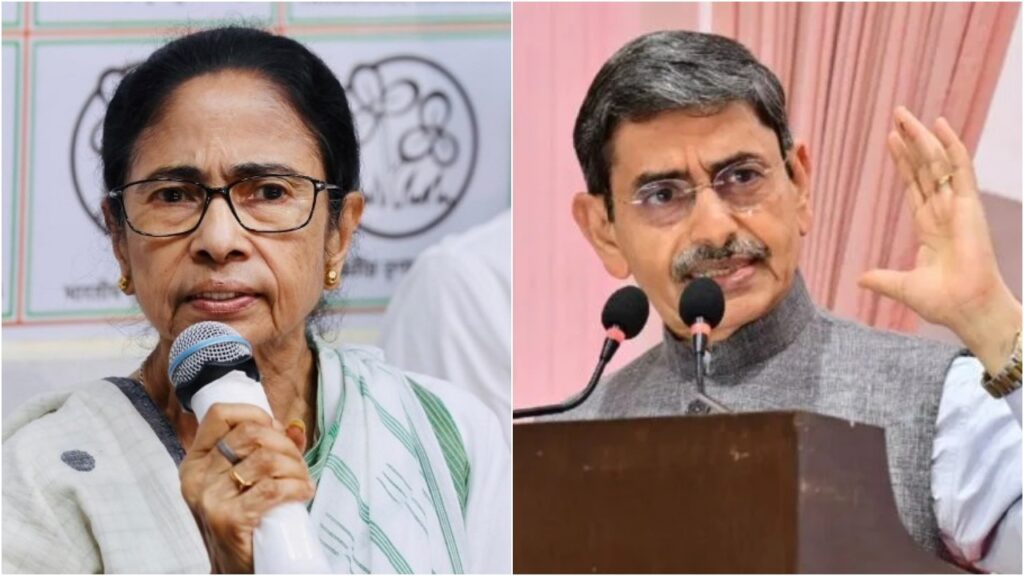
Political uncertainty gripped West Bengal on Wednesday after Governor R. N. Ravi dissolved the state Assembly and formally ended the government led by Mamata Banerjee. The move came a day after the tenure of the outgoing Assembly ended and pushed the state into an interim constitutional phase.
In an official notification, the Governor invoked Article 174(2)(b) of the Constitution and announced the dissolution of the Legislative Assembly with immediate effect from May 7, 2026. As a result, Banerjee no longer holds the office of Chief Minister, bringing a dramatic pause to the Trinamool Congress era in Bengal politics.
The development followed days of political confrontation after election results reshaped the power balance in the state. While the Bharatiya Janata Party emerged with a breakthrough performance, the Trinamool Congress refused to accept the outcome quietly. Banerjee repeatedly questioned the credibility of the electoral process and accused rivals of manipulating votes through electronic voting machines and alleged booth-level irregularities.
However, constitutional experts maintained that a government cannot continue once the Assembly term ends without proving majority support in a newly constituted House. Former bureaucrat and ex-Rajya Sabha MP Jawhar Sircar said the Governor would oversee interim arrangements until a new Chief Minister takes oath.
Meanwhile, tension continued across several districts as political workers from rival camps clashed after the results. Security agencies increased deployment in sensitive pockets, especially in northern and suburban belts around Kolkata and Madhyamgram. Residents in many areas reported fear, uncertainty and sporadic violence through the week.
On the ground, shopkeepers and commuters expressed concern over law and order rather than political slogans. In several market areas, people discussed rising tension and uncertainty over the next administration. Local residents said continuous clashes between party workers disrupted daily business and transport movement in pockets affected by post-poll unrest.
The political violence also turned deadly. At least five people reportedly lost their lives after the election results. Among them was Chandranath Rath, an aide linked to senior BJP leader Suvendu Adhikari. Attackers shot Rath at close range in Madhyamgram, further intensifying the political atmosphere in the state.
Even so, the BJP has not yet announced its Chief Ministerial candidate. Party legislators will meet on Thursday afternoon to elect the leader of the legislative party. That meeting may decide who leads the next government in Bengal after one of the most fiercely contested elections in recent state history.
The constitutional debate around Article 174 also moved into public discussion after the Governor’s decision. The provision grants Governors authority to prorogue or dissolve a Legislative Assembly. Under clause (2)(b), the Governor can dissolve the House, which clears the path for formation of a new government or fresh elections if required.
Bengal stands at a political crossroads. The Assembly no longer exists, the outgoing government has stepped aside, and rival parties continue to battle for narrative control. While one side celebrates a historic electoral shift, the other alleges democratic betrayal. As political negotiations continue behind closed doors, people across the state now wait for clarity, stability and the announcement of Bengal’s next Chief Minister.