Rijiju claims Tharoor remark signals Congress ‘anti-women’ stand
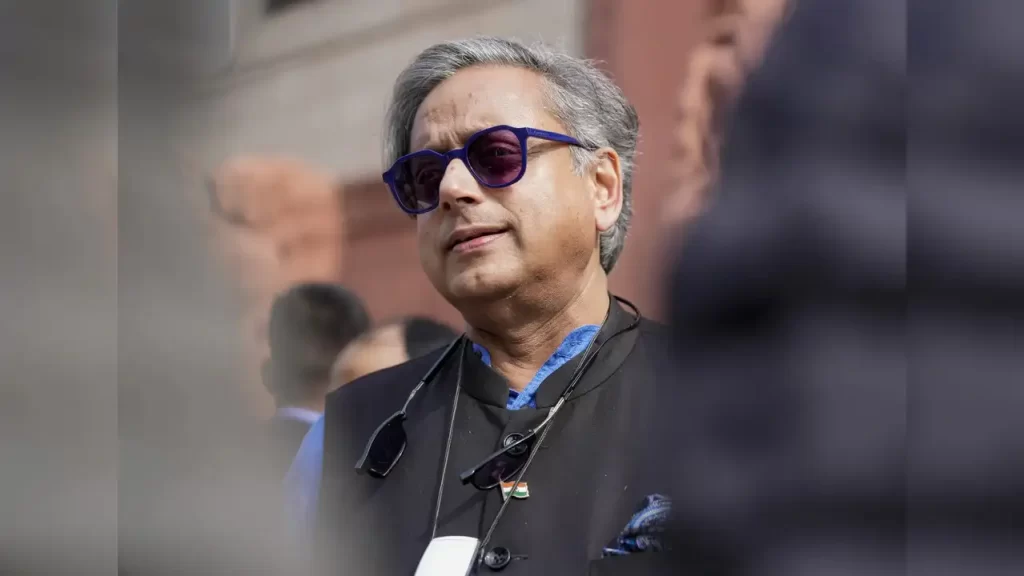
Soon after Parliament wrapped up its session, a private exchange between Shashi Tharoor and Kiren Rijiju spilled into the public arena. Then, it quickly turned into a sharp political flashpoint. As a result, the debate over women’s representation returned to centre stage.
Speaking to ANI, Rijiju claimed that Tharoor “in a way admitted” that the Indian National Congress holds an anti-women stance. He described a brief conversation inside Parliament. According to Rijiju, Tharoor said women may view the Congress as anti-women, yet they would not see him personally in that light. Rijiju said he agreed with the personal distinction but pressed the political point. He argued that the remark indirectly reflected the party’s position.
Meanwhile, Tharoor has not issued a detailed public response to this specific claim. However, the comment has already fueled a wider political narrative. On one side, the Bharatiya Janata Party has amplified Rijiju’s statement. On the other side, Congress leaders continue to defend their record on gender issues.
Earlier, the BJP had intensified its criticism after a key vote in the Lok Sabha. The party accused the Opposition of blocking a measure linked to women’s political representation. Rijiju argued that the Congress celebrated the Bill’s failure. He claimed that such actions would draw strong reactions from women voters across the country.
At the heart of the dispute lies the proposed expansion of legislative seats under a constitutional amendment plan. The Bill sought to increase Lok Sabha seats from 543 to as many as 816. It aimed to align this expansion with the implementation of 33 per cent reservation for women. The proposal also included similar adjustments in state assemblies. The government linked the move to a future delimitation exercise based on population data.
However, the Opposition raised strong objections. Congress leaders and their allies demanded immediate implementation of women’s reservation without increasing seats. They argued that the proposed delimitation could reshape electoral boundaries in ways that favour the ruling party. They also flagged concerns from southern states. These states, they said, could lose representation despite better population control efforts.
On the ground, the issue has stirred mixed reactions. In Delhi’s political circles, party workers from both sides have stepped up outreach among women voters. BJP supporters frame the Bill as a long-delayed reform that the Opposition blocked. Congress workers counter this narrative. They highlight past welfare schemes and accuse the government of politicising the issue.
Political analysts see a deeper strategy behind the rhetoric. The BJP aims to consolidate support among women voters ahead of future elections. At the same time, Congress seeks to reposition itself as a defender of federal balance and electoral fairness. The clash, therefore, extends beyond one remark or one Bill.
As the debate continues, both parties push competing narratives. Rijiju stands by his interpretation of Tharoor’s comment. Congress leaders reject the broader allegation. In the end, the issue of women’s representation remains unresolved, while political messaging around it grows sharper.