Bengal Phase 1 sees 41% turnout by 11 am, clash erupts in Murshidabad
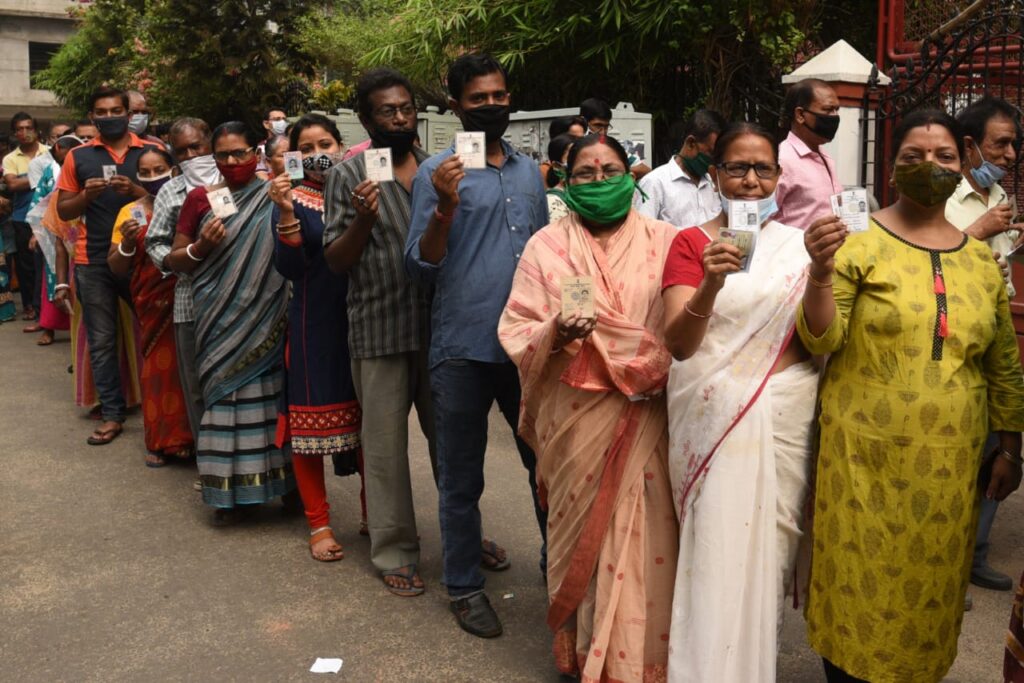
Voters turn out in large numbers across West Bengal. Then, tension breaks out in Murshidabad after a blast injures several people. As a result, polling continues amid tight security and rising political heat.
Voting begins at 7 am across 152 constituencies in 16 districts. By 11 am, turnout touches 41.11 percent, according to the Election Commission of India. On the ground, long queues form outside booths in rural belts and towns. Women and elderly voters arrive early, while first-time voters show steady participation.
However, the day takes a sharp turn in Nowda, Murshidabad. A crude bomb explodes and injures several people. Soon after, supporters of the ruling party and the All India United Democratic Front-backed group clash near the site. Humayun Kabir reaches the spot and openly confronts rival workers. He accuses the Trinamool Congress of wrongdoing, escalating tensions further.
Police step in quickly. They push back crowds and try to restore order. When clashes intensify, personnel use mild force to disperse groups. Officials later say they control the situation and prevent further escalation. Security presence increases across sensitive booths after the incident.
Meanwhile, reports of EVM glitches surface from a few polling stations. Officials address technical issues and resume voting without major delay. Despite disruptions, polling continues across most areas without interruption.
In Nandigram, Suvendu Adhikari casts his vote and speaks to reporters. He expresses confidence about the outcome and calls for peaceful polling. He also claims that removal of fake voters will impact results. His remarks add to the ongoing political narrative around voter lists.
At the national level, Narendra Modi urges higher participation. He calls on women and youth to vote in large numbers. His appeal comes as both major parties push for maximum turnout in a tightly contested phase.
The background to this election remains intense. The ruling Trinamool Congress, led by Mamata Banerjee, seeks another term. On the other side, the BJP aims to unseat the government and expand its footprint. Over the past weeks, both sides run aggressive campaigns. Amit Shah targets the state government over infiltration and governance issues. In response, TMC leaders counterattack and accuse the BJP of divisive politics.
A key issue shapes voter sentiment this time. The Special Intensive Revision of electoral rolls triggers debate across districts. Parties argue over large-scale deletions and voter eligibility. On the ground, some voters raise concerns about missing names, while others focus on local issues like jobs, roads, and welfare delivery.
Key constituencies also draw attention. Bhabanipur, Kharagpur Sadar, Murshidabad, and Baharampur witness close contests with prominent candidates in the fray. Each seat carries symbolic and political weight as parties test their strength.
The first phase reflects both enthusiasm and tension. Strong turnout signals active voter engagement. At the same time, isolated violence and clashes highlight underlying friction. As polling continues till evening, authorities remain on alert to ensure a smooth process in the remaining hours.