Amit Shah maps endgame on naxalism in 90-minute Lok Sabha offensive
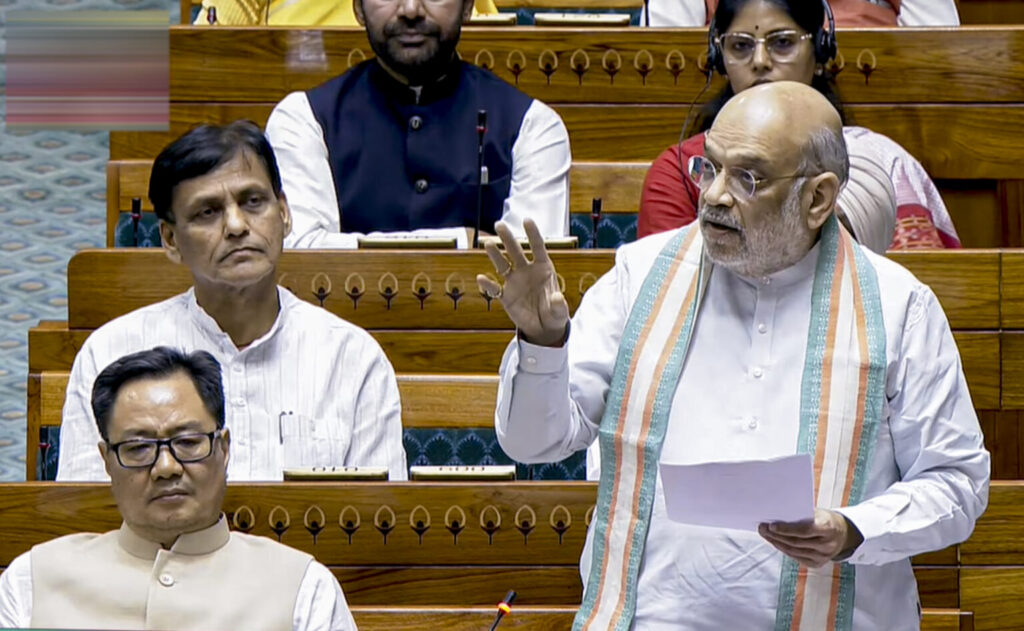
New Delhi – Home Minister Amit Shah turned a quiet evening in the Lok Sabha into a high-voltage political moment on Monday. He declared India free from Naxalism and backed his claim with a sharp, structured speech. He built his case step by step. He mixed data, history, and direct attacks. As a result, he controlled the narrative inside the House.
Shah entered the House around 4 pm. He chose silence first. He listened. He observed. He tracked every argument from the Opposition. Meanwhile, several Opposition leaders stayed away. Rahul Gandhi, Priyanka Gandhi Vadra, and Dimple Yadav did not appear. Their absence created a visible gap. On the other side, Shah stayed alert. He watched every speaker closely.
Soon, his pen started moving. He wrote notes. He marked key points. He prepared counters. This preparation signaled intent. He did not react instantly. Instead, he planned a detailed reply.
As discussions moved forward, BJP MP Nishikant Dubey shifted the tone. He shared a personal loss linked to Naxal violence. His words brought emotion into the debate. At the same time, tensions rose. Congress leader Deepender Hooda challenged him. Both sides exchanged sharp remarks. The House turned restless.
Then actor-MP Kangana Ranaut stepped in. She attacked Congress leadership. She credited Prime Minister Narendra Modi for policy shifts. Her remarks triggered protests. Opposition MPs shouted slogans. Yet she stayed firm and completed her speech.
During this phase, Shah stayed engaged. He signaled Dubey. He asked for notes. He refined his arguments. These small moments revealed a larger strategy in motion.
At 6:04 pm, Shah rose to speak. Instantly, the House shifted focus. He began with history. He targeted former Prime Minister Indira Gandhi. He accused past governments of enabling Naxal ideology. This claim sparked protests. Still, Shah pushed forward.
He then flipped a long-standing argument. He said Naxalism caused poverty, not the other way around. With this line, he challenged the Opposition’s narrative directly. He asked tough questions. He pointed at ideological support. As a result, tensions escalated again.
Soon, exchanges grew sharper. Leaders like Hanuman Beniwal interrupted. Shah responded without pause. He warned against armed rebellion. He stressed that the government would act firmly.
Midway, Shah shifted tone. He introduced data. He cited timelines. He spoke about policy steps since 2019. He outlined rehabilitation efforts. He highlighted a target to eliminate Naxalism by March 2026. These details strengthened his claim.
He also criticized sections of discourse. He said many narratives favored Naxals over victims. Through this, he aimed to reshape public perception. He framed the issue as both a security and moral challenge.
From a ground perspective, states like Chhattisgarh remain central to this issue. Security forces have intensified operations in recent years. Infrastructure projects have expanded. Villages now see more roads, schools, and communication links. These changes support the government’s claim of progress.
At the same time, critics question the “Naxal-free” claim. They point to pockets of resistance. They demand more transparency. However, Shah’s speech aimed to send a strong political signal ahead of future debates.
Shah spoke for nearly 90 minutes. He moved from silence to dominance. He combined preparation with aggression. He used both facts and rhetoric. By the end, slogans filled the House. Yet the direction of the debate had already changed.
In one evening, Shah did more than respond. He set the tone. He projected confidence. He framed the fight against Naxalism as nearly complete. Whether the claim holds on the ground or not, his message reached far beyond the House.