Supreme Court grants pension relief to women SSC officers, flags policy gaps
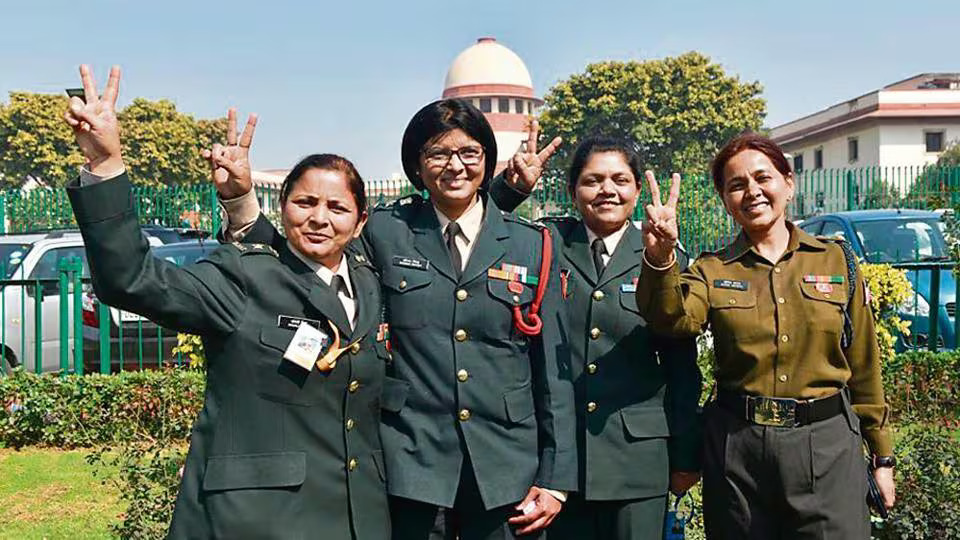
New Delhi – In a landmark move, the Supreme Court of India has delivered major relief to women officers in the armed forces. The court has ruled that women serving under the Short Service Commission in the Army, Navy and Air Force will receive pension benefits even after early release. This decision directly impacts officers who completed 14 years of service but could not secure a permanent role.
To begin with, the court addressed a long-standing gap in service rules. At present, officers must complete 20 years to qualify for pension. However, many women officers exited service before reaching that mark. They had applied for Permanent Commission but did not receive approval. As a result, they lost pension benefits despite years of service.
Now, the court has stepped in to correct this imbalance. It has ruled that such officers will count as having completed 20 years of qualifying service. Consequently, they will receive pension under a one-time relief measure. The bench used its special constitutional powers to ensure fairness in this case.
Importantly, the ruling covers officers across all three services. It includes those who appeared before selection boards between 2019 and 2021. Even those who faced rejection or ineligibility during this period will receive the benefit. However, the court has made one limitation clear. Officers will not receive arrears of pay for the past period.
At the same time, the judgment offers clarity for officers who still serve. The court has stated that they can receive Permanent Commission. However, they must meet certain conditions. These include performance grading, medical fitness, vigilance clearance and discipline standards. Thus, the court has balanced relief with institutional requirements.
The case reached the court through multiple petitions. Among the petitioners stood Wing Commander Sucheta Edan and other women officers from the Indian Air Force. They challenged policy changes introduced in 2019. According to them, these changes created unfair barriers in the path to Permanent Commission.
As the hearing progressed, the court examined the policy in detail. It found key flaws in how authorities implemented the 2019 Human Resource Policy. Specifically, the court noted that officials introduced new performance benchmarks without giving officers enough time to prepare. This sudden shift, the bench observed, affected their chances during selection.
Further, the court reviewed the timeline of events. Many of these officers joined service in 2007 under the Short Service Commission. Later, they faced selection boards in 2019, 2020 and 2021. During this period, authorities applied new criteria for the first time. However, officers had no prior notice or transition period. As a result, they could not align their performance with the revised standards.
In addition, the court raised concerns about the “service length criteria.” Authorities used this factor during evaluation. However, the bench found this approach problematic. It stated that service length alone should not indicate unsuitability. Officers deserved a fair and structured opportunity to grow and qualify for career advancement.
From the ground perspective, the verdict carries deep significance. Many women officers had served in challenging conditions. They handled operational duties, training assignments and administrative roles. Despite this, they faced uncertainty at the end of their tenure. The lack of pension added to their concerns about financial stability after service.
Now, the ruling offers both recognition and security. It acknowledges their contribution while ensuring post-retirement support. For many officers, this decision closes a long chapter of legal struggle. It also restores confidence among serving personnel who look for equal opportunities in career progression.
At a broader level, the judgment reflects a shift in institutional thinking. Over the years, courts have pushed for greater inclusion of women in the armed forces. This case continues that trend. It reinforces the idea that policy changes must align with fairness and transparency.
Moreover, the decision sends a message to policymakers. It highlights the need for gradual implementation of new rules. Authorities must provide adequate time and clarity when they introduce new standards. Otherwise, such changes risk creating unintended disadvantages.
Finally, the court has set a clear timeline for implementation. Pension benefits under this ruling will take effect from November 1, 2025. Calculations will consider the deemed completion of 20 years of service. While officers will not receive back pay, the assured pension marks a crucial step forward.
In conclusion, the verdict stands as a significant milestone. It corrects a structural gap, supports women officers, and strengthens trust in the system. At the same time, it urges institutions to adopt fairer practices in the future.