Airstrike on Kabul medical facility leaves 400 dead, 250 hurt: Taliban
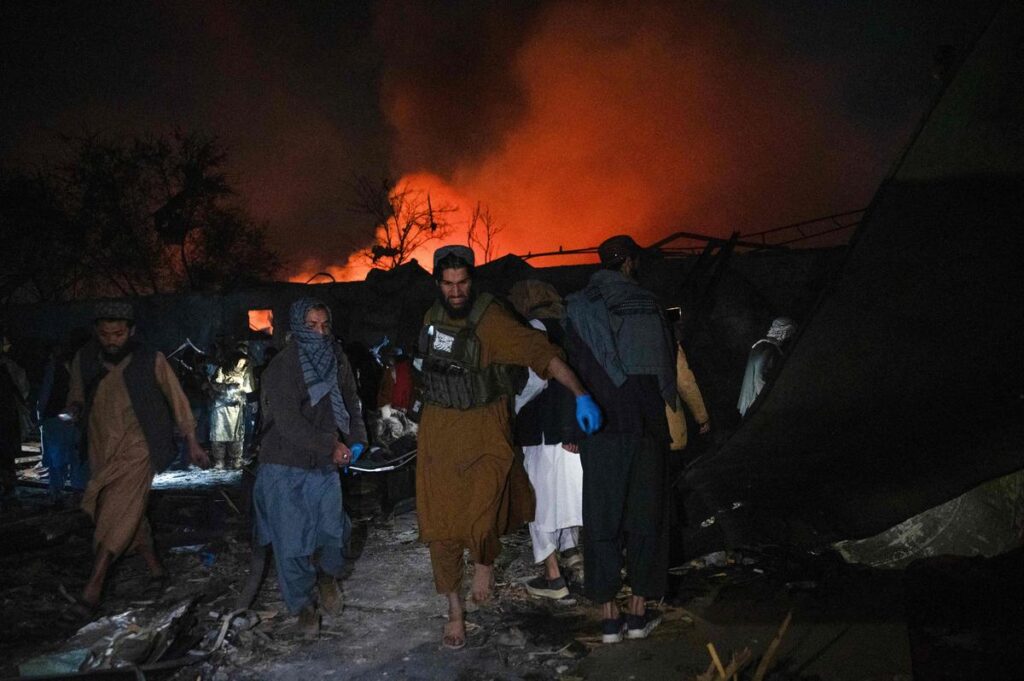
Kabul woke to devastation on Tuesday after a late-night airstrike tore through a hospital, killing hundreds and leaving chaos behind. Afghan Taliban officials reported that at least 400 people died and around 250 suffered injuries. The strike, they said, hit a facility that treated drug-dependent patients, turning a place of recovery into a scene of mass death.
According to deputy spokesman Hamdullah Fitrat, the attack destroyed large parts of the hospital late Monday. He said rescue teams rushed in immediately. They battled flames, searched through debris, and pulled out bodies. Meanwhile, survivors cried for help as smoke filled the air and parts of the building continued to collapse.
Earlier, health ministry spokesman Sharafat Zaman had reported over 200 deaths. However, officials revised the toll sharply upward as rescuers reached deeper sections of the rubble. He confirmed that the entire hospital structure suffered near-total destruction.
On the ground, the scale of loss became clear within hours. Witnesses described burned wards, shattered walls, and scattered medical equipment. Firefighters fought intense flames while families gathered outside, searching for loved ones. Many victims, officials said, were patients undergoing treatment inside the facility at the time of the strike.
Taliban spokesman Zabiullah Mujahid strongly condemned the attack. He called it a direct violation of Afghan territory and accused Pakistan of targeting civilians. He stressed that most victims had no link to conflict and had sought medical care.
At the same time, voices from outside government echoed the grief. Afghan cricketer Mohammad Nabi shared visuals from the scene. He described emotional scenes of families waiting and calling out names. He said the attack shattered hope, especially during the holy month of Ramadan.
However, Pakistan rejected the allegations outright. Officials insisted that their forces targeted militant infrastructure, not civilian locations. A spokesperson for Prime Minister Shehbaz Sharif dismissed claims of a hospital strike. He stated that the operation focused on terrorist facilities, including weapons storage and support bases. He also argued that forces acted with precision to avoid civilian harm.
As both sides traded accusations, violence along the border intensified. Afghan officials reported that overnight shelling from Pakistan hit villages in Khost province, killing civilians, including children. In response, Pakistan claimed that cross-border fire from Afghanistan struck a home in Bajaur, killing four members of a family. These incidents deepened mistrust and pushed both sides closer to open conflict.
Meanwhile, the international community raised fresh concerns. The United Nations Security Council urged Afghan authorities to strengthen counterterror efforts. It also extended the mandate of the United Nations Assistance Mission in Afghanistan for three months, signaling concern over growing instability.
The crisis did not emerge overnight. Tensions had already escalated in late February after cross-border strikes triggered retaliation from both nations. Since then, both sides have hardened their positions. Pakistan described the situation as nearing open war, while Afghan leaders framed their response as a defense of sovereignty.
Deputy Prime Minister Abdul Salam Hanafi said the conflict had been forced upon Afghanistan. He warned that continued strikes would increase civilian suffering and destabilize the region further.
As rescue operations continue in Kabul, uncertainty hangs heavy. Conflicting claims, rising casualties, and intensifying border clashes now threaten to push the region into a deeper and more dangerous phase of conflict.