Iran expands drone war across Gulf as flights halt and oil facilities come under fire
Tensions across West Asia rose sharply on Tuesday after Iran launched fresh drone attacks toward Saudi Arabia and Kuwait. The escalation added to an already volatile regional conflict that has disrupted air travel, energy infrastructure, and global shipping routes.
Iran fired several drones early Tuesday toward Gulf nations it views as close partners of the United States. However, Saudi Arabia and Kuwait quickly responded. Saudi air defence units intercepted and destroyed two incoming drones. Meanwhile, Kuwaiti forces shot down six drones before they reached their targets. Authorities said the interceptions prevented damage and casualties.
As the conflict intensifies, aviation across the region continues to suffer. Airlines have cancelled more than 40,000 flights so far across West Asia. Governments and airlines cite security risks and restricted airspace as the main reasons. Airports across the Gulf now operate under heightened alert as military activity increases in the skies.
Meanwhile, the United Arab Emirates addressed growing concerns about its role in the conflict. Officials stressed that the country does not want escalation. Jamal Al Musharakh, the UAE’s ambassador to the United Nations in Geneva, said the country faces attacks in a “very unwarranted manner.” However, he clarified that the UAE will not launch attacks against Iran. Instead, the government seeks to avoid deeper involvement in the war.
At the same time, international partners have started to support Gulf defence efforts. Australia announced new security assistance to help the UAE defend its airspace. Prime Minister Anthony Albanese and Defence Minister Richard Marles said Australia will deploy a surveillance aircraft to the Middle East. In addition, Canberra will provide advanced air-to-air missiles to strengthen the UAE’s defence systems.
Australian leaders said these steps aim to protect civilians and maintain open airspace. The move will also help stranded Australians return home safely. According to their statement, the UAE has already intercepted more than 1,500 rockets and drones since Iran expanded its attacks on Gulf countries.
Despite rising security tensions, daily life in some Gulf cities continues with limited disruption. In Dubai, supermarkets remain fully stocked. Retailers rely on supply chains and logistics networks that proved reliable during the COVID-19 pandemic and the severe floods of 2024.
However, companies have begun adjusting transport routes. Some suppliers now move goods through air cargo or road networks to avoid risky sea lanes. The UAE government has also reassured residents about food availability. Officials say the country maintains reserves that can last for several months. Authorities also continue to monitor food prices to prevent sudden spikes.
Still, concerns remain about how long stability will last. Iranian drones and missiles have already struck several Gulf cities, including areas near Dubai. Iran says it launched these strikes in retaliation for earlier attacks carried out by Israel and the United States.
The broader conflict has also disrupted one of the world’s most critical shipping routes: the Strait of Hormuz. This narrow passage carries a major share of global oil exports. As security risks increase, several cargo vessels now avoid the route.
As a result, shipments of commodities have stalled. Ships carrying Indian rice, Australian meat, and Indonesian coffee remain stuck outside the strait. The disruption has already shaken oil and commodity markets.
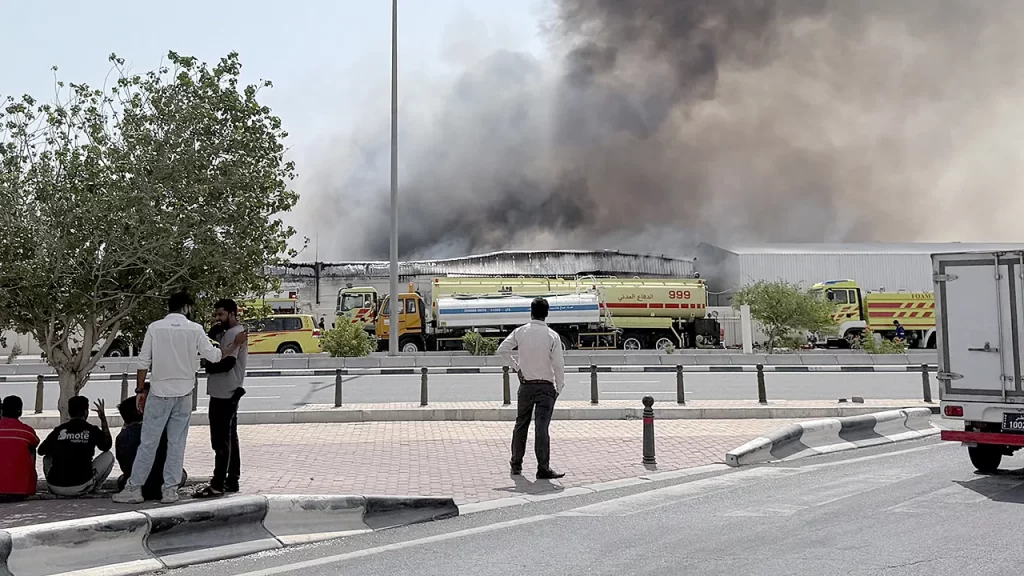
Meanwhile, Iran has widened its military targets across the Gulf energy sector. Iranian forces struck several installations, including a petroleum complex in Bahrain. The attack hit the large Al Ma’ameer oil facility and triggered a fire that damaged parts of the site.
Following the strike, Bahrain’s state-owned energy company Bapco declared force majeure. The legal move allows companies to suspend contractual obligations during extraordinary events such as war or natural disasters. Analysts say such steps reflect growing risks to Gulf oil production.
The conflict has also triggered sharp movements in global oil prices. Traders fear that further attacks could interrupt energy supplies from the region.
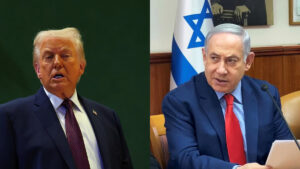
Amid the escalation, the United States signalled hope for a possible end to the war. US President Donald Trump said he believes the conflict could conclude soon. While speaking to reporters in Florida, Trump said the war might end “very soon,” though he offered no specific timeline.
However, Iran’s Revolutionary Guards rejected the suggestion. The military force declared that Iran—not Washington—will decide when the war ends.
At the same time, Iran’s leadership signalled internal changes. Over the weekend, the country’s clerical establishment selected the son of slain supreme leader Ali Khamenei as its new chief.
For now, the conflict continues to widen across the Gulf. Military strikes, economic disruptions, and diplomatic tensions together signal a prolonged and uncertain crisis for West Asia.