India slams Pakistan at UNHRC over J&K, calls for vacating occupied areas
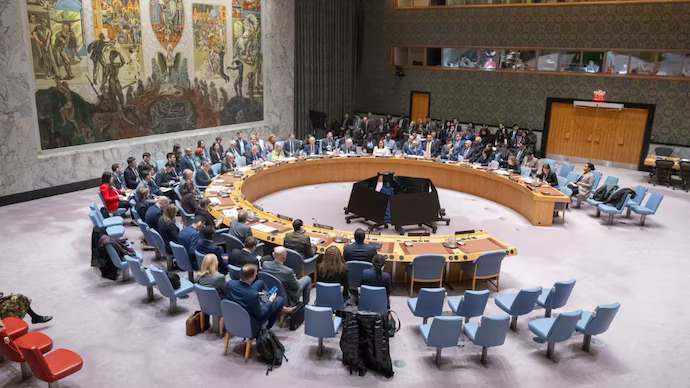
India strongly countered Pakistan at the High-Level Segment of the 55th Regular Session of the United Nations Human Rights Council in Geneva. Indian envoy Anupama Singh rejected Islamabad’s remarks on Jammu and Kashmir. She also criticised the Organisation of Islamic Cooperation for echoing those claims.
First, Singh accused Pakistan of spreading propaganda. She said the allegations “reek of envy.” However, she added that India would respond with facts instead of rhetoric. She made it clear that India would not allow misinformation to go unanswered.
Next, Singh reiterated India’s long-standing position on Jammu and Kashmir. She stated that Jammu and Kashmir “was, is, and will always remain” an integral part of India. She stressed that the region’s accession followed the Indian Independence Act 1947 and complied with international law. Therefore, she said, no statement from Pakistan can alter that legal reality.
Furthermore, Singh shifted the focus to what she called the “real issue.” She said Pakistan continues to occupy parts of Indian territory illegally. She urged Islamabad to vacate areas under its forcible control instead of raising baseless claims at global forums.
Then, she highlighted recent developments in Jammu and Kashmir. Singh pointed to record voter turnout in recent general and assembly elections. She argued that high participation reflects public trust in democracy. According to her, the people of the region have rejected terrorism and violence. Instead, they now support development and governance.
In addition, Singh cited infrastructure growth as proof of progress. She mentioned the Chenab Rail Bridge, which engineers inaugurated last year. She described it as the world’s highest railway bridge. She said that if Pakistan considers such projects “fake,” then its leadership must be living in “La-La Land.” Through this remark, she questioned Islamabad’s refusal to acknowledge visible development.
Moreover, Singh compared economic indicators. She stated that Jammu and Kashmir’s developmental budget now exceeds double the recent bailout package Pakistan sought from the International Monetary Fund. With this comparison, she aimed to underline the contrast between economic growth in the region and Pakistan’s financial struggles.
When Pakistan raised concerns about democracy, Singh responded sharply. She said India finds it difficult to accept lectures on democratic values from a country where civilian governments rarely complete full terms. By doing so, she turned the debate toward Pakistan’s domestic political instability.
Meanwhile, the diplomatic exchange unfolded during the ongoing session of the UN Human Rights Council in Geneva. Delegates from several countries attended the meeting as part of the council’s regular proceedings. Against this backdrop, India used the platform to restate its sovereignty claims and development narrative regarding Jammu and Kashmir.
Overall, Singh framed India’s response around legality, democracy, and development. She dismissed Pakistan’s criticism as politically motivated. At the same time, she called on Islamabad to address what she described as illegal occupation rather than repeating allegations on international stages.
With this firm rebuttal, India signaled that it will continue to challenge Pakistan’s narrative at multilateral forums and defend its position on Jammu and Kashmir.