US slashes India tariff to 10% after Supreme Court blocks Trump’s global duties
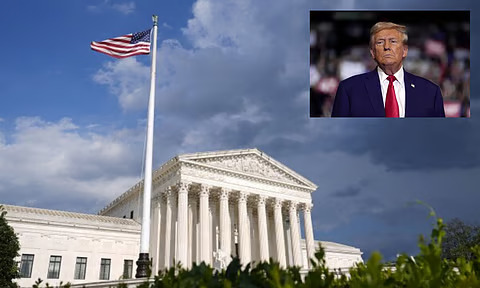
The United States has reduced tariffs on India to 10 percent after President Donald Trump issued a fresh proclamation. The move came hours after the US Supreme Court struck down his sweeping global tariffs.
First, the White House clarified that countries which negotiated trade terms with Washington, including India, will now face a flat 10 percent duty. Earlier, India had agreed to higher tariff levels under a revised trade framework. Now, the administration has aligned those rates with the new global order.
On Friday, the US Supreme Court ruled 6–3 against Trump’s tariff policy. Chief Justice John Roberts wrote the majority opinion. He stated that the president exceeded his authority under federal law. The Constitution gives Congress the power to impose taxes and tariffs. Therefore, the court concluded that Trump could not rely on emergency powers for broad trade levies.
Previously, Trump had invoked the International Emergency Economic Powers Act of 1977. He used that law to impose tariffs on imports from almost all trading partners without seeking approval from Congress. The policy covered allies from Canada to India. At one stage, India faced a 50 percent tariff. Later, a trade understanding reduced that rate to 25 percent and then to 18 percent.
However, the court ended that approach. Roberts wrote that extraordinary claims of executive authority require clear authorization from Congress. He stressed that lawmakers never granted such sweeping tariff powers under the emergency statute. The ruling therefore blocked the administration’s reliance on that law for trade taxation.
In response, Trump criticized the judgment. He expressed anger at the justices who ruled against him. Nevertheless, he acted quickly. On the same day, he signed a new executive order in the Oval Office. He imposed a 10 percent global tariff on foreign goods. He later announced on social media that the order would take effect almost immediately.
According to a White House fact sheet, the new duty will apply from 12:01 a.m. Washington time on February 24. The administration framed the move as a reset rather than a retreat. Officials argued that the 10 percent baseline keeps trade pressure intact while complying with the court’s interpretation.
Meanwhile, questions arose about the India–US trade deal. Trump said the Supreme Court ruling does not alter the broader agreement. He insisted that “nothing changes” in the understanding reached earlier this month.
Under that framework, Washington removed 25 percent punitive tariffs that it had imposed on India over its purchases of Russian oil. In return, US officials pointed to India’s commitment to reduce direct or indirect imports of Russian energy and increase purchases of American energy products. The reciprocal tariff on India had fallen from 25 percent to 18 percent. Now, the fresh proclamation sets the general rate at 10 percent.
In addition, Trump signaled further action. He directed officials to explore higher tariffs under Section 301, which targets unfair trade practices, and Section 232, which addresses national security concerns. Treasury Secretary Scott Bessent said these measures could maintain tariff revenue levels in 2026 despite the court setback.
For now, trading partners are adjusting to the new baseline. India benefits from the lower 10 percent rate. At the same time, Washington continues to defend its tough trade posture. The Supreme Court ruling reshaped the legal path, but it did not end the administration’s push to rewrite global tariff rules.