India set to join US-Led PAX Silica, boosts global AI and semiconductor alliance
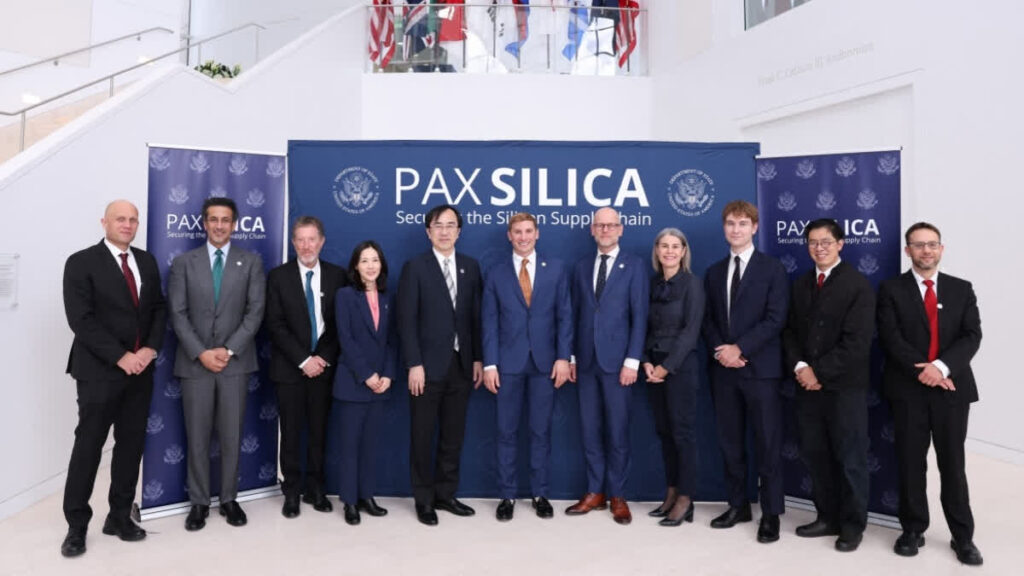
India will join Pax Silica on Friday, a US-led strategic alliance that Washington launched in December 2025. The grouping aims to secure the global AI and semiconductor supply chain. It also seeks to reduce dependence on non-aligned nations. With this move, New Delhi signals deeper alignment with leading technology economies.
First, the partnership will strengthen cooperation in critical minerals. Then, it will expand collaboration in semiconductor manufacturing. At the same time, both sides will push joint efforts in the fast-growing artificial intelligence sector. Officials believe this step will help build a secure and resilient global silicon ecosystem.
This development comes as India and the United States work to finalise a proposed trade deal. Both governments also want to move past earlier tensions over tariffs that President Donald Trump imposed during his term. Therefore, Pax Silica adds strategic weight to broader economic talks between two of the world’s largest economies.
Apart from the United States, several countries have joined the alliance. Members include Australia, Greece, Israel, Japan, Qatar, South Korea, Singapore, the United Arab Emirates and the United Kingdom. Together, these nations represent major hubs of technology, finance and advanced manufacturing. As a result, the bloc commands strong influence across global supply chains.
US Under Secretary for Economic Affairs Jacob Helberg has outlined the logic behind the initiative. He argues that oil and steel powered the 20th century. However, computers drive the 21st century. Therefore, countries now compete for minerals such as lithium and cobalt that power chips, batteries and advanced devices. Through Pax Silica, member nations plan to coordinate access to these resources.
The alliance covers the full technology value chain. First, it addresses energy generation needed to run massive data centres. Next, it focuses on securing supplies of critical minerals. Then, it supports high-tech manufacturing, including semiconductor fabrication. Finally, it promotes collaboration on AI models and digital infrastructure. In short, Pax Silica links raw materials to advanced algorithms.
Members have agreed to pursue shared prosperity and technological progress. They also aim to protect economic security. By coordinating policy and investment, they want to reduce vulnerabilities in global trade. This approach reflects lessons learned from past supply disruptions and geopolitical tensions.
The long-term purpose of Pax Silica centers on unity among leading tech nations. If these countries align standards and investments, they can unlock the economic potential of AI. Moreover, they can shape global rules for emerging technologies. India’s entry strengthens that ambition because of its large digital market and growing semiconductor plans.
Artificial intelligence now reshapes the global economy. Leaders within the alliance acknowledge that the AI revolution accelerates rapidly. It reorganises supply chains and creates new industrial demands. For instance, AI systems require enormous computing power. Consequently, companies need more chips, more electricity and more advanced hardware.
At the same time, AI expansion fuels demand for infrastructure that many markets have not yet developed. New business models continue to emerge. Governments see opportunities for growth, but they also see risks. Therefore, Pax Silica places strong emphasis on secure systems.
One core objective involves reducing coercive dependencies. In practical terms, members want to avoid overreliance on any single country for key materials or technologies. By diversifying supply chains, they aim to prevent economic pressure or manipulation.
Another objective focuses on trusted digital infrastructure. Members plan to safeguard advanced technologies from theft and misuse. Through tighter coordination, they hope to protect innovation while encouraging open collaboration.
With India joining the alliance, Pax Silica expands its global footprint. Simultaneously, New Delhi strengthens its strategic and technological partnership with Washington. Together, these moves signal a new phase in global tech diplomacy.