Delhi imposes two-phase traffic curbs as India AI Impact Summit ends with global push for AI Guardrails
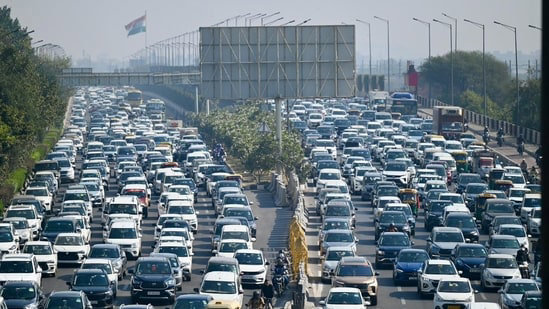
Delhi Police enforced two-phase traffic curbs across key routes on Friday due to VVIP movements linked to the final day of the India AI Impact Summit 2025. Authorities diverted vehicles near central districts and advised commuters to use alternate roads. Officials increased security outside major venues and tightened surveillance across high-footfall zones. As a result, traffic slowed in parts of Lutyens’ Delhi and nearby corridors.
Meanwhile, the summit entered its fifth and final day with high-stakes discussions. Delegates focused on reimagining India’s education system through artificial intelligence. Experts examined how the US-India partnership can power the AI era. Speakers also explored AI in diplomacy and negotiations. In addition, panels debated data sovereignty and the idea of collective AI for Indian society. These conversations shaped the broader agenda for responsible innovation.
On Friday, Brazil took centre stage. President Luiz Inácio Lula da Silva addressed the gathering and shared Brazil’s perspective on the future of AI. Several Brazilian ministers joined him and highlighted cooperation across the Global South. Their participation added weight to the summit’s international outreach. Consequently, the event strengthened multilateral dialogue on AI governance.
Leaders also prepared to adopt a joint declaration. The proposed Leaders’ Declaration aims to affirm collective commitments and outline a shared roadmap for global AI governance. Negotiators worked through final language during closed-door meetings. If adopted, the document will signal a unified approach toward transparency, accountability and cross-border collaboration.
At the same time, the Global Partnership on Artificial Intelligence council convened high-level meetings. Members reviewed policy frameworks and exchanged best practices. They pushed for stronger coordination between governments, industry and research institutions. Through these discussions, stakeholders sought to balance innovation with safeguards.
This momentum followed Prime Minister Narendra Modi’s address on Thursday. He positioned India as a central player in the global AI ecosystem. First, he called for stronger guardrails to regulate emerging technologies. Then, he stressed AI’s transformative potential across sectors. He highlighted child safety as a priority and urged wider democratisation of artificial intelligence. According to him, access must expand beyond a few corporations and nations.
Later, he hosted several heads of state and chaired a CEO Roundtable. Industry leaders and policymakers discussed responsible AI scaling and global collaboration. Modi described the exchanges as forward-looking and growth-oriented. He emphasised cooperation as the key to unlocking AI-driven development.
Earlier in the week, the Prime Minister unveiled India’s ‘MANAV’ vision for AI governance. He broke down the acronym to explain the framework. M stands for moral and ethical systems. A represents accountable governance with transparent rules and robust oversight. N underscores national sovereignty and data rights. The second A promotes accessibility and inclusion. V ensures validity and legitimacy. Through MANAV, he linked AI policy with human welfare and global responsibility.
Global tech leaders also weighed in. OpenAI CEO Sam Altman delivered a keynote and offered a stark forecast. He predicted early versions of true superintelligence within a couple of years. By 2028, he suggested that much of the world’s intellectual capacity could reside inside data centres. However, he also urged global oversight. He proposed an international body, similar to the nuclear watchdog model, to govern advanced AI systems.
As the summit concludes, Delhi manages both diplomatic momentum and logistical pressure. Security teams maintain tight control, while global leaders debate the future of intelligence itself. Together, these developments place India at the centre of a rapidly evolving AI conversation.