US prepares Iran strike options as Trump weighs decision amid rising Middle East tensions
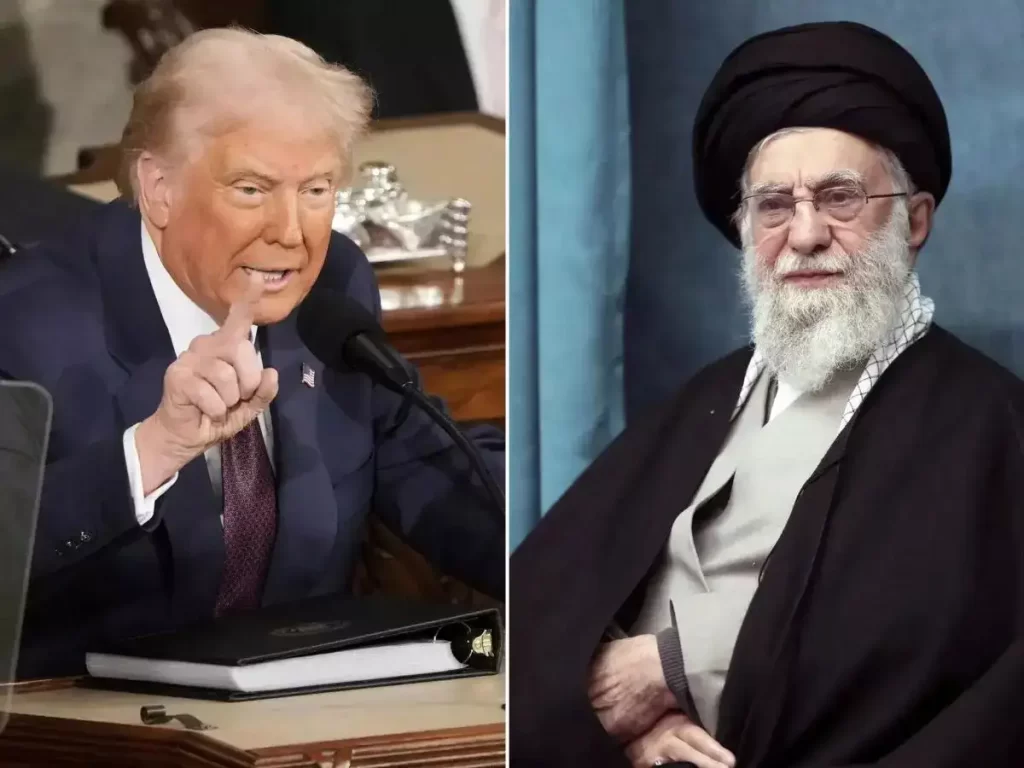
Tensions continue to rise across the Middle East. As a result, Washington has intensified its military posture. Reports now indicate that the United States stands ready to strike Iran as early as this weekend. However, President Donald Trump has not approved any final action.
According to multiple US media reports, senior officials have informed the White House that the military can execute strike options within days. Therefore, planners have aligned air and naval assets in the region. In recent weeks, Washington has increased its presence through strategic deployments. Officials aim to ensure rapid response capability if the President orders action.
On Wednesday, top national security officials met inside the White House Situation Room. They reviewed intelligence updates and examined operational scenarios. In addition, Trump received briefings from special envoy Steve Witkoff and senior adviser Jared Kushner. Sources say the President continues to evaluate risks and consequences. He has not yet indicated a final timeline.
Reports suggest that military planners have presented several strike options against Tehran. These options reportedly target key military and political leadership structures. Officials claim the plans focus on maximizing strategic impact. Nevertheless, Trump continues to deliberate. A source familiar with the discussions says he spends significant time reviewing the implications.
Meanwhile, the Pentagon has strengthened its footprint in the region. The administration ordered a second aircraft carrier group to deploy. The USS Abraham Lincoln currently operates in regional waters with nearly 80 aircraft onboard. Satellite imagery places the carrier roughly 700 kilometers from Iran’s coastline. Furthermore, the US Air Force has repositioned refueling tankers and fighter jets from bases in the United Kingdom to the Middle East.
Flight tracking data also shows increased cargo movement. US military aircraft have transported equipment and supplies to Jordan, Bahrain, and Saudi Arabia. These steps signal preparation rather than immediate engagement. However, they underscore Washington’s readiness.
At the same time, Iran has demonstrated its own military posture. The Islamic Revolutionary Guard Corps has launched war games in the Strait of Hormuz. Iranian officials have also signaled the possibility of blocking the strategic waterway. The strait handles a significant share of global oil and gas shipments. Any disruption there could trigger sharp economic consequences worldwide.
Diplomatic channels, however, remain open. White House press secretary Karoline Leavitt urged Iran to pursue a deal with the United States. She acknowledged limited progress during recent talks in Geneva. Still, she emphasized that major differences remain. She stated that Trump prefers diplomacy before military escalation. According to her, the administration expects Tehran to provide further details in the coming weeks.
In Tehran, leaders have sent mixed signals. Foreign Minister Abbas Araghchi confirmed that Iran is drafting a framework for future negotiations. Meanwhile, President Masoud Pezeshkian said Iran does not seek war. Yet, he also rejected external pressure or humiliation. His remarks reflected internal resolve as well as caution.
Additionally, US Energy Secretary Chris Wright reiterated Washington’s commitment to prevent Iran from acquiring nuclear weapons. He stressed that the United States will act if necessary.
For now, uncertainty dominates the landscape. Military assets stand ready. Diplomats continue discussions. And President Trump weighs his next move. The coming days may determine whether the crisis shifts toward negotiation or confrontation.