India pushes for 50% local content in Rafale production, Rajnath Singh tells France
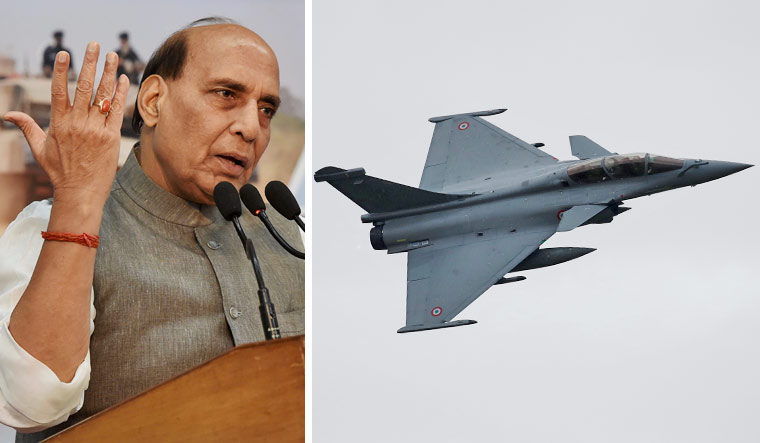
India has stepped up its push for defence self-reliance. On Tuesday, Defence Minister Rajnath Singh urged France to raise indigenous content in Rafale fighter jets to 50 percent. He made the demand during high-level talks under the upgraded India–France strategic partnership.
First, Singh placed co-design, co-development, and co-production at the centre of discussions. He stressed that India wants deeper involvement in manufacturing. He also called for stronger participation by Indian firms in the Rafale supply chain.
Then, he focused on production targets. He asked French partners to ensure that at least half of the components come from Indian sources. He linked this demand to India’s long-term defence planning.
Meanwhile, officials said the proposal will shape the next phase of fighter jet procurement. The plan relates to the expected purchase of 114 multirole aircraft for the Indian Air Force. Defence sources see Rafale as a leading contender.
At the same time, Singh highlighted the need for stable industrial partnerships. He said India no longer wants to remain only a buyer. Instead, he wants joint ownership of technology and production.
Notably, French firm Dassault Aviation builds the Rafale jets. Indian officials want the company to expand its local manufacturing footprint. They also want more Indian engineers and suppliers in the system.
In addition, the talks aligned with the “Make in India” campaign. The government continues to link defence contracts with domestic production. Officials believe this approach strengthens both security and economic growth.
The renewed focus emerged during the sixth India–France Annual Defence Dialogue in Mumbai. Singh co-chaired the meeting with French minister Catherine Vautrin. Both sides reviewed past cooperation. They also extended the defence framework for another ten years.
Moreover, senior officials signed fresh understandings. They reaffirmed defence ties as a pillar of bilateral relations. They agreed to expand cooperation in aircraft, engines, and advanced systems.
Earlier, political leaders also set the tone. On February 17, 2026, Prime Minister Narendra Modi and French President Emmanuel Macron upgraded ties to a “Special Global Strategic Partnership.” They committed to long-term collaboration across air, naval, and land platforms.
As a result, defence aeronautics gained new importance. Both countries welcomed progress on the deal for 26 Rafale-Marine jets for the Indian Navy. They also agreed to deepen cooperation in engine technology.
In this context, French engine maker Safran plans to work closely with Indian partners. Officials expect joint projects in combat aircraft engines and propulsion systems.
Meanwhile, the Defence Acquisition Council has added urgency. Its approval for 114 new fighter jets has accelerated negotiations. Ministries now want faster decisions and clearer production plans.
Furthermore, experts see the Rafale expansion as a turning point. If talks succeed, the project will rank among India’s largest defence deals. It will also mark a shift from simple imports to shared manufacturing.
Finally, officials say the government will keep pressing for local value. They aim to build strong supply chains inside India. They also want to create skilled jobs and export potential.
Through this strategy, India seeks both security and self-reliance. With the 50 percent target, New Delhi signals its intent. It wants partnership, not dependency, in future defence programmes.