ICC T20 World Cup: India extend dominance as Pakistan struggle in Colombo showdown
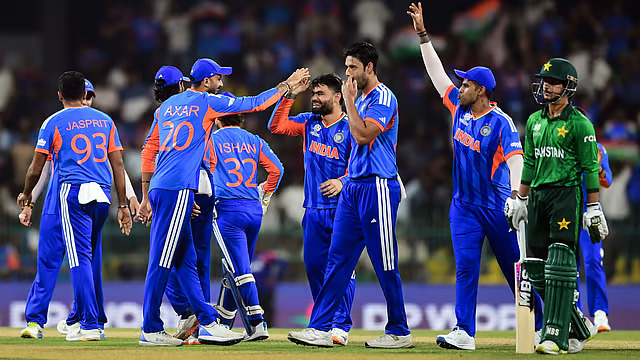
India stretched their dominance over Pakistan on Sunday night with a commanding win at the R Premadasa Stadium. The match promised drama. Instead, it delivered a clear message. The rivalry no longer runs on equal terms.
From the start, India controlled the tempo. The stands filled with blue and green. The noise rose with every delivery. Yet, on the field, balance never arrived.
Early on, Pakistan searched for answers. In the eighth over, leg-spinner Shadab Khan tried everything. He changed fields. He varied pace. He mixed deliveries. Still, Ishan Kishan stayed in charge. A reverse sweep for four summed up the moment. From then on, Pakistan looked helpless.
Meanwhile, captain Suryakumar Yadav watched calmly. His team had prepared for this scenario. India expected spin. India planned for pressure. India trusted one batter to break free.
Before the match, experts built a clear narrative. Pakistan trained in Sri Lanka for weeks. They focused on slow, turning pitches. They prepared four spinners. In contrast, India arrived from high-scoring venues. Critics questioned their adaptability.
However, conditions did not decide the game. Mindset did.
Pakistan won the toss and chose to bowl. India accepted the challenge. The openers began cautiously. Boundaries came slowly. Singles mattered. Then, Kishan shifted gears.
Soon after, he dominated the middle overs. He faced 14 consecutive balls. During that stretch, he scored 41 runs. Four bowlers tried and failed. Agha, Ayub, Abrar, and Shadab found no solution. Consequently, momentum shifted permanently.
Kishan finished with 77 from 40 balls. He struck 10 fours and three sixes. Others supported him. They rotated strike. They avoided risks. They allowed the main aggressor to work.
As a result, India reached 175. On this surface, that total looked intimidating. In fact, it felt decisive.
After the innings, Pakistan needed a flying start. Their plan depended on early aggression. Their middle order lacked consistency. Therefore, pressure rested on the openers.
India denied them space.
First, Hardik Pandya opened with tight lines. He bowled three dot balls. He forced a false shot. Farhan lofted one. Rinku caught it.
Next, Jasprit Bumrah took over. He delivered an inswinging yorker. He removed Ayub. Two balls later, another wicket fell. Pakistan slipped to three down for 13.
At that point, the contest ended.
Although Babar Azam tried to rebuild, pressure mounted. He survived briefly. Then he miscued against Axar Patel. After that, collapse followed.
India’s spinners tightened the grip. Fielders stayed sharp. Bowlers attacked stumps. Pakistan folded in 18 overs. The margin stood at 61 runs.
In modern T20 cricket, that gap signals dominance.
After the match, India spoke with clarity. The captain praised collective effort. He highlighted disciplined bowling. He underlined belief.
More importantly, the performance reflected a wider trend. Over recent years, India have dictated terms. They adapt faster. They handle pressure better. They trust depth.
Meanwhile, Pakistan continue to search for stability. Preparation alone no longer guarantees success. Planning without execution brings little reward.
On Sunday night, one passage defined everything. Fourteen balls. Four bowlers. One batter in total control.
As those runs flowed, green sections fell silent. Blue sections grew louder.
The rivalry still attracts crowds. It still commands headlines. Yet, on the field, balance remains missing. And until Pakistan rediscover consistency, India will keep setting the terms.