TCS and Infosys slide nearly 6% as global worries and AI fears hit Indian IT stocks
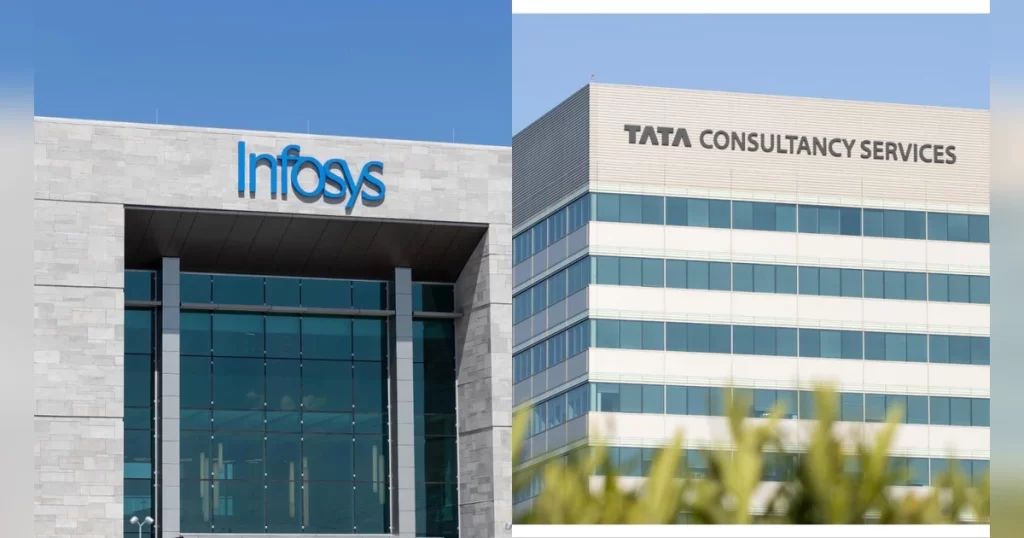
Indian IT stocks faced sharp selling pressure on Tuesday. The sector did not slip gradually. Instead, it fell suddenly. Investors rushed to cut exposure. As a result, market sentiment weakened.
Early in the session, shares of Tata Consultancy Services and Infosys dropped close to 6%. The decline pulled the entire IT pack lower. Consequently, broader indices also felt the impact.
Notably, no single company announcement triggered the fall. Instead, multiple global and structural factors combined to shake confidence. Analysts point to three major reasons behind the renewed weakness.
First, Strong US Data and Rate Cut Concerns
To begin with, fresh economic data from the United States unsettled investors. Recent employment numbers came in stronger than expected. At the same time, the unemployment rate edged lower.
Because of this, traders reduced expectations of early interest rate cuts by the US central bank. Higher rates usually hurt growth-oriented stocks. Therefore, technology shares came under pressure.
For Indian IT firms, this matters directly. Most large companies earn a major share of revenue from American clients. When borrowing costs stay high, US companies often delay technology spending. As a result, investors worry about slower deal flow and weaker earnings.
Thus, strong US data triggered caution across global tech markets. Indian IT stocks reacted immediately.
Second, Global Tech Sell-Off and AI Reset
Meanwhile, US technology stocks also faced selling pressure overnight. Major tech indices declined sharply. This fall added to negative sentiment in Asia.
Last year, global markets rallied on artificial intelligence enthusiasm. Big tech firms led that surge. However, investors now reassess those lofty valuations. As AI-related stocks cool off, money moves out of the sector.
India did not benefit fully from last year’s AI rally. Still, global corrections now affect domestic stocks. When foreign investors reduce tech exposure, Indian IT shares also suffer.
Moreover, IT remains one of the largest profit contributors in corporate India. Therefore, sharp corrections in this sector quickly impact overall market confidence. Traders often respond by reducing risk across portfolios.
In the short term, this global reset continues to create volatility.
Third, Rising Fears Over AI Disruption
More importantly, structural concerns now worry investors. Artificial intelligence continues to reshape the IT services industry.
Today, AI tools complete tasks faster. Automation reduces manual work. Project timelines shrink. Consequently, companies need fewer employees for routine assignments.
Traditional outsourcing depends heavily on billing based on workforce size. That model now faces pressure. If clients pay for outcomes instead of hours, margins may tighten.
Furthermore, areas once considered stable now appear vulnerable. Even enterprise software implementation and support services face automation risks.
Clients increasingly demand faster delivery at lower costs. They also expect AI-driven efficiency. Because of this shift, some investors fear slower hiring, possible layoffs, and weaker long-term growth.
Analysts now track deal wins closely. New contracts will indicate whether companies can adapt to this changing environment.
What Should Investors Do Now?
Despite the sharp fall, experts urge caution. They advise against panic selling. Markets have entered a turbulent phase. Volatility may persist. However, such periods also create opportunities.
Investors may benefit from waiting for clearer signals. They should watch US market trends, interest rate outlook, and corporate guidance. They should also focus on companies with strong balance sheets and consistent performance.
Some analysts believe quality stocks may become attractive after further corrections. Select sectors with solid earnings visibility could offer better stability.
The Road Ahead
In simple terms, the current decline reflects more than one bad trading day. It combines strong US data, delayed rate cut hopes, a global tech reset, and deep concerns about AI-led disruption.
For now, uncertainty dominates. Until global markets stabilise and companies clarify their AI strategies and revenue outlook, Indian IT stocks may remain volatile.
Investors, therefore, need patience, discipline, and a long-term view in this changing landscape.