Tarique Rahman votes as Bangladesh goes to polls; crude bomb blast injures 3 in Gopalganj
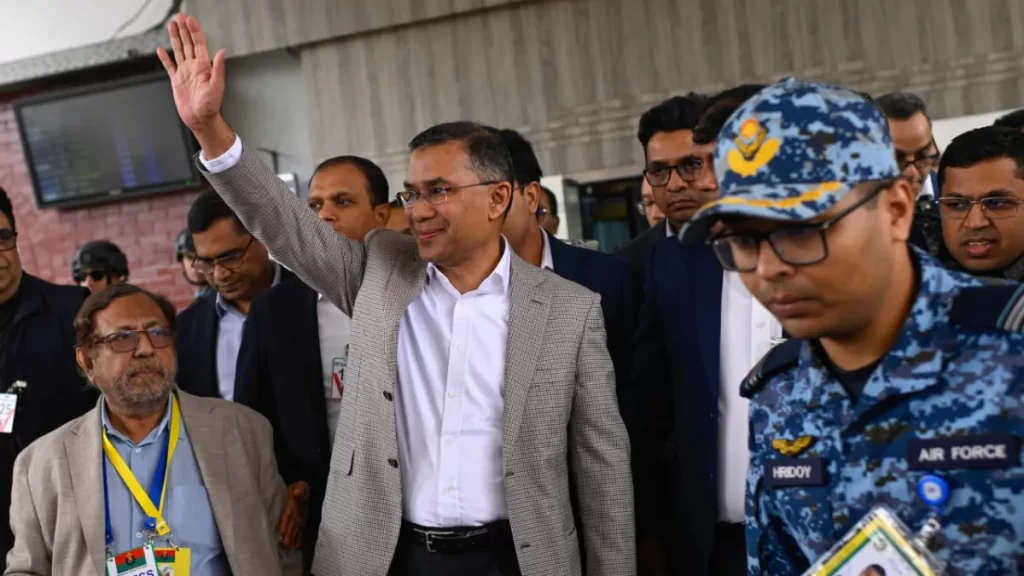
Bangladesh went to the polls on Sunday in a crucial national election marked by high political tension and security concerns. BNP leader Tarique Rahman cast his vote at the Gulshan Model School and College Centre in Dhaka. Meanwhile, a crude bomb blast injured three people in Gopalganj, a former stronghold of Sheikh Hasina and the Awami League.
The blast occurred during voting hours. It triggered panic in the area. Police rushed to the spot. Security forces sealed nearby roads. Officials launched an investigation. They also increased patrols to prevent further violence.
At the same time, voters lined up at polling stations across the country. Election officials reported steady turnout in urban and rural areas. Authorities deployed thousands of police and paramilitary personnel to maintain order.
More than 127 million citizens are eligible to vote in this election. Nearly 1,981 candidates are contesting parliamentary seats. However, only 109 women are among them. Local media highlighted the low female representation.
This election holds special importance. It marks the first major contest since 2009. It also comes after the Election Commission cancelled the registration of Sheikh Hasina’s Awami League. As a result, the ruling party stayed out of the race.
After the ban, the Bangladesh Nationalist Party emerged as the main challenger. The party projected Tarique Rahman as its key leader. Rahman returned to Bangladesh in December after 17 years in exile. Since then, he has promised reforms, stronger institutions, and economic revival.
Meanwhile, an 11-party alliance led by Jamaat-e-Islami entered the race. The bloc aims to expand its political influence. It also includes the newly formed National Citizen Party. Gen Z activists launched this party after the 2024 uprising.
Young voters now play a decisive role. Nearly one-fourth of the electorate belongs to Generation Z. Many of them took part in last year’s protests. They now seek political change through ballots.
Political analyst Parvez Karim Abbasi said youth participation could shape the final outcome. He noted that young voters demand transparency, jobs, and accountability.
Former prime minister Sheikh Hasina criticised the election from exile in India. In a recent message to international media, she warned of instability. She said the process lacks inclusiveness. She also claimed that exclusion weakens democratic institutions.
As voting continued, key national issues dominated public debate. Corruption topped the list of voter concerns. Surveys showed deep public frustration over misuse of power. Inflation also worried citizens. Official data put inflation at 8.58 percent in January. Rising prices have strained household budgets.
Economic recovery remains another major challenge. Bangladesh’s garment industry suffered after the pandemic. Growth slowed. Many families lost income. Employment also emerged as a critical issue. About 40 percent of the population is under 30. Young people now demand large-scale job creation.
In addition, voters will decide on proposed political reforms. These include limits on prime ministerial terms and stronger checks on executive authority. Supporters say these changes can prevent power concentration.
The interim government, led by Nobel laureate Muhammad Yunus, is overseeing the election. It has promised a free and fair process. Observers are monitoring polling stations nationwide.
As counting approaches, attention remains high. The results will test Bangladesh’s democratic future. They will also show whether youth movements can convert protest energy into lasting political change. For millions of first-time voters, this election marks their first step into national politics.