Mohan Bhagwat says he will step down when RSS decides, reaffirms commitment to service
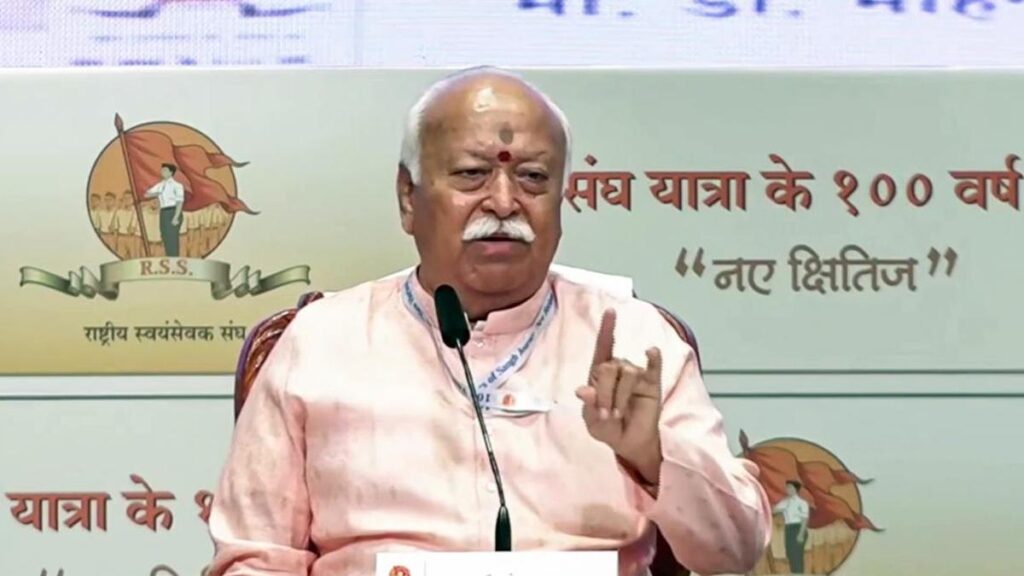
RSS chief Mohan Bhagwat on Sunday made it clear that he remains ready to step down whenever the organisation asks him to do so. He spoke at a programme in Mumbai marking the centenary of the Rashtriya Swayamsevak Sangh. He said the Sangh continues to assign him responsibility despite his age. Therefore, he keeps working with full commitment.
First, Bhagwat explained how the RSS selects its chief. He said the organisation does not hold elections for the post. Instead, regional and divisional leaders choose the head. He added that tradition suggests leaders above 75 should work without holding formal posts. However, he said the Sangh asked him to continue even after he crossed that age.
Next, he shared his personal position on leadership. He said he informed the organisation after turning 75. However, the RSS requested him to stay on. As a result, he continued his duties. He stressed that he would step down immediately if the Sangh directs him to do so. At the same time, he said he would never retire from social work.
Meanwhile, Bhagwat spoke about the culture of work inside the organisation. He said the RSS never forces anyone into retirement. Instead, it encourages volunteers to serve till the end of their capacity. He added that the organisation believes in full dedication and lifelong service.
Then, he turned to the issue of publicity. He said the RSS has not focused much on self-promotion. According to him, excessive campaigning creates arrogance. Therefore, the Sangh prefers quiet and steady work. He compared publicity to rainfall. He said it should come in the right amount and at the right time. He also said the organisation focuses more on building values, or “sanskar,” than on public image.
After that, Bhagwat spoke about language. He said English does not serve as a medium of communication in the RSS. He called it a non-Indian language. However, he clarified that the organisation uses English when needed. He urged people to master English but not forget their mother tongue. He cited an example from Bengaluru, where he answered questions in English because people did not understand Hindi.
Later, Bhagwat shared his views on major national issues. On the Uniform Civil Code, he said policymakers must consult all sections of society. He stressed that the law should promote unity and not create division.
On the India-US trade pact, he said every agreement involves give and take. He added that India must ensure it does not suffer losses. He called for balanced and fair deals.
He also addressed the impact of artificial intelligence. He said technology will continue to grow. Therefore, people must learn to control and use it wisely. He warned against resisting change. Instead, he urged workers to adapt so that technology does not harm employment.
Meanwhile, Bhagwat spoke on illegal infiltration. He asked citizens to remain alert and report such cases to authorities. He said many Indians avoid low-skilled jobs. As a result, outsiders often fill these roles and secure employment.
Finally, he commented on the demand for the Bharat Ratna for Veer Savarkar. He said the award’s prestige would rise if it goes to Savarkar. He praised Savarkar’s contribution to national thought.
Overall, Bhagwat’s remarks highlighted discipline, service, and balance. He reaffirmed loyalty to the organisation. He also underlined the need for cultural roots, responsible leadership, and adaptability in a changing world.