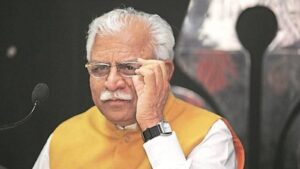
Shakeel Ahmad alleges Rahul Gandhi directed attacks on his Bihar residences

Political tensions inside the Congress spilled into the open after former leader Shakeel Ahmad accused Rahul Gandhi of directing attacks on his residences in Bihar. The charge came days after Ahmad publicly criticised Gandhi’s leadership and called him a “darpok” and an insecure politician.
First, Ahmad laid out his claim. He said party leaders planned attacks on his houses in Patna and Madhubani on January 27. He alleged that senior Congress figures passed the orders under the pretext of burning his effigy. He also claimed that colleagues quietly warned him about the plan in advance.
Next, Ahmad shared what he described as proof. He posted a screenshot of a WhatsApp message on X. The message allegedly urged local and district-level Congress leaders to burn his effigy in protest. According to Ahmad, the message reflected an organised attempt to intimidate him after his remarks on Rahul Gandhi.
Meanwhile, Ahmad linked the alleged threats directly to the party’s top leadership. He said Rahul Gandhi reacted angrily to his criticism and chose intimidation over dialogue. Ahmad claimed he faced sustained pressure after speaking out. He added that he quit the Congress after its poor performance in the Bihar elections last year, but the hostility followed him even after his exit.
To understand the dispute, one must look at the trigger. Last week, Ahmad criticised Rahul Gandhi amid the Congress’s declining electoral fortunes. He accused Gandhi of running the party in a dictatorial manner. He also claimed that the leadership sidelined experienced leaders with public support.
Further, Ahmad said Rahul Gandhi promoted only young leaders who praised him. He alleged that senior leaders made the leadership uncomfortable because of their independent standing. However, Ahmad insisted that his criticism aimed to reform the party, not damage it. He said he repeatedly pointed out mistakes when they occurred. He also claimed that he advised Gandhi to continue temple visits as part of broader political outreach.
Then, Ahmad named individuals. He accused Krishna Allavaru, the Congress’s Bihar in-charge, of orchestrating the threats. He claimed outsiders could attack him under Allavaru’s direction. He also alleged that Allavaru mistreated him on Rahul Gandhi’s instructions.
In response, the Congress pushed back sharply. Party leader Manickam Tagore attacked Ahmad with strong language. He called Ahmad a “betrayer” and labelled him “Jaichand,” a historical reference often used to describe treachery. Tagore said such attacks did not stem from ideology or concern for the party. Instead, he accused Ahmad of seeking attention and relevance. He described critics like Ahmad as a new batch of betrayers emerging in 2026.
However, the exchange did not end there. Ahmad hit back at Tagore within hours. He alleged that Tagore acted under Rahul Gandhi’s instructions. He also mocked Tagore’s statement, claiming that Tagore did not understand Hindi yet issued a long post against him. According to Ahmad, Gandhi directed Tagore to respond publicly.
Overall, the episode highlights deepening fault lines within the Congress. It also shows how internal criticism now triggers public confrontation. As Bihar politics heats up, the party faces questions about dissent, leadership style, and internal cohesion. For now, the war of words continues, with allegations and counter-allegations dominating the narrative.