Tamil Nadu political realignment accelerates as Dhinakaran rejoins NDA and DMK absorbs OPS camp’s last bastion
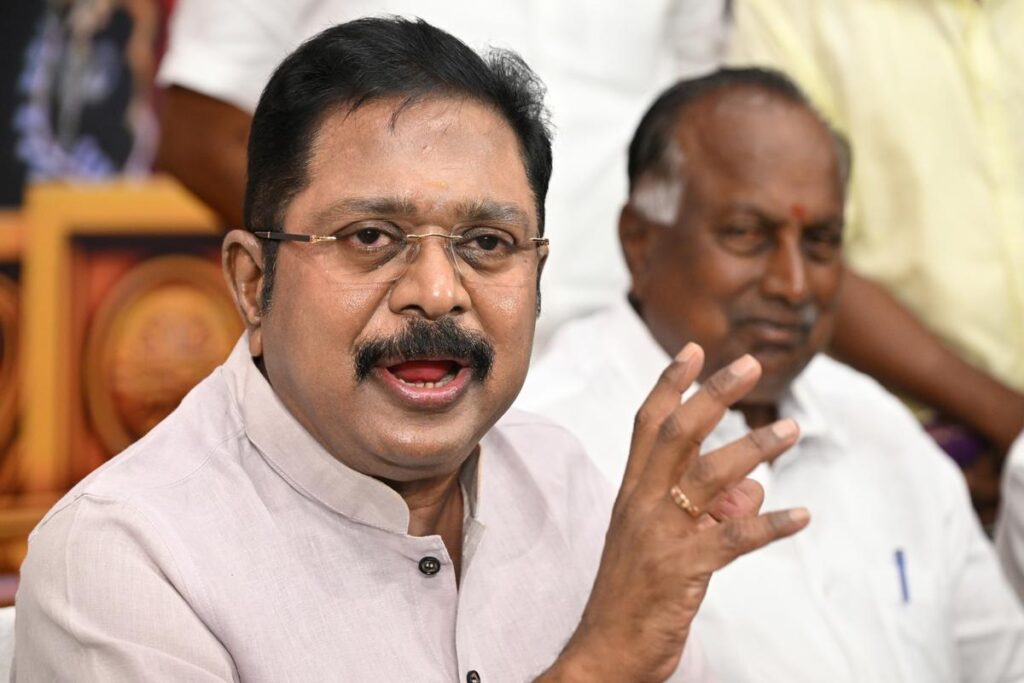
Tamil Nadu’s political churn picked up pace on Wednesday. With months left for the Assembly elections, parties moved fast to lock allies and weaken rivals. Two parallel shifts highlighted the moment. TTV Dhinakaran returned to the NDA. At the same time, the DMK drew in R Vaithilingam from the OPS camp.
First, the Amma Makkal Munnetra Kazhagam made its move. Dhinakaran announced the AMMK’s formal return to the National Democratic Alliance. He met BJP leaders in Chennai to seal the decision. Piyush Goyal led the talks as the BJP’s Tamil Nadu election in-charge. L Murugan and Nainar Nagenthran also joined the meeting.
Soon after, Goyal welcomed the AMMK back. He said the NDA stood united against the ruling DMK. He projected the alliance as a platform for governance, welfare, and cultural pride. He stressed unity ahead of the polls.
For Dhinakaran, the step marked a clear compromise. He once attacked AIADMK general secretary Edappadi K Palaniswami without restraint. Now, he struck a conciliatory tone. He described past clashes as disagreements among allies. He argued that defeating the DMK mattered more than old rivalries.
Earlier, the AMMK had quit the NDA last year. The exit followed the BJP’s renewed alliance with the AIADMK. Dhinakaran then accused the NDA of sidelining his party. Now, circumstances have changed. Seat-sharing talks have begun. Campaign planning has gained urgency.
Moreover, Prime Minister Narendra Modi will address a rally near Maduranthagam on January 23. Dhinakaran is likely to attend. If so, he will share a stage with Palaniswami for the first time since his AIADMK expulsion in 2017. That image alone signals a reset.
Meanwhile, the DMK scored a strategic gain. The party inducted R Vaithilingam at its Chennai headquarters, Anna Arivalayam. Chief Minister M K Stalin led the induction. Deputy Chief Minister Udhayanidhi Stalin stood beside him.
Vaithilingam represents Orathanadu in Thanjavur district. He also served as a senior AIADMK minister. For years, he remained O Panneerselvam’s closest ally. His exit now leaves OPS isolated.
Vaithilingam explained his decision in blunt terms. He said the AIADMK no longer functions effectively under Palaniswami. He accused the party leadership of authoritarian control. He claimed that internal democracy has eroded.
Next, he invoked ideology. He recalled the legacy of C N Annadurai. He said the DMK reflects the original Dravidian tradition. He argued that the party still carries that political spirit.
Timing also mattered. Elections are approaching fast. Vaithilingam said uncertainty gripped the OPS camp. He noted the absence of a clear roadmap. He admitted that the situation forced a decision.
He also addressed speculation about a return to the AIADMK. He confirmed that leaders invited him back as an individual. However, he set a condition. He said he would return only if rival AIADMK factions reunited. Since that did not happen, he chose the DMK.
Together, these moves reveal a broader pattern. Large blocs are consolidating early. Smaller factions are fading fast. The NDA wants a united front against the DMK. The DMK, in turn, wants to drain the opposition of experienced leaders.
As a result, the space for splinter groups continues to shrink. OPS now stands without a senior lieutenant. Dhinakaran has chosen relevance over isolation. Both decisions reshape the battlefield.
In the coming weeks, alliances will harden. Campaigns will intensify. Tamil Nadu’s election contest has clearly entered its decisive phase.