Trump retreats on Greenland Tariff threat after NATO talks, signals shift on Arctic dispute
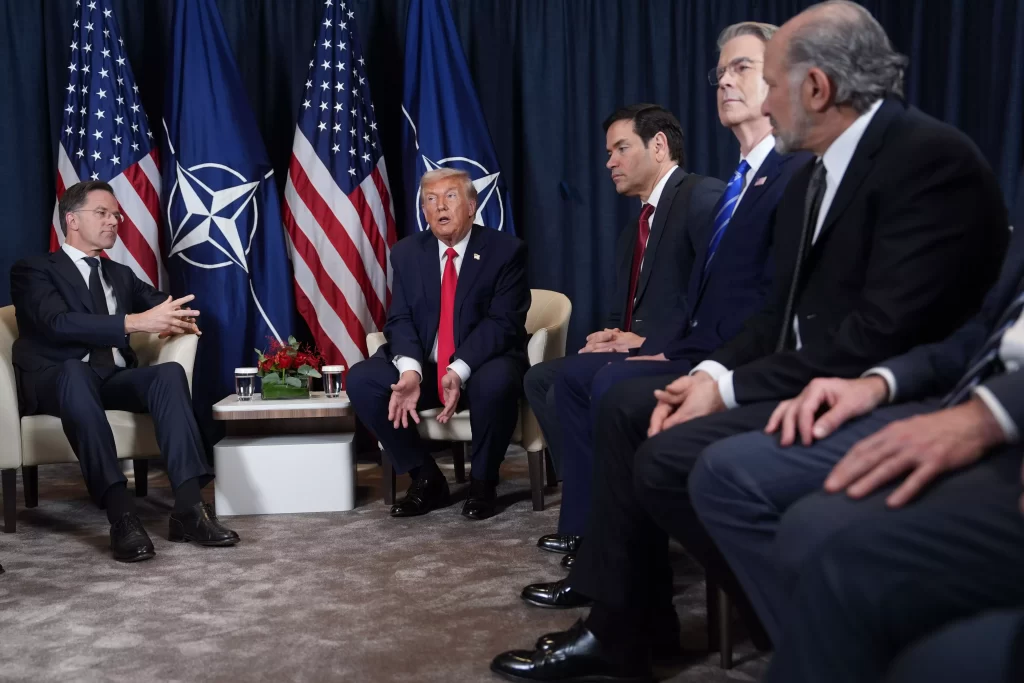
Political uncertainty rippled across Europe after President Donald Trump abruptly softened his tariff threat tied to Greenland. The reversal came on Wednesday. It followed talks with NATO leadership. Both sides agreed on a framework for future Arctic security cooperation.
Earlier in the day, Trump had struck a far tougher tone. He repeated his desire to secure US control over Greenland. He spoke about “right, title, and ownership.” However, he also insisted he would not use force. Even so, his remarks unsettled allies. They raised fears of a major rupture inside NATO.
Soon after, Trump changed course. He announced he would cancel the planned tariffs on European allies. The duties had targeted Denmark and others. Trump linked the rollback to progress on security talks. He framed the decision as a step toward stability in the Arctic.
Still, the controversy did not fade. At the World Economic Forum in Davos, Trump delivered a combative speech. He argued that the US had protected Europe for decades. He called Greenland “cold and poorly located.” He said his demand amounted to a small request compared to America’s past sacrifices.
At the same time, Trump used sharp language. He warned that the US could exert overwhelming power if it chose to do so. Yet he stressed restraint. “I don’t want to use force,” he said. “I don’t have to.” The message mixed reassurance with pressure.
Trump often deploys this tactic. He escalates rhetoric to extract leverage. He then pivots when talks advance. In this case, the approach carried high stakes. NATO has anchored Western security since the Cold War. Any fracture could reshape global alliances.
Greenland quickly became the focal point. NATO members reiterated a firm position. They said Greenland is not for sale. Denmark rejected any transfer of sovereignty. Leaders warned against coercion. They argued that alliance unity matters more than territorial ambition.
Trump, however, doubled down on strategic logic. He said the US needs Greenland to counter Russia and China in the Arctic. He pointed to rising military competition in the region. He also noted that the US already operates a major base on the island.
Denmark responded with caution. A senior Danish official said Copenhagen remains open to security dialogue. However, the official stressed clear red lines. Denmark will not compromise sovereignty. Officials made that message clear after Trump’s Davos remarks.
Greenland’s local government reacted on a different front. Authorities urged citizens to prepare for crises. They released a public handbook. It advised residents to store food, water, fuel, and supplies for at least five days. The move reflected rising anxiety.
In Nuuk, residents took notice. Locals visited grocery stores. They stocked essentials. Many described Trump’s words as unsettling. Some dismissed them as threats. Others preferred caution.
Back in Europe, leaders spoke out. Danish Foreign Minister Lars Løkke Rasmussen welcomed Trump’s rejection of military force. Still, he criticized the broader message. He said the speech clashed with norms of territorial integrity. He stressed that Denmark and Greenland both belong to NATO. He said sovereignty remains non-negotiable.
Trump also widened the debate. He contrasted the US economy with Europe’s. He said America is booming. He claimed Europe lags behind. He said the US wants strong allies, not weakened ones. The remarks drew polite applause but visible discomfort.
Meanwhile, trade concerns resurfaced. Trump warned he could revive tariffs if talks stalled. He mentioned duties starting at 10 percent. He said they could rise to 25 percent by June. European leaders pushed back immediately.
British Prime Minister Keir Starmer took a firm stance. He told Parliament that Britain would not yield to tariff threats. European Commission President Ursula von der Leyen echoed the warning. She said any response would remain united and proportional.
Markets watched closely. Economists warned that a trade clash could disrupt the US-EU truce reached last summer. Investors reacted with caution. However, US stocks recovered later in the day after initial losses.
Trump’s speech also drew criticism for its tone. He lashed out at Denmark. He accused it of ingratitude. He even mixed up Greenland and Iceland several times. The errors undercut his message and drew ridicule online.
In Greenland, frustration lingered. Residents described Trump’s language as insulting. Many said he reduced their homeland to “a piece of ice.” Some worried about the future. Others voiced anger.
For now, Trump has stepped back from tariffs. He has ruled out military action. Yet uncertainty remains. Talks continue. Allies remain wary. Greenland has become more than an island. It now stands as a test of alliance unity in a changing Arctic world.