ED–TMC face off reaches Supreme Court as Bengal Alleges ‘forum shopping’ ahead of 2026 polls
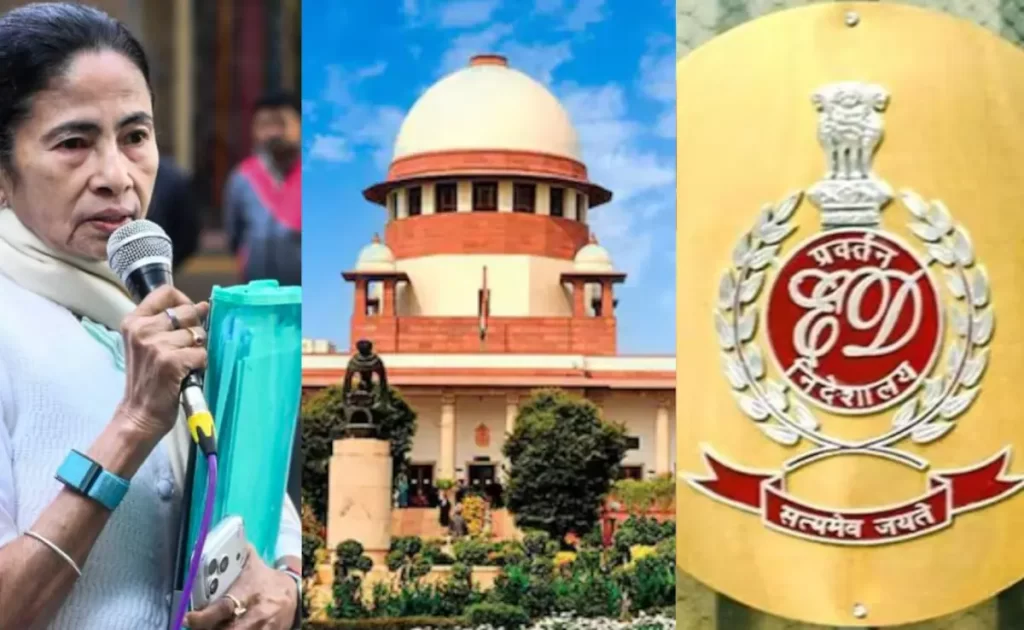
A high-stakes legal battle unfolded in the Supreme Court on Tuesday. The Enforcement Directorate and the West Bengal government clashed over an alleged money laundering probe linked to IPAC. The case now carries strong political and legal implications.
At the center of the dispute lies a 2020 coal smuggling case. The ED claims the probe later uncovered financial links to political consulting firm IPAC. Investigators also named Pratik Jain in the inquiry. The agency alleges that illegal funds moved through hawala channels.
Meanwhile, the Trinamool Congress raised sharp objections. The party questioned the timing of the ED’s actions. TMC leaders pointed to the 2026 West Bengal Assembly elections. They argued that the raids came just months before the political battle intensifies.
During the hearing, senior advocate Abhishek Manu Singhvi represented the West Bengal government. He accused the ED of “forum shopping.” He said the agency approached the Calcutta High Court and the Supreme Court at the same time. According to him, this strategy undermines legal fairness.
Singhvi argued that the ED sought favorable orders through parallel litigation. He stressed that courts discourage such practices. He urged the Supreme Court to take note of the pattern. He also linked the move to political pressure tactics.
On the other side, Solicitor General Tushar Mehta defended the ED. He laid out the agency’s allegations in detail. He claimed that more than ₹20 crore reached IPAC through hawala operators. He connected these transactions to the 2022 Goa elections.
According to the ED, shell entities and intermediaries helped route the money. The agency said the funds aimed to influence political strategy. Investigators argued that financial crime, not politics, drives the case.
However, the TMC rejected this claim. The party accused the ED of overreach. Counsel for the state said the agency used the probe as a cover. He alleged that investigators wanted access to political data and campaign blueprints.
Furthermore, Mamata Banerjee’s counsel framed the issue as federal overreach. He argued that central agencies repeatedly target opposition-ruled states. He cited past cases to support this claim. He said such actions erode democratic balance.
As arguments continued, the bench listened closely. Judges asked questions about jurisdiction and procedure. They focused on whether the ED followed due process. They also examined the need for simultaneous court moves.
In the background, the political stakes remain high. West Bengal gears up for a crucial election cycle. The TMC views the case as part of a larger political narrative. The party has often accused central agencies of selective action.
At the same time, the ED maintains its stance. The agency insists that evidence guides its actions. Officials say they will pursue the case regardless of political fallout.
Legal experts say the court’s response will matter. A strong observation on forum shopping could reshape agency conduct. It could also set limits on parallel proceedings.
For now, the case remains under judicial scrutiny. The Supreme Court may issue directions on jurisdiction and process. Until then, the ED–TMC confrontation continues.
The outcome could influence both law enforcement practice and political discourse. As the 2026 polls draw closer, the intersection of law and politics grows sharper.