PM Modi leads Shaurya Yatra at Somnath, marks 1,000 years of civilisational resolve
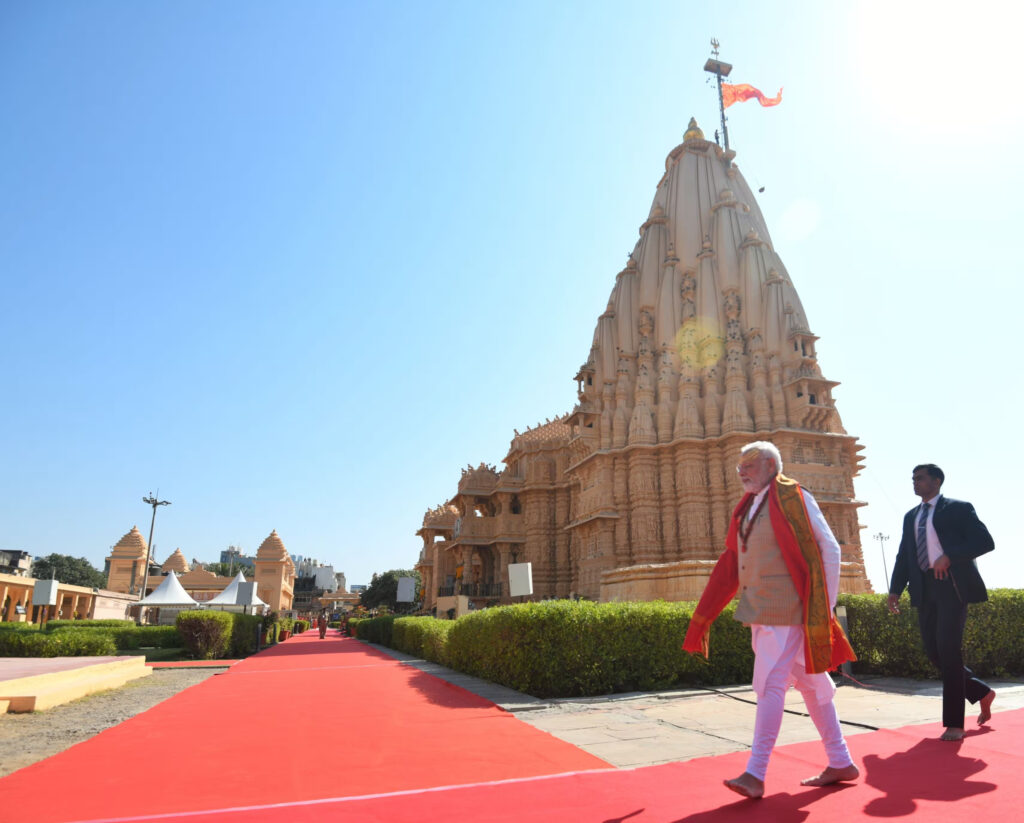
SOMNATH, GUJARAT — Prime Minister Narendra Modi on Saturday led the Shaurya Yatra at Somnath as India marked 1,000 years of civilisational resilience and spiritual strength. The event formed the centrepiece of the Somnath Swabhiman Parv, a multi-day programme that blends faith, history, and national resolve.
First, the Prime Minister took part in a 72-hour Omkar chanting ritual at the Somnath temple complex. The chanting symbolised continuity of faith and cultural endurance. Organisers said the ritual reflected the unbroken spiritual rhythm of the region across centuries.
Then, PM Modi led the Shaurya Yatra, a ceremonial procession featuring 108 horses. The march honoured warriors who defended the Somnath temple during repeated invasions. Riders moved through the historic town as chants and drums echoed across the coastline. The visual recalled resistance, courage, and collective memory.
Meanwhile, Gujarat witnessed heightened security and large public participation. Devotees, scholars, and cultural figures gathered from across the country. Local authorities managed crowd flow and logistics as the event drew national attention.
In his address, PM Modi linked Somnath’s past to India’s present identity. He said Somnath stands not only as a temple but as a symbol of India’s civilisational self-belief. He stressed that faith and courage shaped the nation’s survival through centuries of adversity.
Importantly, the event carried a clear message of strength and unity. One senior official present at the venue said the symbolism spoke for itself. He said India remembers its history and responds with confidence. He added that the message remains simple: India values peace but stands ready to defend its civilisation.
Historically, Somnath occupies a central place in India’s cultural narrative. The temple faced repeated attacks, including the well-documented invasion by Mahmud of Ghazni in the 11th century. Each time, devotees rebuilt the shrine. That cycle of destruction and renewal turned Somnath into a lasting symbol of resilience.
Over time, Somnath came to represent more than religious devotion. It reflected resistance against cultural erasure. It also reflected the determination to rebuild without fear. Leaders across generations have cited Somnath as proof of India’s civilisational continuity.
Against this backdrop, the Swabhiman Parv expanded beyond rituals. The programme included special prayers, Vedic recitations, and cultural performances. At night, a large drone show lit up the sky. Visuals depicted episodes from the temple’s history and India’s broader civilisational journey.
Additionally, scholars and spiritual leaders participated in discussions on heritage and identity. They spoke about the relevance of history in shaping modern national consciousness. They stressed that remembrance strengthens unity rather than division.
Politically, the event also carried contemporary significance. PM Modi has often linked heritage with development and national confidence. This visit followed that pattern. He framed cultural pride as a foundation for future growth.
In conclusion, the Shaurya Yatra at Somnath marked more than an anniversary. It reaffirmed a narrative of survival, courage, and renewal. Through rituals, symbols, and public participation, the event projected India’s civilisational spirit. Somnath once again stood as a reminder that faith, memory, and resolve continue to shape the nation’s path forward.