Owaisi blames Congress for long jail term of Umar Khalid and Sharjeel Imam after bail denial
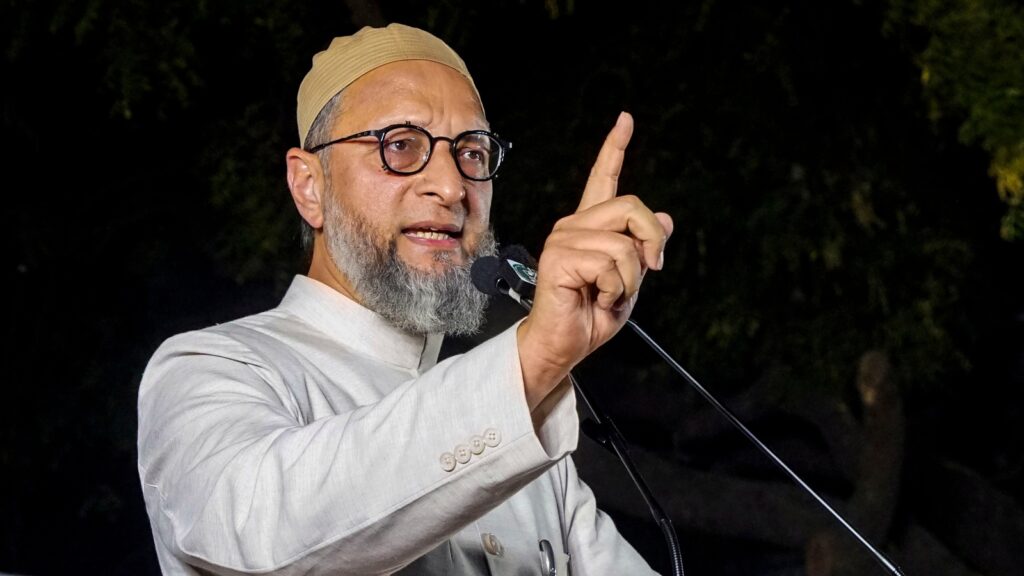
AIMIM chief Asaduddin Owaisi on Monday blamed the Congress party for the prolonged jail stay of student activists Umar Khalid and Sharjeel Imam. He linked their incarceration to changes made to the Unlawful Activities (Prevention) Act during the UPA era.
Earlier in the day, the Supreme Court denied bail to Khalid and Imam. The court heard the “larger conspiracy” case related to the 2020 Delhi riots. It explained its reasons and cited the legal framework governing terrorism-related offences.
Soon after, Owaisi reacted sharply. He said the law itself caused the problem. He argued that Congress strengthened an already strict statute. As a result, undertrial prisoners now face long jail terms without conviction.
According to Owaisi, amendments during the tenure of then home minister P Chidambaram expanded the scope of UAPA. He said those changes continue to harm accused persons years later. He added that Khalid and Imam remain examples of that impact.
Owaisi said the Supreme Court applied the law as written. He stressed that the court followed definitions inserted during the UPA government. He did not accuse judges. Instead, he targeted lawmakers who drafted the provisions.
He recalled his own warnings in Parliament. Owaisi said he flagged the issue in 2007 or 2008. At that time, he questioned how the law defined terrorism. He called parts of the definition vague and open to misuse.
Specifically, he referred to Section 15 of the Act. He highlighted the phrase “by any other means of whatever nature.” According to him, the wording lacks clarity. He said it allows wide interpretation by investigating agencies.
Owaisi said he warned that such language could target writers, activists, or critics. He even cited author Arundhati Roy as an example. He asked who decides what qualifies as terrorism. He argued that the law leaves that power unchecked.
Now, Owaisi said events have proved his point. He noted that Khalid and Imam have spent over five years in jail. He said the court relied on the same broad language he once opposed. Therefore, he blamed Congress for the consequences.
He went further. Owaisi asked whether any Congress leader has spent similar time in jail since Independence. He questioned the party’s silence on the issue. He suggested that ordinary citizens suffer under laws passed by political elites.
The AIMIM chief framed the issue as structural, not personal. He said governments change, but laws remain. He warned that strict statutes often outlive the circumstances that created them. According to him, UAPA now affects dissent across governments.
Meanwhile, the Supreme Court granted relief to others. Five accused in the same case received bail. They include Gulfisha Fatima, Meeran Haider, Shifa Ur Rehman, Mohd Saleem Khan, and Shadab Ahmad. The court cited individual roles and circumstances.
Still, the denial of bail to Khalid and Imam kept the debate alive. Opposition leaders continue to question anti-terror laws. Rights groups also raise concerns over prolonged pre-trial detention.
For now, Owaisi has placed responsibility squarely on Congress. He says the party must answer for the law it shaped. As legal battles continue, the political argument over UAPA shows no sign of fading.