Khaleda Zia dies at 80, closing a defining chapter in Bangladesh politics
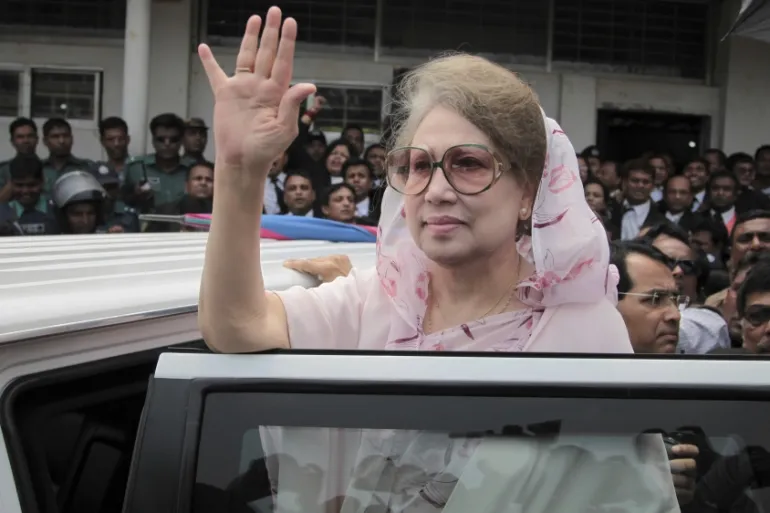
Khaleda Zia died in Dhaka on Tuesday at age 80. Doctors announced the news after days of critical care. Her Bangladesh Nationalist Party (BNP) confirmed the details soon after. Family members gathered at Evercare Hospital. Tension grew through the night. Finally, doctors ended all speculation and informed the nation.
For years, Zia fought serious illness. Her doctors treated liver cirrhosis, arthritis, diabetes, and heart complications. They monitored her constantly. They adjusted her treatment again and again. However, her condition kept worsening. On December 11, doctors put her on ventilator support. They hoped to stabilize her. Instead, she struggled every hour.
Meanwhile, the BNP prepared options for further treatment. Supporters arranged a special aircraft from Qatar. They aimed to move her to London. Yet doctors reviewed the risks and denied clearance. They judged the transfer unsafe. Therefore, the family stayed in Dhaka and continued treatment locally.
Just days earlier, party leaders filed her nomination papers for the Bogura-7 constituency. They signaled her symbolic presence in the election cycle. At the same time, her son Tarique Rahman returned to the country after 17 years in exile. Many observers now see him as a central figure in the coming polls. He plans to contest from Dhaka-17 and Bogra-6. On Sunday, he visited his mother and spent hours with her.
Zia shaped Bangladesh’s democratic journey for decades. Voters elected her Prime Minister in 1991. They gave her another mandate in 2001. She led the country through major political transitions. Moreover, she broke barriers as the first woman to hold the office. Across the Muslim world, only Benazir Bhutto had reached a similar milestone before her.
Her political roots trace back to her husband, Ziaur Rahman. He led during the turbulent post-Liberation War era and founded the BNP in 1977. After his assassination in 1981, party leaders rallied around Khaleda Zia. In 1984, they chose her as chairperson. She then organized mass campaigns against HM Ershad’s military rule. Authorities detained her repeatedly. Yet she refused to step back. Finally, nationwide protests forced Ershad to resign in 1990. Free elections followed. Voters again supported her leadership in the new democratic setting.
Later, she faced fierce rivalry with Sheikh Hasina. Both leaders competed to shape national identity, growth, and governance. Their clashes defined political life for years. Sometimes protests filled the streets. Sometimes dialogue broke down completely. As a result, the country saw frequent unrest.
During office, Zia pushed education reforms. She expanded free and compulsory primary schooling. She ensured free education for girls up to Class 10. She launched stipends and food-for-education programs. Furthermore, her government raised the age limit for entry into public service from 27 to 30. Supporters cite these moves as proof of her social agenda.
However, investigations later targeted her administration. Anti-corruption agencies pursued charges. Courts moved cases forward. Authorities eventually arrested her in 2007. Critics argued politics fueled many actions. Supporters insisted on due process. The debate still divides the public.
Today, Bangladesh absorbs the weight of her passing. Politicians issue tributes. Citizens revisit her record. Meanwhile, the BNP looks toward elections with uncertainty. Tarique Rahman steps into the foreground. The ruling Awami League prepares its message. Therefore, the national conversation turns again to leadership, stability, and the future.
Khaleda Zia’s story shows hard choices, sharp rivalry, and lasting impact. Her death closes one era. Yet her legacy continues to shape the next one—at every ballot box and in every political debate.