Delhi Police sweep streets before New Year, crush crime networks with Aaghat 3.0
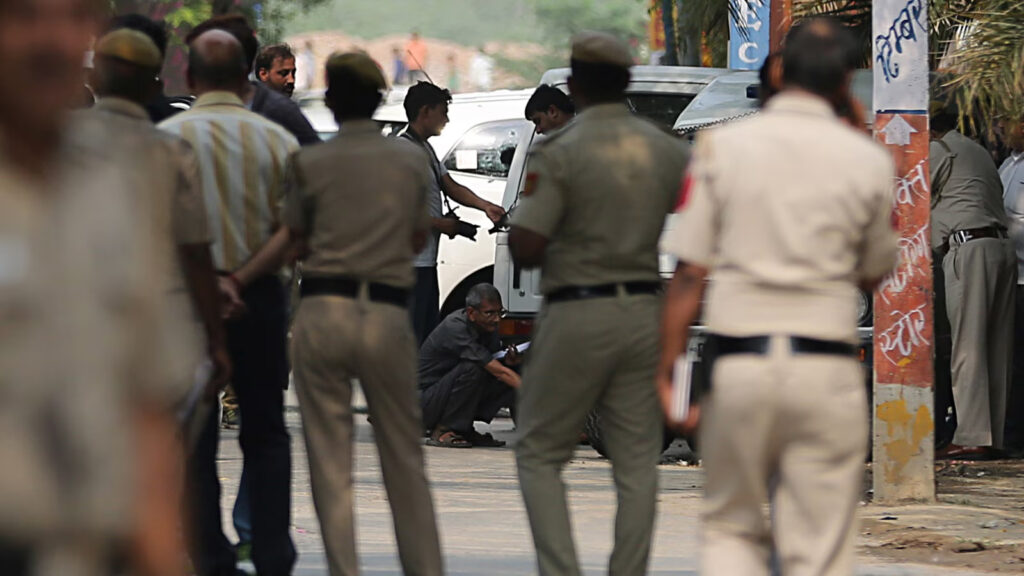
New Delhi – Delhi prepared for New Year celebrations. Meanwhile, the city police launched Operation Aaghat 3.0 on Friday and moved fast. Officers fanned out across busy neighborhoods. They checked hotspots. They tracked repeat offenders. Then they struck.
Police arrested 285 people for violations under the Excise Act, the NDPS Act, and the Gambling Act. In addition, officers detained more than 500 people as a preventive step. They also arrested 116 people that they classify as “bad characters.” The force acted in real time and pressed every unit into service.
Moreover, officers recovered dangerous weapons. They seized 21 country-made pistols and 20 live cartridges. They also collected 27 knives from different locations. The team recovered cannabis, cash, and large quantities of illicit liquor. The crackdown sent a clear signal ahead of the holiday rush.
DCP South East Hemant Tiwari briefed the media. He said the operation strengthens law and order across the capital. He explained that officers also picked up ten property offenders and five auto-lifters. The teams recovered ₹2,30,990 from gamblers. They also brought back 310 mobile phones linked to illegal activity. Furthermore, they seized 231 two-wheelers and one four-wheeler during the sweep.
The numbers highlighted the scale. Officers apprehended 504 people under preventive measures. They booked hundreds under specific laws. They carried out sustained checks on streets, markets, and transit corridors. As a result, they closed multiple crime loops that fuel daily disturbances.
At the same time, police targeted alcohol and drug networks. The teams recovered 12,258 quarters of illicit liquor. They also seized 6.01 kg of ganja from dealers and couriers. These actions aimed to stop supply chains before New Year crowds gathered. Therefore, the operation created an early layer of safety for residents.
The campaign did not appear overnight. Earlier, Delhi Police ran the first edition of Operation Aaghat in September. That effort brought 70 arrests in southeast Delhi. Officers recovered firearms, narcotics, illicit liquor, and stolen goods. The drive strengthened confidence inside many neighborhoods. Tiwari called the initiative a comprehensive push to protect communities.
Then, in October, the force launched Operation Aaghat 2.0. Police apprehended around 500 people. They focused on organized crime, habitual offenders, bootleggers, and drug peddlers. Each round built experience. Each round improved coordination.
Now, Aaghat 3.0 shows sharper planning. It shows faster response. It also shows deeper collaboration between units. Officers moved with clear targets. They relied on intelligence. They maintained visibility in sensitive pockets. Consequently, criminals lost room to operate.
Looking ahead, Delhi heads into New Year’s Eve with tighter policing. Crowds will fill markets, malls, and party zones. However, the police promise firm vigilance. They plan more checks and quicker responses. They also urge citizens to celebrate responsibly and report suspicious activity.
In sum, Operation Aaghat 3.0 signals a focused strategy. Police act early. They strike hard. They protect neighborhoods before trouble grows. And with each phase, they push crime further to the margins while keeping the city ready for safe celebrations.