Delhi pollution crisis deepens as government enforces GRAP-4, orders 50% work from home
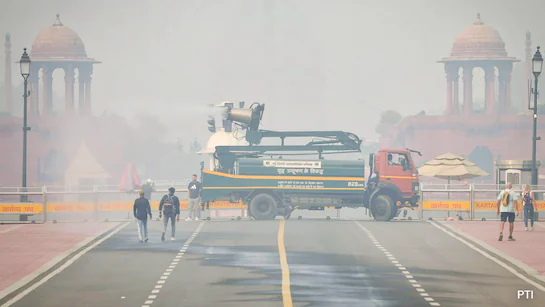
New Delhi – Delhi’s pollution crisis has intensified. In response, the city government has triggered the strictest emergency measures under GRAP-4. The decision comes as air quality remains in the “severe” category for consecutive days.
Accordingly, the government has made work-from-home mandatory for half the workforce. The rule applies to all government offices and private institutions. The order takes effect from tomorrow. Officials say the move aims to cut traffic volume and reduce daily emissions.
At the same time, the government has announced financial relief for affected workers. Registered construction workers will receive a compensation of ₹10,000 each. The payout targets those who lose income due to the construction ban under GRAP-4. Authorities say the labour department will begin disbursal through direct benefit transfer.
Meanwhile, Delhi Environment Minister Manjinder Singh Sirsa outlined the broader plan. He said the government will not compromise on public health. Therefore, enforcement teams will act across the city. They will monitor roads, industrial zones, and construction hotspots.
In addition, the government has ordered a complete halt on construction and demolition activities. Officials say dust from these sites adds heavily to particulate pollution. As a result, inspectors will seal sites that violate the ban. They will also impose fines on repeat offenders.
Further, the government has tightened vehicle norms. Enforcement teams will check pollution under control certificates at key junctions. Vehicles without valid PUC documents will face penalties. Sirsa said such vehicles contribute significantly to toxic emissions.
Moreover, the government has banned the use of fossil fuels in select sectors. Authorities have asked industries and commercial units to shift to cleaner alternatives immediately. Power plants and diesel generators will also remain under close watch.
Education has also felt the impact. The government has suspended physical classes in schools. Officials say children face the highest health risk during pollution spikes. Schools will continue online classes until air quality improves.
Health experts have backed the decision. Doctors warn that prolonged exposure can trigger asthma, heart disease, and respiratory infections. They advise residents to limit outdoor activity and wear protective masks when necessary.
Meanwhile, the transport department has stepped up public messaging. Officials have urged residents to use public transport and carpool. They have also asked people to avoid non-essential travel during peak hours.
Traffic police have increased coordination with civic agencies. They aim to reduce congestion at major crossings. Officers will also ensure smoother movement for emergency vehicles.
Additionally, municipal bodies have intensified road cleaning drives. Teams have started mechanised sweeping on arterial roads. Water sprinkling has also increased to settle dust particles.
However, officials admit that weather conditions continue to pose challenges. Low wind speed and cooler temperatures trap pollutants near the surface. Until dispersion improves, the city will likely struggle with hazardous air.
Despite criticism, the government has defended the tough steps. Sirsa said the measures focus on saving lives, not convenience. He added that temporary discomfort remains necessary to prevent long-term damage.
Opposition leaders, meanwhile, have called for long-term planning. They have demanded stronger action against regional pollution sources. They have also urged coordination with neighbouring states.
For now, the government remains focused on immediate control. Officials will review air quality data daily. They will adjust restrictions if conditions worsen.
As Delhi enters another winter under a blanket of smog, the administration has made its stance clear. Public health comes first. GRAP-4 will stay in force until the air turns safer again.