IndiGo turbulence: Over 1,000 cancellations trigger national travel chaos
IndiGo entered the weekend with massive operational trouble as the airline continued to cancel hundreds of flights across India. The crisis intensified on Friday when cancellations crossed 1,000, the highest single-day disruption in the airline’s history. On Saturday, IndiGo CEO Pieter Elbers released a video message and said the airline would likely keep cancellations below 1,000, but he warned of continued turbulence.
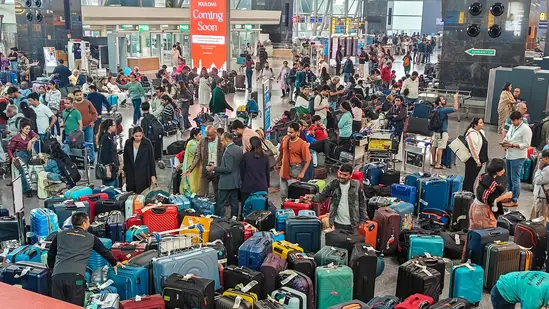
The disruption hit passengers hard. As flights vanished from departure boards, major airports slipped into chaos. Travellers stood in long queues, searched for updates and scrambled to track their luggage. Confusion deepened when airfares spiked sharply on many routes. Social media then turned into a venting ground as stranded passengers demanded answers.
The crisis raised one central question: Why is IndiGo cancelling so many flights?
IndiGo explained the collapse. It said the airline ran into “unforeseen operational challenges.” The biggest trigger was the new Flight Duty Time Limitations (FDTL) rules. These rules require mandatory rest for pilots and crew. IndiGo activated the new system at the same time it expanded its winter schedule on October 26. As a result, a large pool of pilots went on compulsory rest while the airline tried to fly an extended schedule. This mismatch created a severe manpower crunch.
As Saturday began, the disruption’s impact spread beyond cancellations. Airfares shot up across the country. Travellers searched for alternate flights and discovered shocking prices. A one-stop SpiceJet ticket from Kolkata to Mumbai for December 6 touched ₹90,000. An Air India fare from Mumbai to Bhubaneswar climbed above ₹84,000. Several busy routes showed similar jumps as demand surged and seat availability collapsed.
Meanwhile, the aviation regulator stepped in. The Directorate General of Civil Aviation (DGCA) halted the FDTL rollout on Friday to stabilise airline operations. The move aimed to ease the immediate pressure on pilot rosters. However, the DGCA also launched a deeper investigation. It formed a four-member panel to probe operational lapses. The regulator said the crisis points to serious gaps in IndiGo’s internal oversight, readiness and compliance planning. It added that these gaps require independent scrutiny.
As the investigation begins, IndiGo faces tough questions. The airline dominates the Indian aviation market, so any large-scale disruption hits the entire travel ecosystem. The sudden combination of pilot shortages, schedule expansion and regulatory changes exposed structural weaknesses. Passengers continue to feel the consequences as airports stay crowded and fares rise.
Going forward, IndiGo needs smooth coordination between scheduling, crew management and regulatory compliance. Meanwhile, the DGCA’s inquiry may push airlines to rethink how they handle major operational transitions. The crisis serves as a warning that even the largest carriers can falter when planning falls short.
For now, travellers must brace for more uncertainty as IndiGo works to stabilise its network.