IndiGo faces 3rd day of disruptions as new crew rules strain operations
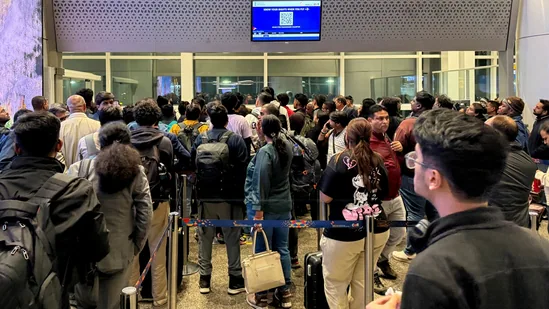
IndiGo entered its third straight day of turmoil on Thursday as flight delays and cancellations triggered fresh chaos at major airports across India. Crowded terminals, long queues and angry passengers defined the morning rush, further deepening concerns about the airline’s ability to stabilise operations.
To understand the crisis, it helps to trace the build-up. Earlier this week, IndiGo acknowledged mounting stress on its network. The airline said it struggled with tech glitches, bad weather, heavy air-traffic congestion and, most importantly, new Flight Duty Time Limitations (FDTL) that took effect in November. These rules demand longer rest hours for pilots, restrict night landings and aim to reduce crew fatigue. However, they also sharply reduced crew availability at a time when IndiGo was already grappling with shortages.
As Thursday began, the situation worsened. At Delhi airport, more than 30 outbound IndiGo flights were cancelled. Bengaluru reported an even bigger hit with 73 cancellations. Soon after, Hyderabad airport sources said the city would lose up to 33 outgoing flights and possibly 35 incoming ones. Mumbai and Kolkata also prepared for more cancellations through the day as schedules slipped deeper into disarray.
Meanwhile, terminals across the country turned tense. Videos on social media showed restless passengers seated on floors or queuing for hours with little clarity about their flights. The posts captured a growing sense of frustration. One traveller said he had waited at Hyderabad airport for more than 12 hours without any resolution in sight. Another wrote that her flight faced a 22-hour delay with no proper communication or compensation. Others spoke of last-minute cancellations that disrupted family travel plans, calling the experience “harassment”.
As complaints mounted, IndiGo continued to insist that “operational” issues were the root of the crisis. However, aviation experts pointed to the new FDTL framework as the main stress point. The rules, set by the Directorate General of Civil Aviation, now mandate a 48-hour weekly rest period, a longer definition of night hours and stricter limits on night landings. These changes aim to improve flight safety, but they also sharply cut the number of hours pilots can fly each week. As a result, airlines that depend on tight crew rotations are now struggling to keep schedules intact.
Consequently, IndiGo’s challenges spilled into a national problem as thousands of passengers faced missed connections, disrupted holidays and extended airport stays. Moreover, the cascading delays created a ripple effect across airports already battling winter congestion and unpredictable weather.
Going forward, IndiGo must address the crew shortage quickly. The airline also needs to improve communication with passengers, who say they feel abandoned during long delays. Meanwhile, regulators and airlines must work together to adjust to the new FDTL norms without compromising safety or reliability.
For now, India’s busiest carrier continues to navigate a turbulent stretch, and passengers hope the skies clear soon.