India marks Constitution Day; President Murmu launches digital text in nine languages
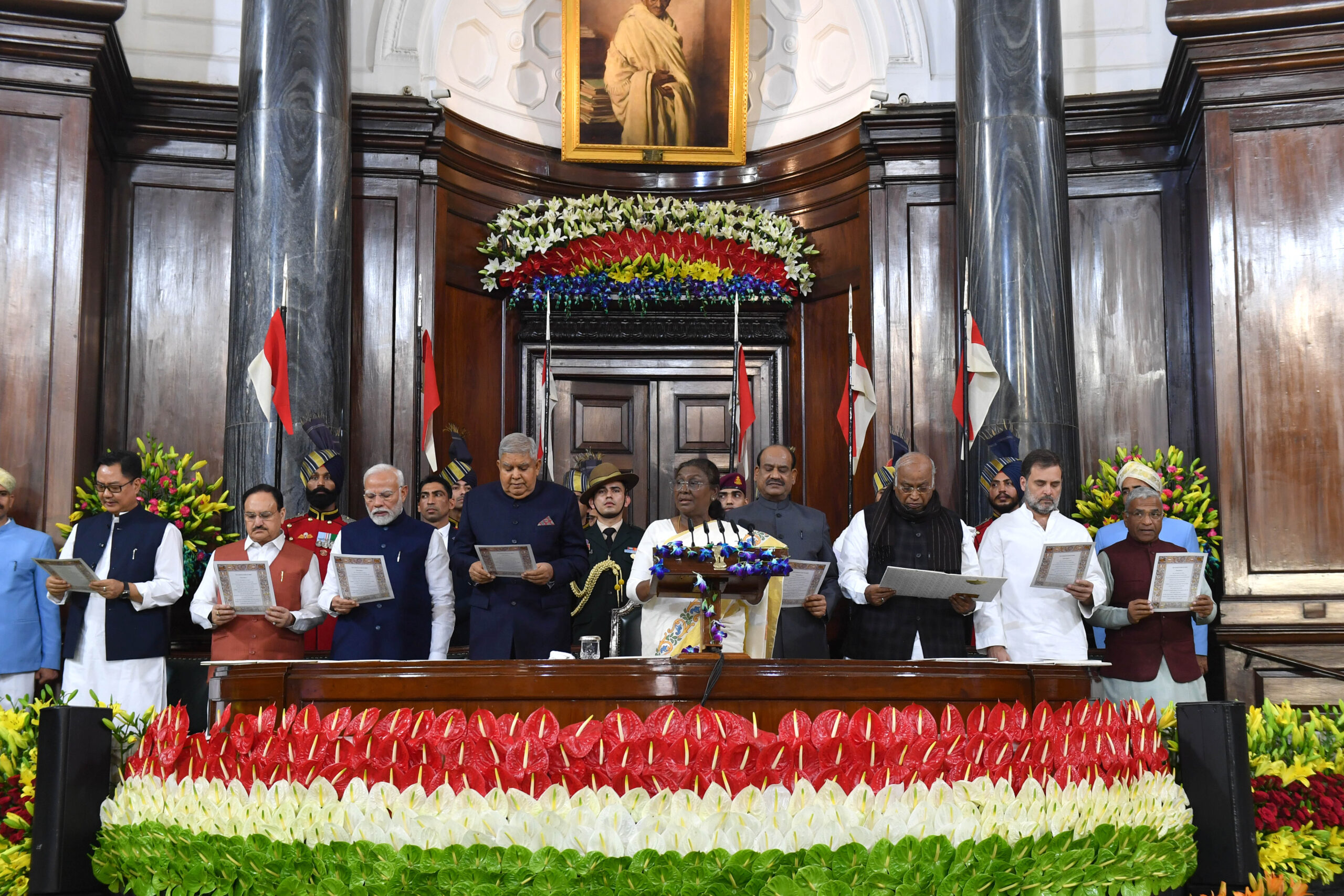
New Delhi – India celebrated Constitution Day on Wednesday with a strong focus on inclusivity, democratic values, and national unity. The event took place inside the historic Central Hall of the old Parliament building. President Droupadi Murmu led the ceremony and released digital translations of the Constitution in nine Indian languages—Malayalam, Marathi, Nepali, Punjabi, Bodo, Kashmiri, Telugu, Odia, and Assamese.
She opened her address with a reminder of India’s progress. She said India lifted 25 crore people out of poverty in recent years, and she linked this achievement to the vision of the Constitution’s framers. She emphasised that they wanted every citizen’s personal and democratic rights protected. She also noted that Constitution Day keeps the country connected to that vision.
Since 2015, India has celebrated Constitution Day—or Samvidhan Diwas—on November 26 to honour the moment when the Constituent Assembly adopted the Constitution in 1949. The day has grown into a national observance that highlights civic responsibilities and democratic values.
Earlier in the day, Vice President C. P. Radhakrishnan addressed a gathering and said the “soul of our Constitution” shows that Bharat is one and will always remain united. He stressed that the Constitution reflects India’s commitment to social justice and the economic empowerment of weaker sections. He also said that the nation’s institutions must continue to strengthen this spirit of equality.
The event drew major national leaders. Prime Minister Narendra Modi, Vice President Radhakrishnan, Lok Sabha Speaker Om Birla, Union ministers, and members of Parliament were scheduled to attend, according to the Ministry of Parliamentary Affairs.
Meanwhile, political leaders echoed the day’s themes across the country. Congress leader Rahul Gandhi delivered a sharp message. He said the Constitution acts as the protective shield of the poor, and he urged people to take a pledge: “We will not allow any attack on the Constitution.” He added that he would be the first to stand up if such an attack ever occurs.
Congress president Mallikarjun Kharge also shared a statement. He underlined the need to protect the Constitution’s fundamental principles: justice, equality, freedom, secularism, socialism, and a spirit of fraternity. He said these values define the nation’s moral and political framework.
Throughout the day, schools, universities, and public institutions held debates, quiz programs, and oath ceremonies to encourage civic awareness. Several states organised reading sessions of the Preamble. Digital platforms livestreamed events to widen participation.
As the celebrations continued, the central message remained clear. The Constitution does more than define India’s legal structure—it anchors the nation’s democratic identity. Leaders across political lines stressed that India must protect this foundation, especially as social and economic aspirations evolve.
With new digital translations now available, officials said millions more people will be able to study the Constitution in their own languages. They described this step as both symbolic and practical—an effort to make the country’s highest legal document more accessible, and to deepen public engagement with its ideals.