Pakistan bombs Afghan villages after Peshawar attack, kills nine children
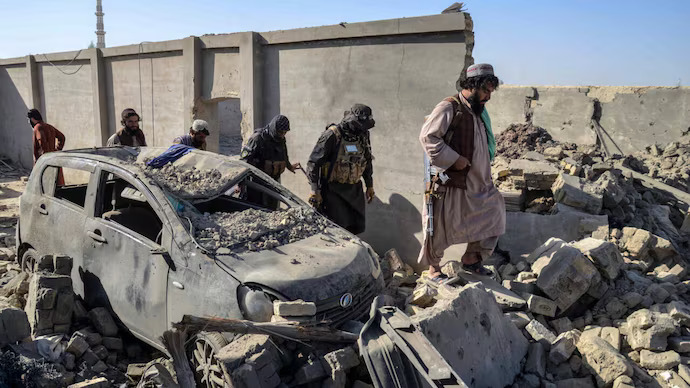
Pakistan escalated tensions on Tuesday as it launched air strikes inside Afghanistan. It hit civilian homes in Khost, Kunar and Paktika. The strikes killed ten people, including nine children. The action came just a day after a suicide blast at a paramilitary headquarters in Peshawar killed six.
Pakistan moved quickly after the Peshawar attack. It sent jets toward the Afghan border region before midnight. The planes struck the home of Waliat Khan in Khost’s Gurbuz district. Taliban spokesman Zabihullah Mujahid confirmed the deaths and shared details. He said the bombing killed five boys, four girls and one woman. He added that the strikes injured four more civilians in Kunar and Paktika.
Afghanistan accused Pakistan of targeting civilians. It blamed Islamabad for violating the fragile ceasefire. It also warned that the bombings could spark a fresh conflict. Taliban officials said Pakistan tried to justify its actions by claiming to target Tehreek-e-Taliban Pakistan (TTP) fighters. However, they said no fighters lived in the area.
Pakistan has not commented on the latest strikes. Yet, its leaders have repeatedly issued threats in recent weeks. Defence minister Khawaja Asif warned earlier this month that Pakistan could enter an “open war” with Afghanistan if peace efforts collapsed. His remarks reflected the rising frustration in Islamabad over TTP-linked attacks.
Meanwhile, the Peshawar attack renewed pressure on Pakistan’s security set-up. The bombing involved a suicide attacker and two gunmen. The bomber blew himself up at the gate. Security forces shot the other two in the parking lot. Jamaat-ul-Ahrar, a faction linked to the TTP, claimed responsibility. Pakistan called the attack a “foiled terrorist plot”, even though three security personnel died.
The violence added to the strain between Pakistan and Afghanistan. Less than two weeks earlier, TTP militants carried out a suicide blast near an Islamabad court that killed 12. Pakistan blamed Afghanistan for offering shelter to these militants. The Taliban denied the charges but admitted that border tensions had risen.
Clashes between both sides escalated in October. Heavy firing across the border killed civilians and soldiers. The two countries then announced a ceasefire. However, the agreement collapsed in practice. Reports of attacks continued to emerge from the border regions.
Now, Pakistan’s latest air strikes have pushed the situation into deeper uncertainty. Both nations say they want peace, yet both accuse each other of provoking conflict. The deaths of nine children have intensified global concern. Regional observers fear that the cycle of retaliation could trigger a full-blown confrontation.
As events unfold, neither side shows signs of stepping back. Pakistan demands action against the TTP. Afghanistan demands an end to cross-border strikes. With both sides locked in mistrust, the region faces another phase of instability.