Trump signs funding Bill, ends longest US Government shutdown; blames Democrats for economic disruption
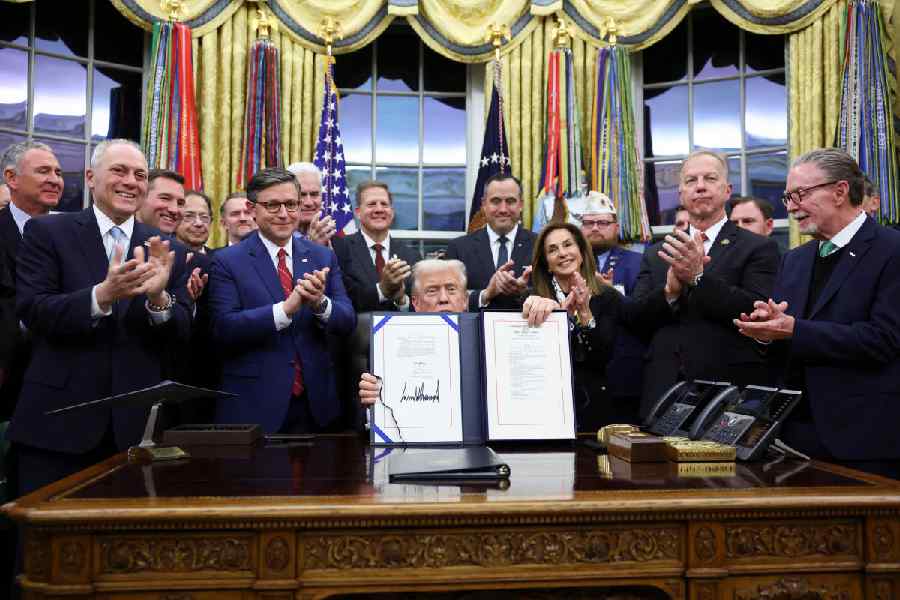
Washington – US President Donald Trump ended the longest government shutdown in American history on Wednesday evening by signing a funding bill passed by the House of Representatives. The move came after weeks of political standoff that left more than one million federal workers without pay and disrupted key government services.
While signing the bill at the Oval Office, Trump accused the Democrats of causing the crisis. “The Democrats’ shutdown inflicted massive harm,” he said. “They caused 20,000 flights to be cancelled or delayed and deprived over a million government employees of their paychecks.” He added that the shutdown also halted food stamp benefits for “millions of Americans in need” and left many small businesses unpaid.
Trump emphasized that the damage would take time to assess. “It will take weeks, maybe months, to calculate the full impact—on our economy, on families, and on the people who suffered because of this obstruction,” he said.
After signing the measure, Trump declared, “Today we are sending a clear message that we will never give in to extortion.” His remarks drew applause from Republican lawmakers gathered at the ceremony.
The funding bill brings an end to the historic shutdown that had paralyzed multiple departments, including transportation, homeland security, and commerce, for several weeks. However, restarting government operations will not happen overnight.
Transportation Secretary Sean Duffy told reporters that it may take up to a week before flight restrictions at major US airports start easing. “We’re working to stabilize the system,” he said, acknowledging that the aviation sector faced major disruptions due to unpaid staff and grounded flights.
The legislation includes provisions to protect federal employees from further layoffs until January. It also reinstates those fired during the shutdown and guarantees back pay for all affected workers. Nearly 670,000 furloughed employees are expected to return to work, while another 600,000 essential workers, including air traffic controllers and security personnel, will receive the salaries they missed.
Trump’s administration had faced mounting pressure from both Congress and the public as the shutdown extended beyond a month. With airports struggling, public services suspended, and paychecks halted, critics said the standoff exposed the human cost of political brinkmanship.
Economists estimated that the shutdown shaved billions off the US GDP and damaged public confidence in Washington’s ability to govern effectively.
Despite ending the impasse, tensions between Republicans and Democrats remain high. Trump insisted that Democrats used the shutdown to push their agenda. “They hurt the American people to score political points,” he said.
As federal offices reopen, workers are gradually returning, and agencies are restoring full operations. But recovery may take time. Officials warned that the government must still clear a backlog of paperwork, delayed projects, and pending benefits.
For millions of Americans, the shutdown’s end brings relief—but also a reminder of how political gridlock can disrupt daily life and threaten the nation’s economic stability.