Battle of the Brothers: Lalu’s sons face off in Bihar’s political arena
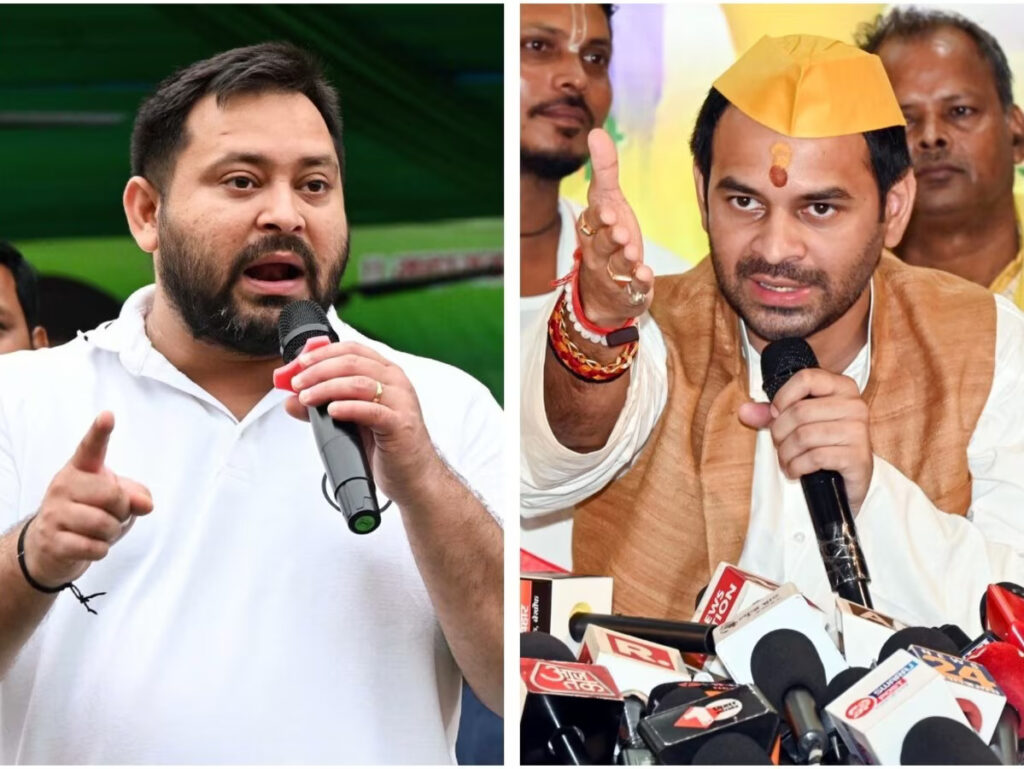
Mahua (Bihar) – Tej Pratap Yadav returned to Mahua on October 16 to file his nomination, holding a framed photo of his late grandmother, Marachhiya Devi. He came alone this time, unlike past elections when his family stood beside him. “My grandmother is supreme. With her blessings, JJD will win all seats,” he told reporters, calling Mahua his “family.”
A day earlier, his younger brother Tejashwi Yadav filed his nomination from Raghopur with their parents, Lalu Prasad and Rabri Devi, and sister Misa Bharti. The split between the brothers now defines Bihar’s political scene. Once united faces of the RJD, they now campaign from rival camps.
Tejashwi, the RJD leader and Mahagathbandhan’s CM face, eyes Nitish Kumar’s chair. He promises jobs, better governance, and a “new Bihar.” Tej Pratap, on the other hand, fights for survival and relevance. After his expulsion from RJD in May over a personal controversy, he formed his own outfit, the Janshakti Janata Dal (JJD). The JJD now fields 43 candidates, mainly in Yadav-dominated or RJD-leaning areas such as Mohiuddinnagar, Bakhtiyarpur, and Sonpur.
Meanwhile, Tejashwi campaigns for RJD candidate Mukesh Roshan in Mahua. He avoids naming his brother but urges voters to choose the lantern, saying, “The party is everything. If it remains, everything remains.”
Tej Pratap hits back sharply. “The people are supreme, not any party or family,” he says at rallies. His speeches blend emotion, spirituality, and defiance. He brands JJD as the “real” heir to Lalu’s ideology, claiming the RJD’s green flag is “fake.”
The contrast between the brothers extends beyond words. Tejashwi’s campaign runs on full throttle — helicopters, massive rallies, and strong coordination with allies like Congress and CPI(ML)L. He draws crowds of thousands and speaks about unemployment, inflation, and Nitish’s failures. His message is polished and consistent.
In contrast, Tej Pratap’s campaign feels more personal. His rallies are smaller but emotionally charged. He meets voters face-to-face, talks about honesty, clean politics, and spiritual values. He relies on local volunteers and personal contacts rather than an organised structure.
In Mahua, his emotional connection still holds weight. Some Yadav voters see him as wronged by the RJD leadership. Even Rabri Devi recently said, “Tej Pratap left the party, not our hearts.”
This emotional divide now shapes the Bihar election. Tejashwi aims for a clear win and leadership of the Opposition alliance. Tej Pratap focuses on reclaiming lost respect and a share of the legacy. Their clash splits the Yadav vote, potentially reshaping key contests.
If JJD cuts even a small fraction of RJD votes, it could tilt results in NDA’s favour in several constituencies. As Bihar votes, the battle of Mahua and Raghopur stands as a symbol — not just of two brothers’ rivalry but of a family’s fractured dream of power.