Tharoor’s remarks on “Dynasties” spark BJP attack, Congress defends Gandhi family
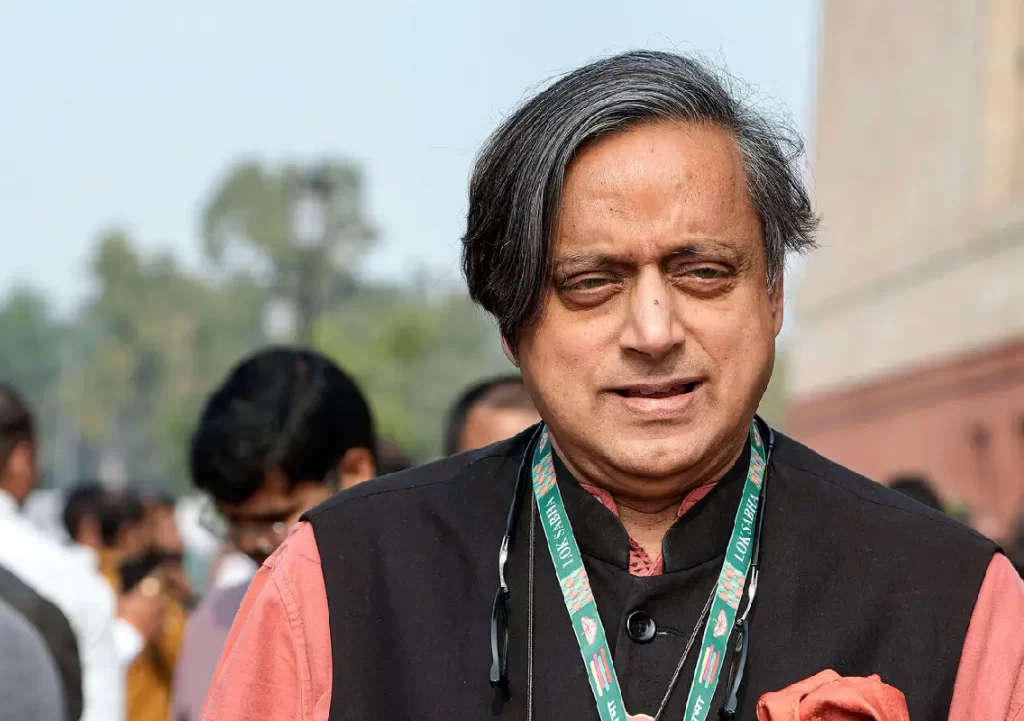
New Delhi – A political storm broke out on Monday after BJP leaders seized on Shashi Tharoor’s latest comments on dynastic politics. The row began with Tharoor’s opinion piece published on October 31 on the Project Syndicate portal.
In his article, Tharoor argued that lineage-based politics weakens governance and limits merit. He wrote that when family name outweighs talent and commitment, the quality of leadership suffers. He also pointed out how political power often flows as a birthright in India, mentioning the Nehru-Gandhi family in that context.
The BJP quickly used his remarks to target the Congress and its leadership. Party leaders said Tharoor had indirectly attacked Rahul Gandhi and called him India’s “original nepo kid.” They also extended the jibe to RJD leader Tejashwi Yadav, calling him a “chhota nepo kid.”
Soon, Congress leaders stepped in to control the narrative. Though the party avoided an official statement, several leaders offered strong reactions. Congress MP Udit Raj said dynastic patterns exist in all professions, not just politics. “A doctor’s son becomes a doctor, a businessman’s child joins business, and a politician’s heir enters politics. This reflects India’s social reality,” he said.
Raj further argued that family-based continuity is common across parties. “From Naidu to Pawar, DMK to Mamata Banerjee, and even Amit Shah’s son — dynastic influence runs deep. The issue is that opportunities often stay locked within families,” he added.
Congress MP Pramod Tiwari defended the Gandhi family, calling their leadership a matter of merit and sacrifice. “Pandit Nehru was the most capable Prime Minister. Indira Gandhi gave her life for the nation. Rajiv Gandhi too made the ultimate sacrifice,” Tiwari said. He asked whether any BJP leader could match that record of dedication and service.
Congress veteran Rashid Alvi echoed similar views. He said democracy allows voters to decide who deserves power. “No one can stop someone from contesting elections because their parent was an MP. Voters choose their leaders freely,” he said.
Meanwhile, BJP leaders continued to portray Tharoor’s remarks as a rare internal criticism within Congress. Party spokespersons highlighted Tharoor’s statement that nepotism “trumps meritocracy” and claimed it exposed the opposition’s core weakness.
The controversy also revived speculation about Tharoor’s uneasy relationship with his party. In recent months, several Congress leaders have accused him of being too sympathetic toward the BJP. Tensions surfaced again when the government picked Tharoor to lead the Operation Sindoor delegation abroad, despite Congress not recommending his name.
Udit Raj even called him the BJP’s “super spokesperson” after Tharoor praised the 2015 Uri strike during his Panama visit.
As the debate continues, Tharoor has not withdrawn his remarks. His article has reopened old questions about political inheritance, leadership merit, and the future of party-based democracy in India.
With the Lok Sabha elections approaching, both parties seem ready to turn the “dynasty vs merit” debate into a key political talking point.